Seeds and nuts deliver some of the highest nutrient density in the food supply, which is why learning how to incorporate more nutritional power of seeds and nuts into your diet can improve satiety, heart health, metabolic balance, and overall diet quality without requiring a complete overhaul of how you eat. In nutrition practice, I have seen small additions such as a tablespoon of ground flax in breakfast or a handful of pistachios as an afternoon snack create more sustainable change than highly restrictive meal plans. Seeds are the edible reproductive structures of plants, while nuts are hard-shelled kernels; in everyday nutrition guidance, the category usually also includes foods commonly grouped with nuts, such as peanuts, even though peanuts are technically legumes. What matters most nutritionally is that these foods provide a compact package of unsaturated fats, plant protein, fiber, vitamins, minerals, and protective phytochemicals. They are especially valuable in modern diets because many people underconsume magnesium, vitamin E, potassium, and fiber, while overconsuming refined carbohydrates and saturated fat. Replacing a processed snack with almonds, walnuts, pumpkin seeds, chia seeds, or tahini changes that equation quickly. This topic matters beyond basic wellness because regular intake of nuts and seeds is associated with lower cardiovascular risk, better blood lipid patterns, and improved dietary adherence. Their versatility also makes them ideal for a hub within superfoods and functional foods: they can support plant-based eating, sports nutrition, blood sugar management, healthy aging, and culinary variety. Understanding which types offer which benefits, how much to eat, and how to use them in everyday meals helps turn broad advice into practical action.
What makes seeds and nuts nutritionally powerful
The nutritional power of seeds and nuts comes from their unique combination of macronutrients and micronutrients. Unlike many snack foods, they generally contain minimal added sugars and naturally pair fat, fiber, and protein, which slows digestion and can support more stable energy levels. Most nuts are rich in monounsaturated and polyunsaturated fats, the same classes of fats emphasized in Mediterranean-style eating patterns. Walnuts stand out for alpha-linolenic acid, a plant omega-3 fat. Almonds are notable for vitamin E, magnesium, and calcium. Pistachios provide potassium, carotenoids such as lutein and zeaxanthin, and a relatively favorable protein-to-calorie ratio. Brazil nuts are exceptionally high in selenium, though portion control matters because selenium can be excessive if intake is too high. Among seeds, chia and flax are leading sources of fiber and plant omega-3 fats; sesame supplies calcium, copper, and lignans; pumpkin seeds are dense in magnesium, zinc, and iron; hemp seeds contribute complete protein with a softer texture that works well in savory dishes.
These foods also contain bioactive compounds that go beyond basic nutrition. Polyphenols, phytosterols, tocopherols, and lignans have been studied for their roles in reducing oxidative stress and supporting vascular function. The structure of whole nuts and seeds matters too. Because some fat remains trapped within plant cell walls during digestion, the metabolizable energy can be lower than the number printed on the label suggests, a point supported by research on almonds, walnuts, and pistachios. That does not mean calories are irrelevant, but it does explain why moderate nut intake is not consistently linked with weight gain in long-term observational studies. In practical terms, the combination of crunch, flavor, and fullness makes them easier to use strategically than isolated supplements.
Evidence-based health benefits and where each option fits
When people ask whether nuts and seeds are truly “superfoods,” the most direct answer is yes, if the term means foods with repeatedly demonstrated health value in real dietary patterns. Large cohort studies and controlled feeding trials consistently support benefits for cardiovascular health. Frequent nut consumption is associated with lower risk of coronary heart disease, and dietary patterns that include nuts often improve LDL cholesterol when they replace refined carbohydrate or saturated fat sources. Seeds show complementary strengths. Flaxseed has evidence for modest reductions in LDL cholesterol and support for bowel regularity because of its soluble and insoluble fiber. Chia can increase fiber intake substantially in a very small serving. Sesame, especially in tahini or ground form, contributes minerals and lignans that may support cardiometabolic health. Pumpkin seeds are useful when someone needs more magnesium or iron from plant foods.
Different goals call for different choices. For appetite control, pistachios in shell can naturally slow eating because the shells create a visual cue of intake. For plant-based athletes, hemp seeds, peanuts, and almond butter can add energy and protein efficiently. For older adults who need calorie-dense, easy-to-chew foods, smooth nut butters and finely ground seeds are often more realistic than whole nuts. For people aiming to improve blood sugar control, pairing fruit or whole-grain toast with nut butter reduces the glycemic impact of the meal. No single seed or nut does everything best, which is why variety matters more than chasing one trending ingredient.
How much to eat and how to build a realistic daily habit
A practical serving for most adults is about 1 ounce of nuts, roughly a small handful, or 1 to 2 tablespoons of seeds or seed butter. That amount is enough to improve nutrient intake without crowding out other foods. In meal planning, I usually recommend starting with one intentional serving a day, then increasing variety across the week instead of adding large quantities all at once. This prevents digestive discomfort from a sudden fiber surge and makes the habit easier to maintain. People often underestimate how simple this can be: chia stirred into yogurt, sunflower seeds over a salad, peanut butter with apple slices, or crushed walnuts on oatmeal all count.
The most effective strategy is attachment to an existing meal. If breakfast is consistent, add ground flax or hemp hearts there. If afternoon vending-machine runs are the weak spot, pre-portion mixed nuts into small containers. If dinner is where vegetables feel repetitive, use toasted sesame seeds, almonds, or pine nuts for texture. Roasting can deepen flavor, but very high heat for long periods may reduce some delicate fats, so gentle to moderate roasting is preferable. Unsalted or lightly salted versions are the best default, especially for people monitoring blood pressure. Flavored products can be useful for transition, but they often carry added sugars, sodium, or refined oils that dilute the nutritional advantage.
Best ways to use seeds and nuts in everyday meals
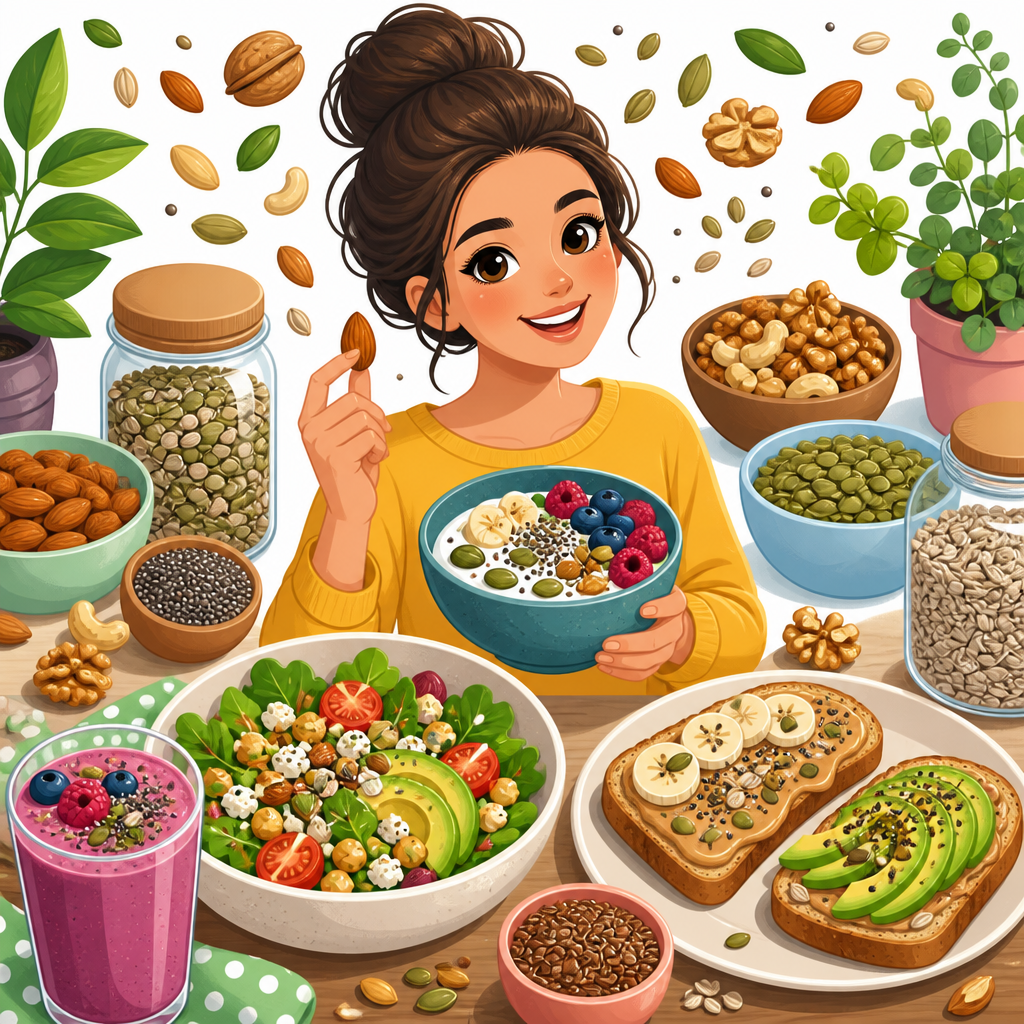
The easiest way to get more nutritional power of seeds and nuts is to think beyond snacking. Breakfast is the obvious entry point because oats, yogurt, smoothies, and whole-grain toast all pair well with them. Ground flaxseed works better than whole flax because grinding improves access to omega-3 fats and lignans. Chia can create a pudding texture in milk or fortified soy beverage overnight, which is especially helpful for make-ahead breakfasts. Nut butters can be spread thinly on toast, whisked into oatmeal, or blended into smoothies for creaminess without dairy.
At lunch and dinner, seeds and nuts are often most valuable as toppings, crusts, or sauces. Pumpkin seeds add crunch to grain bowls and soups. Slivered almonds fit naturally into vegetable dishes, especially green beans, broccoli, and roasted carrots. Tahini can become a dressing with lemon, garlic, and water. Peanut sauce works with stir-fries, noodles, and baked tofu. Walnut “crumbles” pulsed with herbs can replace some cheese or breadcrumbs. Even baking offers practical opportunities: muffins, energy bites, and whole-grain crackers can carry flax, sesame, or chopped nuts in portions that feel normal rather than medicinal.
| Food | Primary strength | Best everyday use | Useful note |
|---|---|---|---|
| Almonds | Vitamin E, magnesium | Snacks, yogurt, grain bowls | Works well whole, sliced, or as butter |
| Walnuts | Plant omega-3 fats | Oatmeal, salads, baking | Slight bitterness balances sweet dishes |
| Chia seeds | Fiber, omega-3 fats | Puddings, smoothies, yogurt | Absorbs liquid and thickens rapidly |
| Ground flaxseed | Fiber, lignans | Oatmeal, muffins, cereals | Use ground form for better absorption |
| Pumpkin seeds | Magnesium, zinc, iron | Soups, salads, trail mix | Good savory option for crunch |
| Tahini | Calcium, copper, sesame lignans | Dressings, sauces, dips | Easy way to use seeds daily |
Buying, storing, and preparing them for maximum value
Quality matters because the healthy fats in nuts and seeds can oxidize over time, especially when products are old, ground, or exposed to heat and light. Buy from stores with steady turnover, check expiration dates, and notice smell and taste. Rancid nuts usually have a sharp, paint-like, or bitter flavor. Whole nuts generally keep longer than chopped nuts, and whole seeds usually keep longer than ground meals. Once opened, store them in airtight containers away from warmth; refrigeration extends freshness, and freezing is ideal for bulk purchases. This is especially important for walnuts, flax, hemp, and other foods with more delicate polyunsaturated fats.
Preparation affects both texture and nutrient access. Grinding flax is essential because whole flax often passes through the digestive system largely intact. Soaking is optional for most people; it can soften chia or cashews for recipes, but it is not required to make nuts “digestible” in ordinary mixed diets. Light toasting can improve flavor and encourage regular use, which is more important than preserving every last milligram of a heat-sensitive compound. Nut butters should ideally list only nuts or seeds and perhaps salt. Hydrogenated oils and heavy sweeteners are signs of a product that functions more like a dessert spread than a staple food.
Special considerations, limitations, and smart substitutions
Although the nutritional power of seeds and nuts is substantial, they are not perfect for every person in every form. Allergies can be severe, and cross-contact matters, so anyone with a diagnosed allergy needs individualized guidance and careful label reading. Seed choices such as pumpkin, sunflower, sesame, or hemp may be useful alternatives for some people who cannot eat tree nuts, though sesame is also a common allergen. Texture can also be a barrier for young children and older adults. For children under five, whole nuts can present a choking risk, so smooth nut and seed butters spread thinly, finely ground nuts, or powders are safer options.
Portion size deserves honesty. Because these foods are calorie-dense, mindless eating from large bags can exceed needs quickly. The answer is not avoidance; it is structure. Pre-portioned servings, using them as ingredients instead of constant grazing, and replacing less nutritious foods rather than simply adding extra calories are reliable approaches. Cost can also be a concern. Peanuts, sunflower seeds, and bulk pumpkin seeds often deliver excellent value. Finally, people with kidney disease, digestive disorders, or medication interactions may need professional advice about oxalates, phosphorus, fiber load, or vitamin K from broader dietary patterns. For most healthy adults, however, the evidence supports regular, moderate intake as a durable way to improve diet quality.
Incorporating more nutritional power of seeds and nuts into your diet is one of the simplest high-impact changes you can make because it improves nutrient density, meal satisfaction, and long-term consistency at the same time. The core principles are straightforward: choose a variety, aim for moderate daily portions, use them to replace less nutritious snacks or toppings, and match the form to the meal. Almonds, walnuts, pistachios, flax, chia, pumpkin seeds, sesame, hemp, peanuts, and their butters all bring distinct strengths, so rotation is smarter than fixation on one “best” choice. Ground flax for breakfast, tahini in a dressing, pumpkin seeds on soup, and a small container of mixed nuts for travel are realistic habits, not aspirational ones. Storage and preparation matter because fresh products taste better and are used more often. Limitations also matter; allergies, choking risk, digestive tolerance, and calorie awareness should shape your choices without overshadowing the broader benefits. As a hub within superfoods and functional foods, this topic opens the door to more specific questions about heart health, plant protein, blood sugar support, sports fueling, and anti-inflammatory eating. Start with one daily serving attached to a meal you already eat, keep two or three options on hand, and build from there. Small, repeatable changes are what make the nutritional power of seeds and nuts truly work in everyday life.
Frequently Asked Questions
1. What are the easiest ways to add more seeds and nuts to my daily meals without changing my whole diet?
The simplest approach is to build on foods you already eat rather than trying to follow a completely new plan. Seeds and nuts are easy to integrate because they work in breakfast, snacks, lunches, dinners, and even desserts. For example, you can stir ground flaxseed or chia seeds into oatmeal, yogurt, or smoothies; sprinkle pumpkin seeds or chopped walnuts on salads and grain bowls; use almond or peanut butter on toast, fruit, or oatmeal; and keep a portion of pistachios, cashews, or mixed nuts on hand for an afternoon snack. Even small additions matter. A tablespoon or two of seeds or a modest handful of nuts can add fiber, plant protein, healthy unsaturated fats, minerals, and beneficial phytochemicals that improve the overall nutritional quality of a meal.
Another practical strategy is to think in terms of “nutrition upgrades.” Add hemp seeds to soup after serving, swap croutons for sunflower seeds on a salad, use tahini in dressings, or blend cashews into sauces for creaminess. These are low-effort changes that can improve satiety and make meals more satisfying. The key is consistency, not perfection. If you routinely add one or two seed- or nut-based ingredients to foods you already enjoy, you can increase nutrient density in a way that feels realistic and sustainable over time.
2. Which seeds and nuts offer the most nutritional benefits, and do I need to eat a wide variety?
Different seeds and nuts bring different strengths, so variety is helpful, but you do not need to eat every type to benefit. Walnuts are especially known for their alpha-linolenic acid, a plant form of omega-3 fat. Almonds provide vitamin E, magnesium, and fiber. Pistachios offer protein, potassium, and carotenoid antioxidants. Brazil nuts are notable for selenium, although they should be eaten in smaller amounts because selenium is very concentrated. Pumpkin seeds contain magnesium, zinc, and iron, while chia and flaxseeds are particularly valuable for fiber and plant omega-3s. Sesame seeds contribute calcium, copper, and lignans, and hemp seeds provide protein along with a balanced mix of fats.
The best strategy is to rotate based on your needs, preferences, and meals. If heart health is a focus, walnuts, almonds, pistachios, flax, and chia are especially useful. If you want more fiber and digestive support, flax, chia, and many whole nuts can help. If you need easy protein support in a plant-forward diet, hemp seeds, peanuts, pistachios, and almonds are strong options. Variety helps broaden your intake of nutrients and plant compounds, but repetition is fine if it helps you stay consistent. A few staple choices used regularly are often more effective than buying many products that go unused.
3. How much should I eat each day, and can seeds and nuts fit into a weight-conscious diet?
Yes, seeds and nuts can absolutely fit into a weight-conscious eating pattern. They are calorie-dense, but that does not make them unhealthy or inherently fattening. In fact, they often support appetite control because they contain a useful combination of healthy fats, fiber, and protein. Many people find that including a sensible portion of nuts or seeds reduces cravings and helps them feel fuller between meals, which can make the rest of the day easier to manage. A practical target is about one ounce of nuts per day, which is roughly a small handful, or one to two tablespoons of seeds. These amounts are large enough to contribute meaningful nutrition without being difficult to fit into a balanced diet.
Portion awareness matters most when nuts and seeds are eaten mindlessly straight from large containers or when they are heavily coated with sugar, chocolate, or excess salt. Pre-portioning snacks, using measured spoonfuls for seeds, and adding them intentionally to meals can help you enjoy the benefits without overdoing it. Also remember that seeds and nuts often improve meal quality enough to displace less filling processed foods. When used as part of balanced meals and snacks, they can be a smart tool for metabolic balance, blood sugar steadiness, and long-term dietary satisfaction rather than a dietary obstacle.
4. Are raw, roasted, soaked, or ground seeds and nuts better nutritionally?
No single form is always “best”; the right choice depends on the food and how you plan to use it. Raw and dry-roasted nuts are both nutritious options. Dry roasting can enhance flavor and make nuts easier to enjoy regularly, which is important for consistency. The main thing to watch is added oils, heavy sodium, or sugar coatings in flavored products. For seeds, preparation can matter more. Flaxseeds are best consumed ground because whole flax often passes through the digestive system without being fully broken down, which limits absorption of some of its nutrients. Chia seeds can be eaten whole, soaked, or stirred into foods, and they absorb liquid well, making them useful in puddings, yogurt, and smoothies.
Soaking can improve texture and digestibility for some people, especially with certain nuts, but it is not required for most healthy adults. Nut and seed butters can also be excellent choices as long as the ingredient list is simple and portions are reasonable. Unsweetened peanut, almond, cashew, or tahini spreads can make nutrition more convenient and versatile. Overall, the healthiest form is the one you will use regularly in minimally processed ways. If roasted pistachios help you choose a satisfying snack over ultra-processed alternatives, or if ground flax in your breakfast makes it easy to boost fiber intake daily, that is a meaningful nutritional win.
5. What should I know about allergies, digestion, and storage when eating more seeds and nuts?
If you have a known tree nut, peanut, or seed allergy, you should follow your healthcare provider’s guidance carefully and avoid trigger foods completely. For everyone else, digestive tolerance is the main practical consideration. Because seeds and nuts are rich in fiber and fats, increasing intake too quickly can cause bloating or discomfort in some people, especially if their usual diet is low in fiber. It is often best to start small, such as a teaspoon of ground flaxseed or a small handful of nuts, and then gradually increase while also drinking enough fluids. People with certain digestive conditions may tolerate smooth nut butters, ground seeds, or more moderate portions better than large servings of whole nuts or seeds.
Proper storage is also important because the healthy fats in nuts and seeds can become rancid over time, especially when exposed to heat, air, and light. Store them in airtight containers, ideally in a cool pantry for short-term use or in the refrigerator or freezer for longer storage. Ground flaxseed, in particular, should be kept cold after opening to preserve freshness. Buying in amounts you can use consistently is often wiser than buying very large bulk quantities that sit too long. With good storage, gradual intake, and attention to individual tolerance, seeds and nuts can be one of the most practical and nutrient-dense additions to a healthy eating pattern.