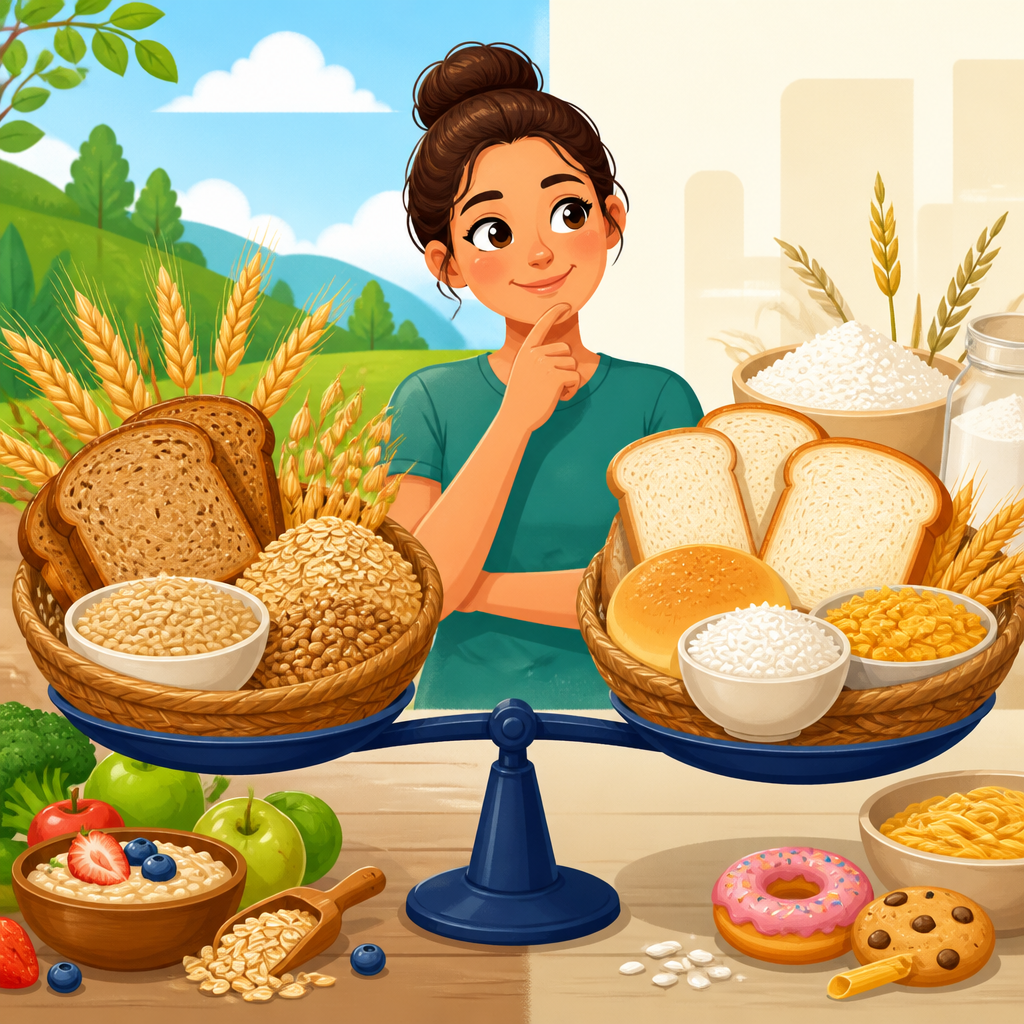
Whole grains versus refined grains is one of the most important nutrition choices in a balanced diet because the way a grain is processed changes its fiber, vitamin, mineral, and metabolic effects. A grain kernel has three edible parts: the bran, which provides fiber, B vitamins, and antioxidants; the germ, which contains healthy fats, vitamin E, and phytonutrients; and the endosperm, which is mostly starch with some protein. Whole grains keep all three parts in their original proportions. Refined grains remove the bran and germ during milling, creating a softer texture and longer shelf life but stripping away much of the nutritional value. That single processing step is why brown rice differs so much from white rice, and why whole wheat bread differs from white bread.
This distinction matters far beyond labels on cereal boxes. In practice, the choice between whole grains and refined grains influences satiety, blood sugar control, digestive health, cardiovascular risk, and overall diet quality. Dietary guidance from organizations such as the USDA and the American Heart Association consistently recommends making at least half of grains whole. The reason is clear: whole grains deliver intact or reconstituted grain components that work together, while refined grains often contribute calories without the same nutritional return. During nutrition counseling and meal planning work, I have repeatedly seen that people who swap only a few refined staples for whole grain versions often improve fullness, snack less between meals, and build more consistent eating patterns without needing extreme restriction.
Understanding key terms helps. “Whole grain” means the grain contains the bran, germ, and endosperm in the same relative proportions as the intact kernel, whether eaten intact like oats or processed into flour. “Refined grain” means one or more of those parts has been removed. “Enriched grain” means some nutrients, typically iron and certain B vitamins such as thiamin, riboflavin, niacin, and folic acid, are added back after refining. Enrichment does not restore fiber, the full range of minerals, or the many phytochemicals naturally present in whole grains. That is why enriched white bread is not nutritionally equivalent to whole grain bread, even when the calorie count appears similar.
For a subtopic within superfoods and functional foods, grains deserve hub-level attention because they are eaten daily and affect the foundation of the diet. Functional foods are not only exotic powders or niche ingredients; they also include ordinary staples that deliver measurable health benefits when chosen wisely. Whole grains fit that definition well. They contain fermentable fibers, resistant starch, phenolic compounds, lignans, and micronutrients that support digestive and metabolic health. Refined grains are not automatically unhealthy in every context, but relying on them as the main grain source usually displaces more nutrient-dense options. Knowing when the difference matters, how to read labels, and which foods to choose gives people a practical way to improve nutrition at every meal.
What counts as whole grains and refined grains
Whole grains include wheat, oats, barley, brown rice, wild rice, corn, popcorn, quinoa, farro, bulgur, millet, rye, sorghum, teff, and products made from whole grain flours. Some are technically pseudocereals, but nutritionally they function similarly in meal planning. Refined grains include white flour, white rice, degermed cornmeal, many crackers, many pastries, and most traditional white pasta unless labeled whole wheat or whole grain. The easiest rule is ingredient order: if “whole wheat,” “whole oats,” “brown rice,” or another whole grain appears first, the product is likely a better choice than one made primarily from enriched flour.
Food packaging can still confuse shoppers. “Multigrain” simply means more than one grain is present; it does not guarantee any of them are whole. “Made with whole grain” may describe a product that contains only a small amount. “Wheat bread” can be mostly refined flour unless the label says “100% whole wheat.” In audits of grocery products, I often compare breads side by side and see major differences hidden behind similar branding. One loaf may provide 3 to 5 grams of fiber per slice pair, while another offers only 1 gram despite similar calories. Reading the ingredient list and fiber line is more reliable than front-of-package claims.
Another important nuance is grain structure. Intact grains such as steel-cut oats, wheat berries, and brown rice digest more slowly than finely milled whole grain flours. Both can be part of a healthy diet, but less processed forms often provide steadier blood sugar responses and greater fullness. Cooking method matters too. Al dente whole wheat pasta behaves differently from soft white pasta, and overnight oats differ from instant oat packets with added sugar. In other words, grain quality is shaped by both refinement and formulation. A whole grain muffin loaded with sugar and saturated fat is still not equivalent to a bowl of plain oatmeal topped with fruit and nuts.
Nutritional differences that change health outcomes
The biggest nutritional gap between whole grains and refined grains is fiber. Fiber supports satiety, bowel regularity, cholesterol reduction, and a healthier gut microbiome. Refining removes much of it. Whole grains also provide magnesium, selenium, zinc, copper, manganese, B vitamins, and plant compounds with antioxidant activity. These nutrients contribute to energy metabolism, nerve function, immune support, and vascular health. Refined grains may be enriched with selected nutrients, but they rarely match the original nutrient matrix. The matrix matters because nutrients in foods work together, influencing digestion, absorption, and metabolic response.
Whole grains also tend to have a lower glycemic impact than refined grains, especially when eaten intact and paired with protein or fat. That means they generally raise blood glucose more gradually. For people managing insulin resistance, prediabetes, or type 2 diabetes risk, this difference is significant. A breakfast of plain rolled oats with Greek yogurt and berries usually produces better satiety and glycemic stability than sweetened corn flakes with low-fat milk. Both meals contain grains, but their effect on hunger and blood sugar can be very different within two hours.
| Grain food | Typical processing level | Main nutritional difference | Practical effect |
|---|---|---|---|
| Steel-cut oats | Minimally processed whole grain | Higher fiber, intact structure | Slower digestion and better fullness |
| Whole wheat bread | Milled whole grain | More fiber and micronutrients than white bread | Supports satiety and better overall diet quality |
| Brown rice | Whole grain with bran and germ intact | More magnesium, fiber, and phytonutrients | More sustained energy than white rice for many people |
| White bread | Refined and often enriched | Lower fiber, fewer naturally occurring compounds | Less filling and faster glucose rise |
| White rice | Refined grain | Bran and germ removed | Softer texture but reduced nutrient density |
Research supports these differences. Large prospective cohort studies have linked higher whole grain intake with lower risk of cardiovascular disease, type 2 diabetes, and all-cause mortality. The protective effect is not magical or isolated to one nutrient; it reflects the cumulative impact of fiber, mineral content, food structure, and dietary substitution. When a person eats whole grain bread instead of white bread, they are not only adding fiber. They are also often reducing the tendency to pair meals with highly processed spreads, oversized portions, and low-satiety snacks later in the day. Nutrition patterns work through these real behavioral mechanisms as much as through lab values.
How whole grains support a balanced diet in daily meals
A balanced diet is built on foods that provide energy, nutrients, satisfaction, and flexibility. Whole grains contribute to all four. They are reliable carbohydrate sources, and carbohydrates are not optional for most active people; they are the preferred fuel for the brain and for moderate to high intensity exercise. The issue is not whether to eat grains, but which grains and in what context. Whole grains help balance meals by supplying slow-release carbohydrates alongside fiber and small amounts of protein. This combination makes meals more stable and more satisfying.
At breakfast, whole grains can anchor appetite for the morning. Oatmeal, muesli, unsweetened whole grain cereal, or whole grain toast with eggs and fruit creates a stronger nutritional base than pastries or sweet refined cereals. At lunch, grain bowls built around quinoa, farro, or brown rice pair well with beans, vegetables, and lean protein. At dinner, barley in soup, whole wheat pasta with olive oil and vegetables, or corn tortillas with black beans can raise fiber intake without making meals feel restrictive. Snacks can also include whole grains, such as plain popcorn, rye crispbread, or homemade oat energy bites with minimal added sugar.
For athletes and highly active people, refined grains still have a place. Before intense training or competition, lower-fiber options like white rice or plain pasta can be easier to digest. During gastrointestinal illness, recovery from certain surgeries, or flare-ups of digestive conditions, refined grains may also be better tolerated temporarily. Balanced eating is not moralized eating. The core principle is that whole grains should be the routine default, while refined grains can be used strategically when digestion, performance, or comfort requires it. That nuanced approach is more realistic and more evidence-based than absolute rules.
Whole grains, gut health, heart health, and weight management
Whole grains support gut health because their fibers and resistant starch feed beneficial gut bacteria. Fermentation of these compounds produces short-chain fatty acids such as butyrate, which help maintain the intestinal lining and influence immune and metabolic function. Different grains contribute different fibers: oats and barley are known for beta-glucan, a soluble fiber with established cholesterol-lowering benefits; wheat and rye provide arabinoxylans; cooled grains may contribute resistant starch. In nutrition practice, increasing whole grains gradually while also raising fluid intake is one of the most effective ways to improve bowel regularity without relying on supplements.
Heart health is another major reason whole grains matter. Diets higher in whole grains are associated with lower LDL cholesterol, improved blood pressure patterns, and reduced cardiovascular risk. Beta-glucan from oats and barley has particularly strong evidence. Many clinicians recommend about 3 grams of oat beta-glucan daily to support cholesterol management, which can come from several servings of oat-based foods. Whole grains also crowd out more processed carbohydrates that tend to be paired with sodium, added sugars, or solid fats. In real meals, this substitution effect is powerful. A bowl of oatmeal with walnuts is not just adding soluble fiber; it is replacing a breakfast sandwich made from refined bread and processed meat.
Weight management benefits usually come from satiety, not from dramatic calorie differences. Whole grain foods often require more chewing, digest more slowly, and produce a steadier appetite curve. People frequently notice they stay full longer after brown rice, oats, or whole grain bread than after refined versions. That does not mean every whole grain product is low calorie, but it does mean the calories are often packaged with more nutritional value and better appetite control. Over time, that can help reduce grazing and oversized portions, which matters more than chasing small calorie differences between similar foods.
How to choose better grain products and make practical swaps
The most effective way to improve grain quality is to start with the foods eaten most often. If bread is daily, switch to 100% whole wheat or another true whole grain loaf with at least 2 to 3 grams of fiber per slice. If rice is standard at dinner, mix white and brown rice first, then transition further as taste adjusts. If breakfast usually includes cereal, choose options with whole grain listed first, limited added sugar, and meaningful fiber. Pasta lovers can try whole wheat pasta, lentil pasta, or a half-and-half mix while adjusting to texture. Small swaps work because they are repeatable.
Cooking technique improves acceptance. Toasting whole grain bread deepens flavor. Cooking farro or barley in broth makes them more savory. Letting brown rice steam after cooking improves tenderness. Using herbs, olive oil, citrus, and roasted vegetables can make whole grain dishes feel substantial rather than worthy. Families often resist whole grains when they are introduced in the blandest possible form. The better strategy is to build them into familiar meals: chili over brown rice, turkey sandwiches on whole grain bread, homemade pizza with part-whole wheat dough, or oatmeal blended into pancake batter.
Cost and convenience matter too. Store-brand oats, brown rice, popcorn kernels, and whole wheat pasta are usually affordable. Frozen cooked grains and microwavable brown rice packets reduce prep time. For people with gluten intolerance or celiac disease, naturally gluten-free whole grains such as certified gluten-free oats, brown rice, quinoa, millet, buckwheat, and corn can fill the same nutritional role. The best balanced diet is the one that fits budget, culture, digestion, and cooking skill. Make one grain upgrade this week, repeat it consistently, and build from there.
Whole grains versus refined grains is not a niche debate; it is a daily decision that shapes nutrient intake, hunger, metabolic health, and long-term disease risk. Whole grains preserve the bran, germ, and endosperm, giving you fiber, vitamins, minerals, and protective plant compounds that refined grains largely lose during processing. Refined grains can still serve a purpose in specific situations, but they should not dominate the plate when the goal is a balanced diet. The strongest evidence and the most practical meal-planning experience point in the same direction: choose whole grains as your routine foundation.
If you remember only a few points, keep these. Read ingredient lists instead of trusting front-label buzzwords. Aim to make at least half of your grain choices whole, and more if it suits your preferences and digestion. Use intact or minimally processed grains often, because structure affects fullness and blood sugar response. Treat refined grains as occasional tools for convenience, sport, or digestive tolerance, not as your default staple. These habits improve diet quality without forcing extreme rules, and they work across breakfasts, lunches, dinners, and snacks.
Start with one simple change today: replace your most common refined grain with a whole grain alternative you will actually eat. That might be oats instead of sugary cereal, brown rice instead of white rice, or 100% whole wheat bread instead of white bread. Once that swap feels normal, add another. Over time, these ordinary choices create a more balanced diet with better staying power, better nutrition, and better health outcomes.
Frequently Asked Questions
1. What is the difference between whole grains and refined grains?
Whole grains contain all three edible parts of the grain kernel in their original proportions: the bran, the germ, and the endosperm. The bran is the fiber-rich outer layer that also supplies B vitamins, minerals, and antioxidants. The germ is the nutrient-dense core that contains healthy fats, vitamin E, and a variety of phytonutrients. The endosperm is the starchy middle portion that provides carbohydrates and some protein. When a grain is labeled “whole,” it means these three parts remain intact, preserving the grain’s natural nutritional package.
Refined grains, by contrast, are processed to remove the bran and germ, leaving mostly the endosperm behind. This improves texture and shelf life, but it also strips away much of the fiber, vitamins, minerals, and beneficial plant compounds. Even when refined grains are “enriched,” only a limited number of nutrients are added back, and the fiber and many naturally occurring compounds are not fully restored. That is why whole grains are generally considered the more nutritious choice and play a more valuable role in a balanced diet.
2. Why are whole grains considered essential for a balanced diet?
Whole grains are essential because they deliver far more than just carbohydrates. They provide complex carbs for steady energy, fiber for digestive health, and a broad range of vitamins and minerals that support metabolism, heart health, and overall wellness. Nutrients commonly found in whole grains include B vitamins, iron, magnesium, selenium, and antioxidants, all of which contribute to important body functions such as energy production, immune support, and cell protection.
They are also associated with better long-term health outcomes. Diets rich in whole grains have been linked to a lower risk of heart disease, type 2 diabetes, and certain digestive problems. One key reason is their fiber content, which helps regulate digestion, supports healthy cholesterol levels, and promotes fullness after meals. Because whole grains are less processed, they tend to have a gentler effect on blood sugar than refined grains, making them especially useful in building meals that are satisfying, balanced, and metabolically supportive.
3. How do whole grains affect blood sugar and energy levels compared to refined grains?
Whole grains usually provide a steadier release of energy because their fiber and intact structure slow down digestion. This means glucose enters the bloodstream more gradually, helping to reduce sharp spikes and crashes in blood sugar. For many people, that translates into more stable energy, better appetite control, and fewer cravings shortly after eating. Foods such as oats, brown rice, quinoa, whole wheat, and barley often leave people feeling full longer than refined grain products made from white flour or polished rice.
Refined grains are typically digested more quickly because much of their fiber has been removed. As a result, they can cause blood sugar to rise more rapidly, followed by a quicker drop that may leave a person hungry or fatigued sooner. This does not mean refined grains must be eliminated entirely, but it does mean that relying on them too often can make it harder to maintain even energy and balanced meals. Choosing whole grains more often is a practical way to support both metabolic health and day-to-day energy stability.
4. Are enriched refined grains just as healthy as whole grains?
Enriched refined grains are not nutritionally equivalent to whole grains, even though they may contain some added vitamins and minerals. Enrichment usually restores a few nutrients lost during processing, such as certain B vitamins and iron. However, it does not replace the full range of naturally occurring nutrients found in the original grain kernel. Most importantly, enrichment does not bring back the bran’s fiber or the germ’s healthy fats, vitamin E, and many phytonutrients.
That distinction matters because nutrition is not only about isolated vitamins. Whole grains offer a complete food matrix in which fiber, minerals, antioxidants, and plant compounds work together. This combination supports digestion, satiety, cardiovascular health, and blood sugar control in ways that enriched refined grains cannot fully match. Enriched grains can still have a place in the diet, especially for convenience or cultural food preferences, but they should not be viewed as a true substitute for the broad, naturally occurring benefits of whole grains.
5. What are some easy ways to include more whole grains in everyday meals?
Adding more whole grains does not require a complete diet overhaul. A simple strategy is to swap refined staples for whole-grain versions whenever possible. Choose oatmeal instead of sugary refined cereal, brown rice or quinoa instead of white rice, whole wheat bread instead of white bread, and whole grain pasta in place of regular pasta. You can also experiment with nutrient-rich options like barley, bulgur, farro, millet, and popcorn, which is a whole grain when prepared with minimal added butter, salt, or sugar.
Reading labels is important because packaging can be misleading. Look for terms such as “100% whole grain” or “100% whole wheat” rather than products described only as “multigrain,” “wheat,” or “made with whole grains.” Starting gradually can also make the transition easier. Mixing brown and white rice together, blending oats into smoothies, or choosing whole grain crackers for snacks are realistic first steps. Over time, these small changes can increase fiber intake, improve meal quality, and make whole grains a consistent part of a balanced, sustainable eating pattern.