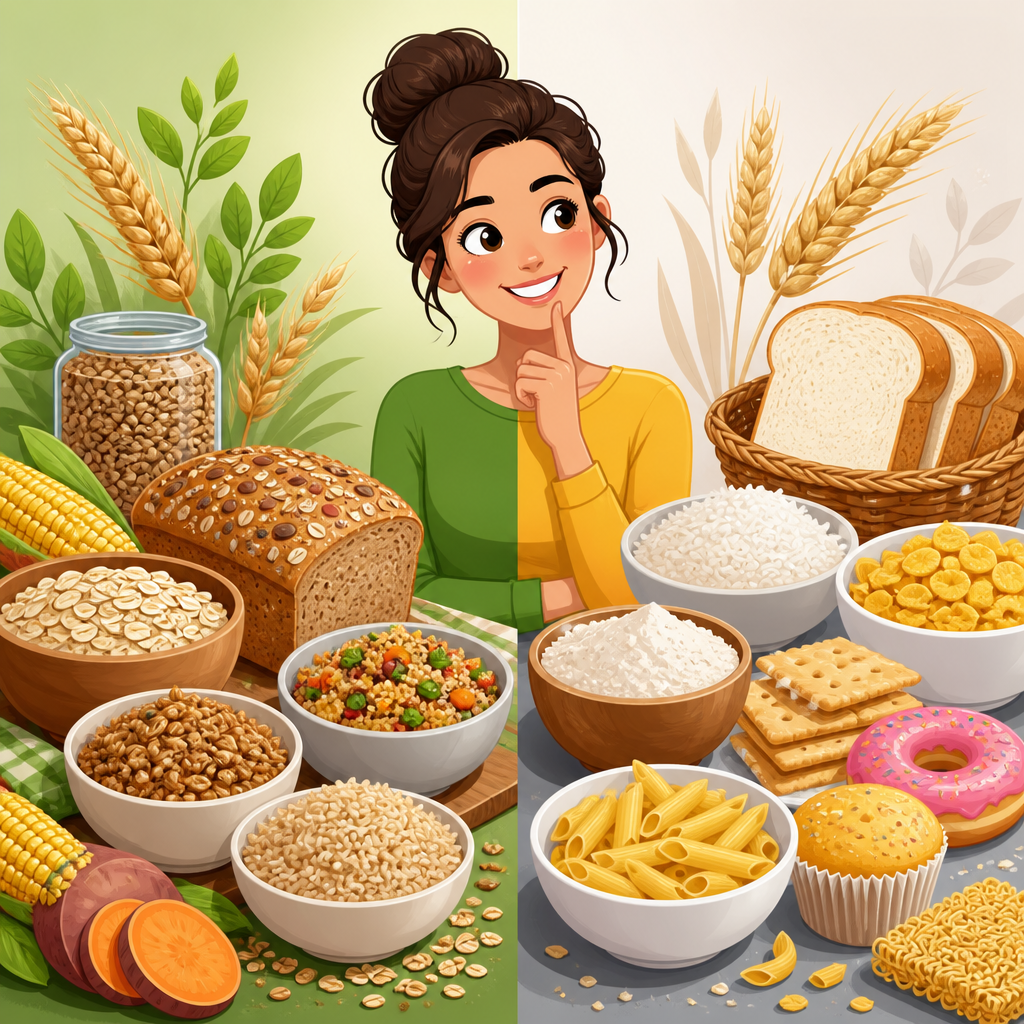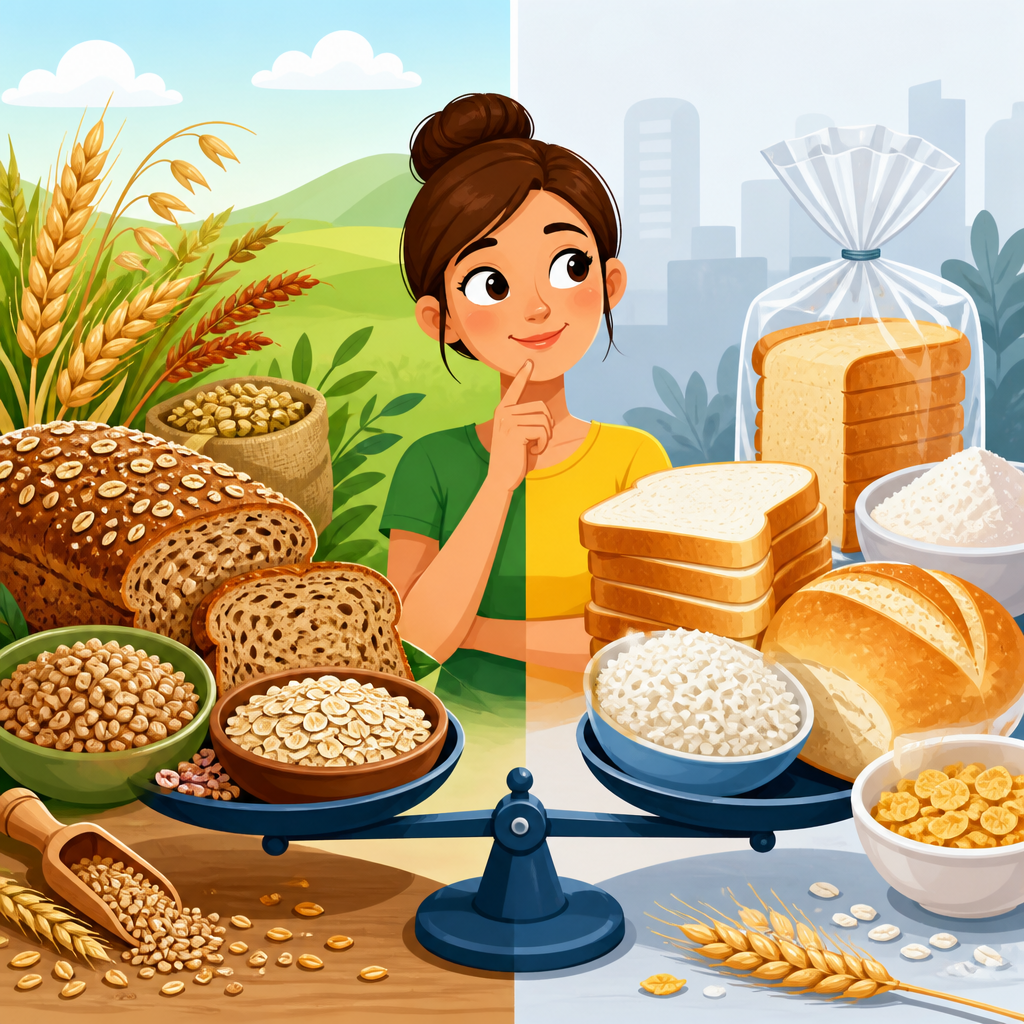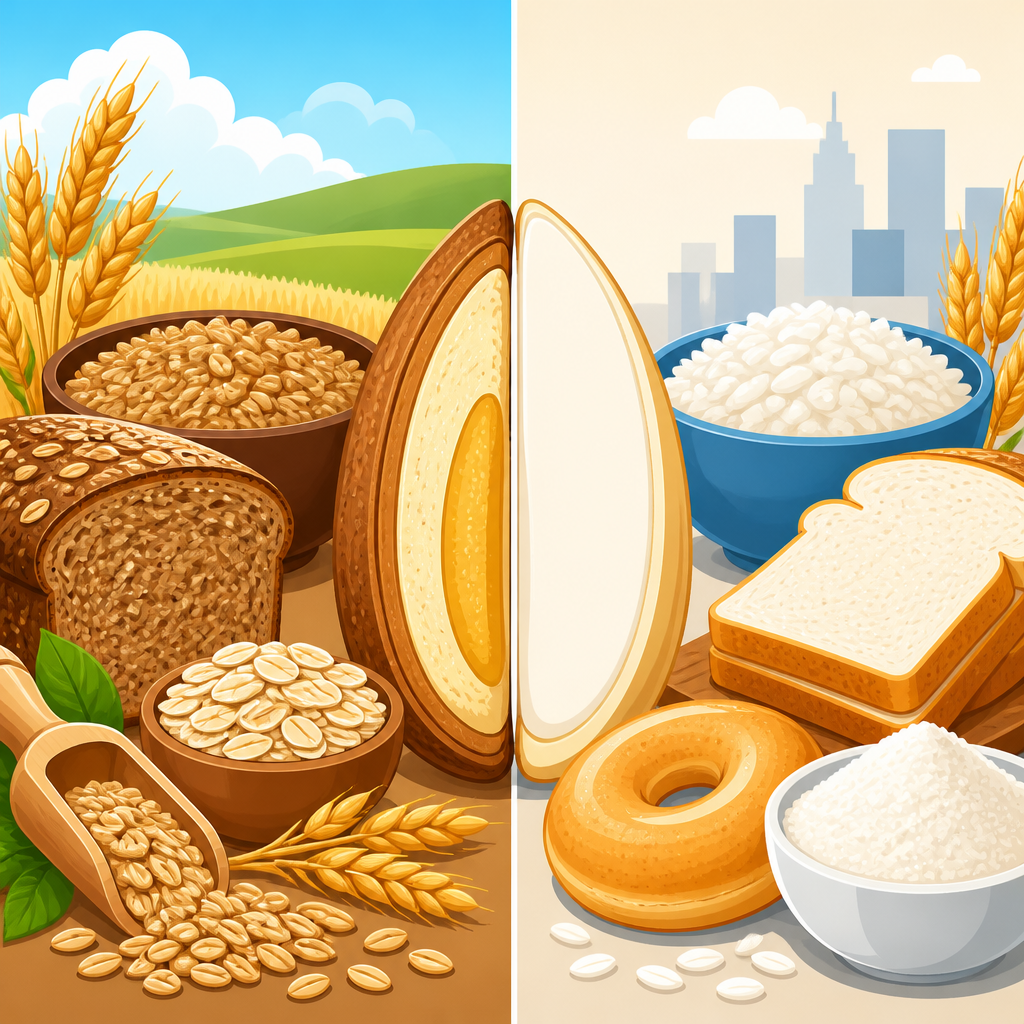
Whole grains and refined grains look similar on a plate, but they differ in structure, nutrition, digestion, and long term health effects in ways that matter every day. A grain kernel has three main parts: the bran, which supplies fiber, B vitamins, minerals, and protective plant compounds; the germ, which contains healthy fats, vitamin E, antioxidants, and enzymes; and the endosperm, which is mostly starch with some protein. Whole grains keep all three parts in their original proportions. Refined grains are milled to remove the bran and germ, leaving mainly the starchy endosperm. That processing creates a softer texture and longer shelf life, but it also strips away much of the fiber and a meaningful share of the micronutrients naturally present in the grain.
Understanding whole grains versus refined grains matters because grains are a staple food for most populations and contribute a large share of daily calories. The choice between oatmeal and sugary instant cereal, brown rice and white rice, or whole wheat bread and white sandwich bread can shift blood sugar response, fullness, digestive health, and nutrient intake across months and years. Dietary guidance from the USDA Dietary Guidelines for Americans and recommendations from organizations such as the American Heart Association consistently encourage making at least half of grains whole. In practice, many people still fall short, often because labels are confusing, products are heavily marketed, and convenience foods blur the distinction.
In my work reviewing food labels, helping families plan meals, and auditing packaged food categories, I have seen the same pattern repeatedly: people assume color, seed toppings, or words like multigrain mean a product is whole grain when they often do not. A dark loaf may be colored with molasses. Crackers with visible seeds may still use refined flour as the first ingredient. Even cereals advertised as healthy can contain mostly refined starch with added sugar and a small amount of whole grain for marketing appeal. To make better choices, you need to know how grains are processed, how to read ingredient lists, and where refined grains can still fit without crowding out more nutritious options.
What counts as a whole grain and what counts as a refined grain?
A whole grain food contains the intact, ground, cracked, or flaked grain with the bran, germ, and endosperm preserved in the same relative proportions as the original kernel. Common examples include oats, brown rice, quinoa, barley, bulgur, millet, popcorn, whole wheat, rye, and corn when it remains whole, as in whole cornmeal. Refined grains include white flour, white rice, degermed cornmeal, many standard pastas, and many bakery products made from enriched wheat flour. Enrichment adds back selected nutrients, typically iron and several B vitamins such as thiamin, riboflavin, niacin, and folic acid, but enrichment does not restore the original fiber, vitamin E, healthy fats, or the full range of phytonutrients removed during milling.
The distinction is not moral; it is structural and nutritional. Whole grains generally provide more dietary fiber, magnesium, potassium, selenium, and phenolic compounds than refined grains. Those components influence satiety, stool regularity, cholesterol metabolism, and glycemic response. Refined grains are not automatically unhealthy, but they are usually less nutrient dense calorie for calorie unless they are eaten alongside fiber rich foods and as part of a balanced pattern. This is why the best question is not whether you must eliminate refined grains entirely, but whether whole grains are doing enough of the daily work in your diet.
How processing changes nutrition, texture, and shelf life
Milling is the key reason whole grains and refined grains behave differently in the body and in the kitchen. Removing bran reduces fiber and changes water absorption. Removing germ reduces natural oils, which improves shelf stability because fats can oxidize and turn rancid over time. The remaining endosperm produces finer flour with a lighter texture, making it useful for airy breads, tender pastries, and noodles with a uniform bite. Food manufacturers favor refined flour partly because it is predictable in large scale production. Consumers often prefer it because it is soft, familiar, and quick cooking.
That convenience has nutritional tradeoffs. Fiber slows gastric emptying and carbohydrate absorption, which can moderate post meal glucose spikes. Bran and germ also contribute flavor complexity, from the nuttiness of oats to the earthy character of farro and rye. Once removed, those layers cannot be fully recreated by adding isolated fiber or a vitamin premix. Stone grinding, steel cutting, rolling, pearling, and extrusion all affect texture and digestibility too. For example, steel cut oats usually digest more slowly than instant oats because particle size matters. Similarly, intact barley kernels tend to have a lower glycemic effect than finely milled barley flour in a processed snack.
| Food example | Whole grain version | Refined grain version | Main practical difference |
|---|---|---|---|
| Bread | 100% whole wheat bread | White bread | Whole wheat offers more fiber and minerals; white bread is softer and often digests faster |
| Rice | Brown rice | White rice | Brown rice keeps bran and germ; white rice cooks faster and stores longer |
| Breakfast cereal | Plain oats or shredded wheat | Sweetened corn or rice cereal | Whole grain options are usually more filling and less processed |
| Pasta | Whole wheat pasta | Traditional semolina pasta | Whole wheat pasta has more fiber; refined pasta often has a milder flavor and texture |
Health effects: blood sugar, heart health, digestion, and weight management
Research consistently links higher whole grain intake with better cardiometabolic health. Large prospective cohort studies have found that people who eat more whole grains tend to have lower risk of cardiovascular disease, type 2 diabetes, and all cause mortality. The mechanism is not one nutrient alone. Fiber, resistant starch, magnesium, antioxidants, and the food matrix work together. Viscous fibers can help reduce LDL cholesterol by interfering with bile acid reabsorption. Fermentable fibers support the gut microbiota, which produces short chain fatty acids such as butyrate that benefit colon health and metabolic signaling. Magnesium plays a role in insulin action, and whole grain structures often produce a slower glucose release than highly refined starches.
Refined grains, especially when paired with added sugars and low fiber diets, can contribute to rapid rises in blood glucose and a shorter feeling of fullness. That does not mean every refined grain food causes a harmful spike, because response depends on portion size, meal composition, cooking method, and individual metabolism. White rice eaten with beans, vegetables, tofu, and olive oil behaves differently from a large serving of sweetened puffed rice cereal eaten alone. Context matters. Still, when people replace a substantial share of refined grains with intact or minimally processed whole grains, I typically see more stable energy, easier appetite control, and better overall diet quality because those swaps often displace ultra processed snack foods.
Digestive benefits are often the first noticeable change. Whole grains increase stool bulk and can improve regularity, particularly when fluid intake is adequate. Popcorn, oats, barley, and wheat bran are common examples. Some people need to increase fiber gradually to reduce bloating. Others, such as those with celiac disease, must avoid wheat, barley, and rye entirely and focus on gluten free whole grains like certified gluten free oats, brown rice, sorghum, buckwheat, millet, quinoa, and teff. For irritable bowel syndrome, tolerance varies. A low FODMAP trial may temporarily limit certain grain products, but that is different from saying whole grains are broadly problematic.
How to identify real whole grain foods on labels
The fastest way to identify a true whole grain product is to read the ingredient list, not the front of the package. Look for terms such as whole wheat, whole oats, brown rice, whole rye, whole grain corn, or whole grain barley as the first ingredient. For bread, “100% whole wheat” is stronger evidence than “wheat bread,” which often uses refined flour. “Multigrain” simply means more than one grain is present; all of them may still be refined. “Made with whole grain” can be technically true even when the product is mostly refined flour. In cereals and snack bars, check both the ingredient list and the fiber and added sugar lines on the Nutrition Facts label.
There are also useful certification tools. The Whole Grains Council stamp can help, though it should complement, not replace, label reading. A product may contain whole grains and still be high in sodium, saturated fat, or added sugar. Granola is a classic example: it may include oats yet deliver dessert level calories in a small serving. Ingredient order matters because items are listed by weight. If enriched wheat flour comes first and whole wheat flour appears later, the food is primarily refined. For pasta, crackers, tortillas, and frozen convenience meals, this simple label habit quickly separates genuinely whole grain choices from halo products designed to appear healthier than they are.
Best whole grain choices for meals, snacks, and cooking
If your goal is to eat more whole grains, start with foods that fit your normal routine rather than chasing novelty. Oatmeal is one of the easiest wins because it is inexpensive, widely available, and backed by strong evidence for heart health, particularly due to beta glucan fiber. Brown rice, farro, bulgur, and barley work well in grain bowls, soups, and pilafs. Whole wheat pasta can replace standard pasta in dishes with robust sauces. Popcorn, when air popped or lightly seasoned, is a whole grain snack with impressive volume and relatively low calorie density. Corn tortillas made from whole corn masa can also be a practical staple, depending on the product.
For breakfast, plain rolled oats with fruit and nuts is stronger nutritionally than many boxed cereals. For lunch, a salad topped with quinoa or farro adds texture and staying power. For dinner, a mix of brown rice and lentils provides complementary nutrients and budget friendly protein. In baking, replacing part of refined flour with whole wheat pastry flour can improve nutrition without making muffins or pancakes overly dense. If taste is the barrier, transition gradually: use half brown and half white rice, or choose sprouted grain bread with a softer crumb. The most sustainable approach is the one your household will repeat, not the idealized pattern that never makes it through a busy week.
Where refined grains still fit, and how to make balanced decisions
Refined grains do have legitimate uses. They are often easier to digest during acute gastrointestinal illness, before endurance events when low fiber intake is helpful, or for people with very high calorie needs who struggle with fullness. In some cultural dishes, texture depends on refined grains, and food traditions matter. Enriched refined grains have also played a public health role by reducing deficiency risk through folic acid fortification, which helps prevent neural tube defects. The problem is not the existence of refined grains; it is their dominance in many dietary patterns, especially when they arrive in pastries, sweet cereals, fast food buns, crackers, and desserts that add sodium, sugar, and saturated fat on top of refined starch.
A practical benchmark is to make at least half of your grain intake whole, then move higher if it suits your digestion, preferences, and overall diet. Pair refined grains intelligently when you do eat them. White rice with salmon and vegetables is a better meal than white rice with a sugary sauce and no fiber source. Sourdough made with refined flour may be easier for some people to tolerate, but it still is not nutritionally identical to whole grain bread. The best diet pattern is built on proportion, not perfection. Audit your staples, upgrade the grains you eat most often, and let occasional refined favorites remain optional rather than automatic.
Whole grains versus refined grains is not a trivial nutrition debate; it is a daily choice about food quality, energy, and long term health. Whole grains retain the bran, germ, and endosperm, which means they generally deliver more fiber, vitamins, minerals, healthy fats, and protective compounds than refined grains. That difference affects satiety, blood sugar response, digestive function, and cardiovascular risk. Refined grains are softer, faster cooking, and sometimes useful, but they should not crowd out more nutrient dense staples. The evidence and the food label both point in the same direction: the closer the grain is to its original structure, the more nutritional value it usually brings.
The simplest way to improve your diet is to upgrade familiar foods one by one. Choose oats instead of sugary refined cereal, 100% whole wheat bread instead of white bread, brown rice or barley more often than white rice, and popcorn instead of refined snack crackers. Read ingredient lists carefully, ignore misleading package claims, and remember that “multigrain” is not the same as whole grain. If you are building a healthier pantry under the broader superfoods and functional foods theme, this is one of the highest impact places to start. Pick one grain swap this week, make it routine, and build from there.
Frequently Asked Questions
What is the difference between whole grains and refined grains?
The main difference comes down to what parts of the grain kernel are still present after processing. A whole grain contains all three original parts of the kernel in their natural proportions: the bran, the germ, and the endosperm. The bran is the outer layer and provides fiber, B vitamins, minerals, and many of the plant compounds linked to health protection. The germ is the nutrient-rich core that contains healthy fats, vitamin E, antioxidants, and other beneficial compounds. The endosperm is the starchy middle layer that supplies carbohydrates and some protein.
Refined grains, by contrast, have been milled to remove the bran and germ, leaving mostly the endosperm behind. This process gives grains a finer texture and can improve shelf life, but it also strips away much of the fiber and many naturally occurring nutrients. While some refined grains are later “enriched” with a few vitamins and minerals, enrichment does not fully restore everything that was lost during refining, especially fiber and many protective plant compounds. In practical terms, whole grains usually offer more nutritional value per serving and tend to support steadier digestion and blood sugar response than refined grains.
Why are whole grains generally considered healthier than refined grains?
Whole grains are generally considered healthier because they deliver a broader package of nutrients and beneficial compounds that work together in the body. Since they retain the bran and germ, whole grains provide more dietary fiber, which supports digestive health, helps promote fullness, and can play a role in managing cholesterol and blood sugar levels. They also supply important vitamins and minerals such as magnesium, iron, selenium, and several B vitamins, along with antioxidants and phytochemicals that may help reduce inflammation and protect cells from damage.
Another important advantage is how whole grains are typically digested. Because the fiber-rich bran remains intact, digestion is usually slower than it is with refined grains. That slower digestion can help prevent the sharper spikes and drops in blood sugar that are more common with highly refined carbohydrate foods. Over time, diets that regularly include whole grains have been associated with better heart health, improved weight management, and a lower risk of certain chronic conditions. That does not mean every refined grain food is automatically unhealthy or that every whole grain product is perfect, but overall, whole grains tend to be the more nutrient-dense and health-supportive choice.
How do whole grains and refined grains affect digestion and blood sugar differently?
Whole grains and refined grains can have noticeably different effects on digestion because of their fiber content and physical structure. Whole grains still contain the bran, which slows the breakdown of starch and helps move food more steadily through the digestive system. This often leads to a more gradual release of glucose into the bloodstream. As a result, whole grain foods may help support more stable energy levels and reduce the sudden hunger that can follow a rapid blood sugar spike.
Refined grains digest more quickly because the fiber-rich bran and nutrient-dense germ have been removed. With less fiber and a softer structure, the starch in refined grains is often absorbed faster. That can lead to a quicker rise in blood sugar and insulin, followed by a faster drop that may leave some people feeling hungry again sooner. Over time, relying heavily on refined grains instead of whole grains may make it more difficult to maintain balanced energy and healthy blood sugar control. The exact effect will still depend on the food itself, portion size, and what it is eaten with, but in general, whole grains offer a more favorable digestion and blood sugar profile.
How can I tell if a food is truly made with whole grains?
The best way to tell is to read the ingredient list carefully rather than relying only on front-of-package marketing claims. Words like “multigrain,” “made with whole grain,” “wheat bread,” or “stone-ground” do not automatically mean a product is primarily whole grain. What you want to look for are ingredients such as “whole wheat,” “whole oats,” “brown rice,” “whole grain corn,” “whole rye,” or another grain specifically identified with the word “whole” in front of it. If one of those appears near the beginning of the ingredient list, that is usually a strong sign the product contains a meaningful amount of whole grain.
It also helps to look at the fiber content on the nutrition label, since truly whole grain foods often provide more fiber than refined versions. However, fiber alone is not a perfect measure because some products add isolated fibers separately. A product can also contain a mix of whole and refined grains, so reading the full ingredient list gives the clearest picture. If your goal is to prioritize whole grains, choose foods where whole grain ingredients are listed first and where the product has minimal added sugars and unnecessary processing. This approach works well for breads, cereals, crackers, pasta, and snack foods alike.
Do I need to avoid refined grains completely, or is balance okay?
Most people do not need to avoid refined grains completely. What matters most is the overall pattern of the diet. Whole grains should generally make up the majority of your grain choices because they offer more fiber, more nutrients, and better long-term health support. But refined grains can still have a place in a balanced eating pattern, especially when they are eaten in moderation and paired with nutrient-rich foods such as vegetables, beans, lean proteins, and healthy fats.
There are also situations where refined grains may be more practical or easier to tolerate, such as during certain digestive issues, before intense exercise, or when someone is gradually increasing fiber intake. The key is not to let refined grains crowd out more nourishing options on a daily basis. A helpful strategy is to make simple swaps where you can, such as choosing oatmeal instead of sugary refined cereal, brown rice instead of white rice more often, or whole wheat bread instead of white bread. Over time, these small changes can meaningfully improve fiber intake, nutrient quality, and overall diet health without requiring an all-or-nothing approach.