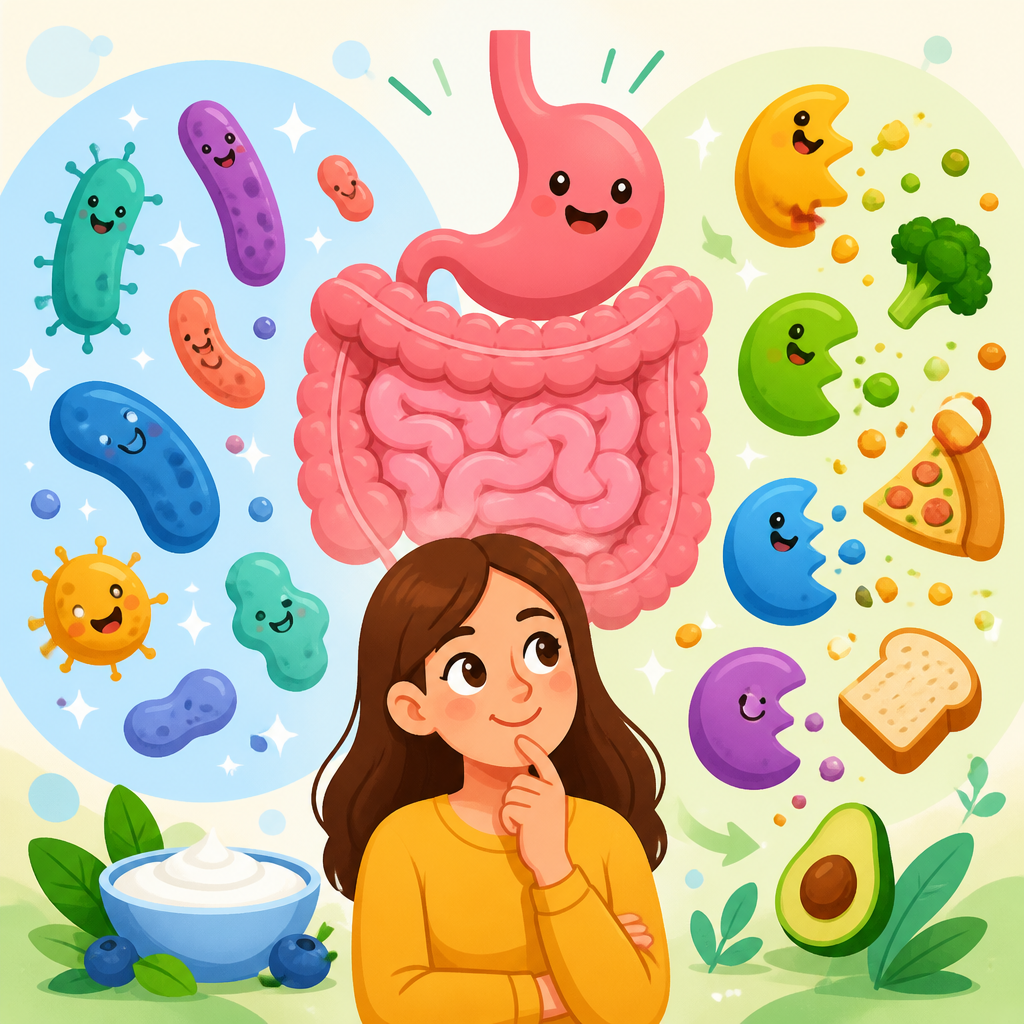
Probiotics and digestive enzymes sit at the center of modern gut health because they influence how food is broken down, how nutrients are absorbed, and how the intestinal environment resists disease. Probiotics are live microorganisms that, when consumed in adequate amounts, confer a health benefit on the host, a definition established by the World Health Organization and the International Scientific Association for Probiotics and Prebiotics. Digestive enzymes are proteins that catalyze the breakdown of carbohydrates, fats, proteins, and fibers into smaller compounds the body can absorb or use. In practice, I have seen confusion arise when people assume these supplements do the same job. They do not. Enzymes act directly on food substrates, while probiotics influence the microbial ecosystem, barrier function, immune signaling, and fermentation patterns in the gut.
The link between probiotics and digestive enzymes matters because digestive efficiency and microbial balance are not separate issues. They interact continuously. Poor enzyme activity can leave more undigested food in the intestine, changing fermentation, gas production, and microbial composition. Altered microbiota can, in turn, influence bile acid metabolism, intestinal inflammation, motility, and the integrity of the gut lining. These processes are relevant to disease prevention because the gastrointestinal tract is not an isolated tube. It is a metabolic and immune organ. Disturbances in digestion and microbial ecology have been associated with irritable bowel syndrome, antibiotic-associated diarrhea, lactose intolerance, inflammatory bowel conditions, metabolic dysfunction, and increased infection risk.
As a hub within Supplements & Nutraceuticals, this article explains how probiotics and digestive enzymes work, where they overlap, where they differ, and how they may contribute to disease prevention when used appropriately. It also clarifies limits. Neither category is a cure-all, and effectiveness depends on strain specificity, enzyme composition, dosing, timing, diet, age, medication use, and the underlying condition. The most useful way to think about them is as complementary tools: enzymes improve the handling of incoming food, while probiotics help shape the internal environment that processes the byproducts of digestion. Understanding that relationship makes supplement choices more evidence-based and reduces trial-and-error.
How Probiotics and Digestive Enzymes Work Together
Probiotics and digestive enzymes are linked through the sequence of digestion. Enzymes act first, beginning in the mouth and continuing through the stomach, pancreas, and small intestine. Amylase breaks starch into sugars, proteases cleave proteins into peptides and amino acids, lipase hydrolyzes fats into fatty acids and monoglycerides, and lactase splits lactose into glucose and galactose. Supplemental products may also contain alpha-galactosidase for beans and cruciferous vegetables, cellulase or hemicellulase for certain plant fibers, and bromelain or papain from pineapple and papaya. When these reactions proceed efficiently, fewer large, osmotically active, poorly absorbed compounds reach the colon.
That shift affects the microbiome. If carbohydrates are incompletely digested, colonic bacteria ferment them more aggressively, producing hydrogen, methane, and short-chain fatty acids. Fermentation is not inherently bad; in fact, short-chain fatty acids such as butyrate support colon cells and anti-inflammatory pathways. The issue is balance. Excess maldigestion can increase bloating, cramps, stool urgency, and nutrient losses. By improving substrate breakdown, enzymes may reduce symptom-triggering fermentation and create more predictable conditions for beneficial microbes. Probiotics then contribute by competing with opportunistic organisms, producing antimicrobial compounds, influencing pH, enhancing mucin production, and modulating local immune responses.
One practical example is lactose intolerance. People with low lactase activity leave more lactose available for bacterial fermentation, which causes gas, pain, and diarrhea. Supplemental lactase addresses the immediate digestive gap. Certain probiotic strains, especially some Lactobacillus and Bifidobacterium species used in fermented dairy, may also improve lactose handling over time because bacteria themselves can contribute beta-galactosidase activity. Another example is after antibiotics. Digestive complaints often worsen because microbial diversity drops and opportunists expand. Enzymes will not restore that ecosystem, but targeted probiotics may help reduce antibiotic-associated diarrhea and support microbial recovery. Used together, the two categories can address both food breakdown and ecological disruption.
Mechanisms That Connect Gut Support to Disease Prevention
Disease prevention starts with mechanisms, not marketing claims. The strongest rationale for probiotics and digestive enzymes comes from how they influence barrier integrity, immune signaling, inflammatory load, and metabolic byproducts. The intestinal lining functions as a selectively permeable barrier. It allows nutrient uptake while keeping pathogens, toxins, and excess antigens from crossing into circulation. Beneficial microbes help maintain this barrier by producing short-chain fatty acids, supporting tight junction proteins, and lowering luminal pH in ways that restrain harmful organisms. Some strains also increase secretory IgA, an antibody that protects mucosal surfaces.
Digestive enzymes contribute more indirectly but still meaningfully. Incomplete protein digestion can leave larger peptides in the gut, which may increase irritation or symptoms in susceptible individuals. Poor fat digestion can alter bile acid handling and stool consistency. In pancreatic exocrine insufficiency, where the pancreas does not release enough digestive enzymes, malnutrition, steatorrhea, weight loss, and fat-soluble vitamin deficiency can follow. Enzyme replacement in that setting is not optional supplementation; it is foundational therapy that reduces nutrient deficiency risk and downstream complications. Even outside clinical insufficiency, improving digestion may reduce chronic gastrointestinal stressors that can amplify inflammation and dysbiosis.
The prevention angle is strongest when focused on specific outcomes rather than broad promises. Evidence supports selected probiotics for reducing antibiotic-associated diarrhea, lowering the risk of Clostridioides difficile recurrence in some contexts, improving symptoms of some functional bowel disorders, and helping with lactose digestion. Enzymes have clear value in pancreatic insufficiency and targeted benefit for common food intolerances or meal-related discomfort. More speculative claims, such as preventing all chronic diseases through gut optimization, go beyond what evidence can support. Still, the gut’s role in immunity, metabolism, and host defense is now well established, and well-chosen interventions can lower risk by improving foundational physiology.
Conditions Where Evidence Is Strongest
Not every digestive complaint requires supplements, but several conditions consistently show where probiotics and digestive enzymes can be useful. The table below summarizes high-value use cases, the main mechanism involved, and practical notes that matter in real-world decisions.
| Condition or Goal | Potential Role of Probiotics | Potential Role of Digestive Enzymes | Key Practical Note |
|---|---|---|---|
| Antibiotic-associated diarrhea | Selected strains such as Saccharomyces boulardii and some Lactobacillus strains may reduce incidence | No direct preventive role | Timing matters; separate probiotics from antibiotics by several hours |
| Lactose intolerance | Some fermented strains may improve tolerance | Lactase directly breaks down lactose | Best results usually come from matching lactase dose to lactose load |
| Pancreatic exocrine insufficiency | Limited supportive role | Pancreatic enzyme replacement is standard care | Medical supervision is required, especially with weight loss or steatorrhea |
| Meal-related bloating from beans or complex carbohydrates | Possible indirect support over time | Alpha-galactosidase may reduce gas production | Use before trigger foods rather than after symptoms start |
| Irritable bowel syndrome symptoms | Some strains may help bloating or stool consistency | Targeted use can help if a specific trigger is identified | Response is individualized; symptom tracking is essential |
Clinical context matters. For example, I have worked with patients who assumed any probiotic would help IBS, yet strain selection is critical. A product with documented use in bloating may not be the same one studied for constipation-predominant symptoms. The same principle applies to enzymes. Broad-spectrum formulas can be useful for mixed meals, but they are not equivalent to prescription pancreatic enzymes, which are standardized for lipase, protease, and amylase content. Knowing whether the problem is microbial imbalance, food intolerance, pancreatic insufficiency, or motility changes prevents wasted time and money.
Choosing Effective Supplements: Strains, Enzymes, Dose, and Quality
The most important buying rule is specificity. A probiotic is defined by genus, species, and strain, such as Lactobacillus rhamnosus GG or Bifidobacterium animalis subsp. lactis BB-12. Evidence does not automatically transfer from one strain to another. Labels should disclose colony-forming units through the end of shelf life, storage instructions, and at least some manufacturing quality markers. For people who want a probiotic for prevention, the best starting point is a strain with human clinical data for the target outcome, not the highest CFU number. More is not always better if the strain is poorly studied or mismatched to the goal.
For digestive enzymes, composition matters more than branding. A useful label states the activity units, not just milligrams, because enzyme potency is measured by function. Lactase may be listed in ALU or FCC Lactase Units, lipase in FIP units, protease in HUT, and amylase in DU or SKB. Enteric protection can matter for enzymes intended to survive stomach acid, while some fungal-derived enzymes are active across a broader pH range. The right formula depends on the meal pattern and the digestive problem. Someone reacting to dairy needs lactase, not a vague digestive blend. Someone with fat malabsorption needs robust lipase support under medical guidance.
Quality and safety are where experienced clinicians pay close attention. Reputable manufacturers use identity testing, microbial contamination screening, stability testing, and Good Manufacturing Practices. Third-party verification from groups such as USP, NSF, or Informed Choice can add confidence, though not all strong products carry every seal. Consumers should also consider interactions and contraindications. Immunocompromised patients, critically ill individuals, and people with central venous catheters need caution with probiotics because rare bloodstream infections have been reported. Enzymes can interact with anticoagulants or cause irritation at high doses. The safest path is to match the product to a clearly defined need and review it with a qualified clinician when health conditions are involved.
How to Use Them Strategically in a Prevention-Focused Routine
Prevention works best when supplements are built into a broader digestive strategy rather than treated as isolated fixes. Food remains the primary lever. Fermented foods such as yogurt with live cultures, kefir, kimchi, sauerkraut, and some miso products can support microbial diversity, while adequate fiber from legumes, oats, berries, nuts, seeds, and vegetables provides substrate for beneficial fermentation. Enzymes do not replace chewing, meal pacing, or appropriate portion sizes. They are support tools. In practice, I usually advise people to identify the pattern first: is discomfort tied to dairy, large high-fat meals, antibiotics, travel, or a specific carbohydrate group? Pattern recognition makes supplementation precise.
Timing is straightforward but important. Digestive enzymes generally work best at the start of the meal because they need contact with food. Taking them after symptoms begin is often less effective. Probiotics are usually taken daily and consistently for several weeks before outcomes can be judged, although some benefits, such as support during antibiotic use, are linked to the intervention period itself. A symptom log helps separate real benefit from random fluctuation. Track bloating, stool form, urgency, abdominal pain, food triggers, and tolerance to common meals. Measurable changes over two to four weeks are more informative than subjective impressions after one day.
There are also clear red flags where self-treatment should stop. Unintentional weight loss, persistent vomiting, blood in the stool, nocturnal diarrhea, anemia, fever, severe abdominal pain, or greasy floating stools warrant medical assessment. These can point to celiac disease, inflammatory bowel disease, infection, gallbladder disease, pancreatic insufficiency, or malignancy. Supplements should not delay diagnosis. When used correctly, though, probiotics and digestive enzymes can play a meaningful role in disease prevention by reducing avoidable digestive stress, improving nutrient handling, and strengthening resilience of the gut ecosystem. Review your digestive patterns, identify the likely mechanism, and choose evidence-based support instead of guessing.
The link between probiotics and digestive enzymes is clear once digestion is viewed as a coordinated system rather than a list of separate symptoms. Enzymes help break food into absorbable parts, reducing the burden of maldigestion and the downstream problems it can create. Probiotics help shape the microbial environment, reinforce barrier function, and influence immune activity in ways that can lower risk for common gut-related complications. Together, they can support comfort, nutrient status, and a healthier intestinal ecosystem when the product, dose, timing, and goal are aligned.
The key lesson is precision. Use probiotics by strain and intended outcome, not by marketing category. Use digestive enzymes by substrate and symptom pattern, not by the assumption that every meal needs help. Remember the strongest evidence: lactase for lactose intolerance, pancreatic enzymes for pancreatic insufficiency, and selected probiotic strains for antibiotic-associated diarrhea and certain functional bowel complaints. Also remember the limits. These tools are supportive, not substitutes for diagnosis, medical care, or a diet that consistently undermines gut health.
As the hub for Probiotics and Digestive Enzymes within Supplements & Nutraceuticals, this page provides the framework for smarter decisions across the topic. If you are building a prevention-focused routine, start with your symptoms, identify whether the problem is digestion, microbiome balance, or both, and choose targeted interventions with documented benefit. Then monitor results and adjust based on evidence. A more resilient gut begins with informed choices.
Frequently Asked Questions
What is the difference between probiotics and digestive enzymes, and why do both matter for disease prevention?
Probiotics and digestive enzymes are closely related in gut health, but they do very different jobs. Probiotics are beneficial live microorganisms that help support a balanced intestinal environment. They can influence the makeup of the gut microbiome, support the intestinal barrier, compete with unwanted microbes, and help regulate immune activity in the digestive tract. Digestive enzymes, by contrast, are proteins that break food down into smaller components the body can absorb and use. For example, enzymes help convert proteins into amino acids, carbohydrates into simple sugars, and fats into fatty acids and glycerol.
Both matter because healthy digestion is not just about avoiding discomfort after meals. When food is broken down properly, the body is better able to absorb vitamins, minerals, and other nutrients needed for immune function, tissue repair, metabolism, and long-term resilience. At the same time, a well-supported microbiome can help reduce intestinal irritation, maintain a healthy inflammatory response, and lower the chance that harmful organisms will gain a foothold in the gut. When either side is compromised, problems can develop. Poor enzyme activity may lead to bloating, gas, malabsorption, or nutrient deficiencies, while an imbalanced microbiome may contribute to digestive upset, weakened barrier function, and broader health disturbances. Together, probiotics and digestive enzymes help create conditions that support digestive efficiency and may reduce risk factors linked to gastrointestinal and metabolic disease.
How do probiotics help protect the gut and support the body’s defenses against disease?
Probiotics support disease prevention through several well-studied mechanisms. One of the most important is competitive protection. Beneficial microbes can help occupy space in the gut and use available nutrients, making it harder for harmful bacteria or other unwanted organisms to multiply. Some probiotic strains also produce substances such as organic acids and bacteriocins that can discourage the growth of potentially harmful microbes. This helps maintain a healthier intestinal ecosystem, which is essential because the gut is one of the body’s primary points of contact with the outside world.
Probiotics also help strengthen the gut barrier, which acts as a selective filter between the contents of the intestines and the bloodstream. A stronger barrier may reduce the passage of irritants and unwanted microbial byproducts into circulation, which can in turn support a healthier inflammatory balance. In addition, probiotics can interact with immune cells in the digestive tract and help guide immune responses so they are effective without being unnecessarily aggressive. This matters because chronic low-grade inflammation and disruptions in gut ecology have been associated with conditions ranging from recurring digestive issues to broader immune and metabolic concerns.
It is important to remember that probiotics are not a cure-all and that benefits can be strain-specific. Not every probiotic does the same thing, and results depend on the strain used, the dose, the person’s overall health, and the condition being addressed. Still, when chosen carefully and used consistently, probiotics can be an important part of a disease-prevention strategy centered on gut integrity, microbial balance, and immune support.
Can digestive enzymes improve nutrient absorption and lower the risk of digestive-related health problems?
Yes, digestive enzymes can play a significant role in improving nutrient absorption, particularly when the body is not producing enough of them or when digestion is under strain. Their basic function is to catalyze the breakdown of food into absorbable units. Without adequate enzyme activity, food may remain only partially digested as it moves through the gastrointestinal tract. This can lead to symptoms such as bloating, fullness, cramping, gas, or irregular stools, but it can also have deeper consequences if it limits access to essential nutrients over time.
When proteins, fats, and carbohydrates are broken down efficiently, the body is better positioned to absorb nutrients needed for energy production, immune resilience, hormone balance, and cellular repair. For instance, insufficient fat digestion can interfere with the absorption of fat-soluble vitamins such as A, D, E, and K. Inadequate protein digestion may affect amino acid availability, while poor carbohydrate breakdown can contribute to fermentation in the gut and uncomfortable digestive symptoms. In this way, digestive enzymes do more than make meals feel easier to tolerate. They support the foundational process that allows nutrition to become biologically useful.
From a disease-prevention perspective, proper digestion may help lower the burden of chronic digestive stress and reduce the likelihood of complications tied to malabsorption or nutrient deficiency. However, enzyme supplements are not automatically necessary for everyone. Some people may benefit more than others, especially those with lactose intolerance, age-related digestive changes, pancreatic insufficiency, or certain gastrointestinal disorders. The key is identifying the underlying reason digestion is impaired rather than assuming all symptoms call for enzyme products. Used appropriately, digestive enzymes can be a valuable support for digestive efficiency and overall health maintenance.
Is there a connection between gut health, chronic inflammation, and long-term disease risk?
There is growing evidence that gut health is deeply connected to chronic inflammation and long-term disease risk. The digestive tract is not only where food is processed; it is also a major immune organ and a central communication hub between diet, microbes, metabolism, and immune signaling. When the gut microbiome is balanced and digestion is functioning well, the body is more likely to maintain a healthy inflammatory response. Beneficial microbes help produce compounds such as short-chain fatty acids that nourish the cells lining the colon and support barrier integrity. Efficient digestion also reduces the amount of poorly processed food material that can irritate the gut or fuel excessive fermentation.
When this balance is disrupted, the consequences can extend beyond occasional digestive discomfort. Dysbiosis, poor nutrient absorption, and impaired barrier function may contribute to persistent immune activation and low-grade inflammation. Over time, that inflammatory burden has been associated with a wide range of chronic conditions, including some gastrointestinal disorders, metabolic dysfunction, and altered immune resilience. This does not mean that probiotics or digestive enzymes alone can prevent major diseases, but it does highlight how important foundational gut processes are to whole-body health.
A useful way to think about it is that the gut often sets the tone for how the body handles exposure, nourishment, and defense. Probiotics may help maintain a healthier microbial environment, while digestive enzymes help ensure food is properly broken down and absorbed. Together, they can support conditions that are less favorable to chronic irritation and more favorable to long-term wellness. That is why gut-focused strategies are increasingly discussed not just in relation to digestion, but also in relation to prevention-oriented health care.
Should everyone take probiotics and digestive enzyme supplements for better gut health and disease prevention?
Not necessarily. While probiotics and digestive enzymes can be very helpful in the right context, they are not universal requirements and should not replace a solid nutritional and medical foundation. Many healthy people can support both microbial balance and enzyme activity through diet and lifestyle alone. Fermented foods, high-fiber plant foods, adequate hydration, stress management, regular physical activity, and mindful eating all play important roles in maintaining digestive health. In many cases, these basics have a major impact on how well the gut functions and how resilient the intestinal environment remains over time.
Supplementation may be more appropriate when there is a clear reason for it. For probiotics, that might include recovery after antibiotic use, support for certain forms of digestive imbalance, or specific strain-based goals recommended by a clinician. For digestive enzymes, use may be more relevant when symptoms suggest impaired digestion, such as difficulty tolerating certain foods, signs of malabsorption, or diagnosed enzyme insufficiency. Even then, the best results usually come from matching the product to the actual need rather than choosing one based on broad marketing claims.
It is also worth noting that not all supplements are created equal. Probiotic effectiveness depends on factors such as strain identity, dose, survivability, and product quality. Enzyme formulas vary widely in composition and may target different digestive challenges. People with chronic digestive symptoms, immune conditions, pancreatic disorders, or other ongoing health concerns should consult a qualified health professional before starting supplements, especially for long-term use. The most effective disease-prevention approach is personalized, evidence-informed, and built on the understanding that gut health is supported by habits, diet, and targeted interventions working together.