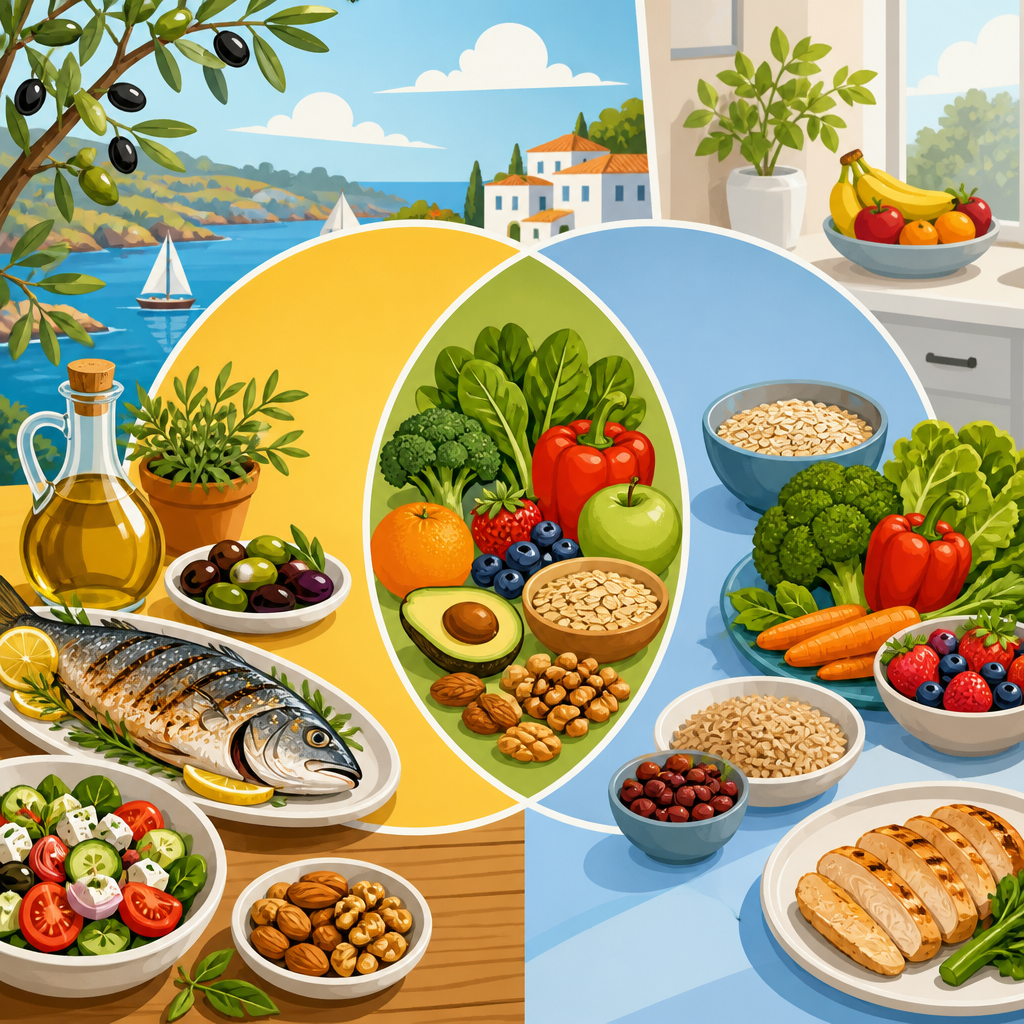
The Mediterranean diet and the DASH diet are two of the most researched eating patterns in modern nutrition, and they overlap far more than most headlines suggest. Both emphasize vegetables, fruits, beans, whole grains, nuts, and minimally processed foods. Both reduce reliance on added sugars, refined starches, and heavily processed meats. Both are linked with better heart health, healthier blood pressure, and improved long-term metabolic outcomes. Yet they were built for slightly different purposes, and those differences matter when someone is choosing a realistic dietary lifestyle rather than a short-term plan.
In practice, I see people compare these diets as if one must “win.” That is usually the wrong question. A better question is this: which pattern best fits your health goals, cooking habits, budget, and medical needs? The Mediterranean diet grew from traditional eating patterns observed in countries bordering the Mediterranean Sea, especially mid-20th-century Greece, Southern Italy, and parts of Spain. The DASH diet, short for Dietary Approaches to Stop Hypertension, was designed through clinical research to lower blood pressure. One is rooted in a regional food culture; the other is a structured therapeutic pattern. Both are credible, sustainable, and adaptable.
This matters because diet quality is one of the strongest modifiable predictors of chronic disease risk. Cardiovascular disease remains the leading cause of death globally, and high blood pressure affects more than one billion adults worldwide, according to the World Health Organization. At the same time, confusion about healthy eating is common. People want direct answers: Which diet is better for heart health? Which is easier to follow? Is the Mediterranean diet good for weight loss? Can DASH help if blood pressure is already normal? This article answers those questions clearly while serving as a central guide to Mediterranean diet benefits and how they compare with DASH in everyday life.
What the Mediterranean and DASH diets have in common
The biggest overlap is that both diets prioritize food quality over calorie obsession. They center meals on plants: vegetables, fruit, legumes, intact or minimally refined grains, nuts, and seeds. They encourage lean or moderate portions of protein, especially fish, poultry, and beans, while limiting red meat and processed meat. They also favor unsaturated fats over saturated fats, although the Mediterranean diet is more explicit about olive oil as a primary fat. In both patterns, the effect is a lower dietary load of sodium-heavy packaged foods, added sugars, trans fats, and rapidly digested refined carbohydrates.
From a clinical perspective, that overlap explains why both diets routinely perform well in studies. They improve nutrient density, fiber intake, potassium intake, and overall dietary pattern scores. They also support better lipid profiles and better glycemic control than a typical Western pattern high in ultraprocessed foods. When patients shift from frequent takeout, sugary beverages, and snack foods toward soups made from beans, salads with olive oil, roasted vegetables, plain yogurt, and fruit, biomarkers often move in the right direction even before substantial weight loss occurs.
Both eating styles also share a practical advantage: they are food-based, not supplement-based. You do not need expensive powders, “detox” products, or rigid meal timing to make either one work. A lunch of lentil soup, whole grain bread, cucumber and tomato salad, and fruit fits both diets. So does a dinner of baked salmon, brown rice, sautéed greens, and unsalted almonds on the side. This is one reason major organizations, including the American Heart Association, consistently align their advice with the principles found in these patterns.
Mediterranean diet benefits: why this pattern gets so much attention
The Mediterranean diet benefits are broad because the pattern affects several major risk pathways at once. It tends to lower intake of refined carbohydrates and processed meats while increasing fiber, polyphenols, monounsaturated fats, omega-3 fats, magnesium, folate, and potassium. Those shifts can influence blood lipids, endothelial function, inflammation, insulin sensitivity, satiety, and the gut microbiome. The result is not a miracle effect from any single food but a cumulative effect from the whole pattern followed consistently over time.
Heart health is the most established benefit. The landmark PREDIMED trial in Spain found that a Mediterranean-style diet supplemented with extra-virgin olive oil or nuts reduced major cardiovascular events in high-risk adults compared with a lower-fat control advice group. While no single study should be oversimplified, the trial helped confirm what earlier observational research had suggested: a Mediterranean dietary pattern can meaningfully reduce cardiovascular risk. In real life, this often comes from replacing butter with olive oil, processed snacks with nuts, and meat-heavy meals with fish, beans, and vegetables.
The Mediterranean diet also supports metabolic health. Many people find it easier to maintain than stricter plans because it allows flexible meals, satisfying fats, and familiar foods. That improves adherence, and adherence is what drives long-term outcomes. For weight management, the Mediterranean diet is effective not because it has a magical fat-burning property but because it tends to improve satiety and reduce reliance on hyperpalatable processed foods. For brain health, emerging evidence links this pattern with better cognitive aging, likely due to vascular benefits plus high intake of antioxidant-rich plant foods and healthy fats. It is also socially sustainable: shared meals, home cooking, seasonal produce, and enjoyable eating are built into the tradition rather than treated as afterthoughts.
How DASH differs from the Mediterranean diet
The DASH diet was engineered first and foremost to lower blood pressure, so it is more prescriptive about nutrients known to influence hypertension. It emphasizes foods rich in potassium, calcium, magnesium, and fiber while placing stronger limits on sodium and saturated fat. Standard DASH guidance often includes specific daily or weekly targets for servings from food groups such as low-fat dairy, vegetables, fruit, grains, nuts, lean meats, and sweets. That structure helps people who want a concrete therapeutic plan rather than a looser lifestyle framework.
By contrast, the Mediterranean diet is less rigid and more culinary. It highlights extra-virgin olive oil, regular legumes, herbs, seafood, vegetables, and often fermented dairy such as yogurt or cheese in moderate amounts, but it usually does not require counting servings in the same formal way. Wine may appear in traditional Mediterranean patterns, typically with meals and in moderation, but it is not required and should not be recommended to non-drinkers. DASH generally keeps the focus tighter on sodium control and blood pressure outcomes, especially for people with hypertension, chronic kidney disease concerns, or strong family history.
Another difference is fat emphasis. DASH allows healthy fats, but Mediterranean eating gives olive oil a starring role and often includes a higher total fat intake if that fat comes largely from unsaturated sources. This can make Mediterranean meals feel more satisfying and culturally natural for some households. DASH, especially in its original trial format, can feel more clinical, though modern versions are far more flexible than many people assume.
Side-by-side comparison for daily eating
| Feature | Mediterranean Diet | DASH Diet |
|---|---|---|
| Main goal | Overall cardiometabolic health and long-term dietary quality | Lower blood pressure and improve heart health |
| Core fat source | Extra-virgin olive oil, nuts, seeds | Healthy fats allowed, with stronger overall limits on saturated fat |
| Sodium focus | Moderate, mainly through less processed food | Explicit and stronger sodium reduction |
| Dairy approach | Usually moderate yogurt and cheese | Often emphasizes low-fat dairy servings |
| Structure | Flexible eating pattern | More defined serving guidance |
| Best fit | People seeking a sustainable lifestyle pattern | People targeting hypertension with clear guardrails |
In practical terms, breakfast on a Mediterranean diet might be plain Greek yogurt with berries, walnuts, and oats, or whole grain toast with olive oil, tomato, and eggs. A DASH-style breakfast might look similar but more deliberately account for sodium, saturated fat, and low-fat dairy targets. Lunch and dinner follow the same pattern: substantial overlap in foods, different emphasis in planning. Mediterranean eating asks, “How do I build a meal around plants and healthy fats?” DASH asks, “How do I build a meal that actively supports blood pressure control?”
Neither approach requires perfection. A person with high blood pressure might start with DASH principles to bring readings down, then settle into a Mediterranean-style routine that preserves the gains. Another person may use Mediterranean eating as a default pattern and borrow DASH tactics such as sodium caps, label reading, and careful restaurant choices. In actual counseling, hybrid approaches are common and often effective.
Which diet is better for heart health, blood pressure, and weight?
For blood pressure specifically, DASH has the clearest direct evidence because that was its original purpose. Clinical trials showed meaningful reductions in systolic and diastolic blood pressure, especially when combined with lower sodium intake. If a person has stage 1 or stage 2 hypertension, this gives DASH an edge as a targeted first-line nutrition strategy. It is especially useful when patients need a straightforward roadmap and measurable nutrition targets.
For broader cardiovascular prevention, the Mediterranean diet has a slight advantage in public reputation because of its extensive evidence base, cultural sustainability, and strong association with lower cardiovascular event risk. That does not mean DASH is weaker overall; it means the Mediterranean pattern has been studied across a wider range of outcomes and populations. It is often easier to maintain for years because meals feel less like treatment and more like normal enjoyable eating.
For weight management, neither diet is inherently a weight-loss diet unless calorie intake matches the goal. Still, both can support fat loss by improving food quality and satiety. Mediterranean meals often satisfy hunger well because olive oil, nuts, beans, and fish make meals flavorful and filling. DASH can help weight loss too, especially when its structure reduces mindless eating and high-sodium processed foods that often travel with excess calories. The best diet for weight is the one a person can repeat on ordinary Tuesdays, during travel, and through holidays without feeling trapped.
How to choose between them and how to combine their strengths
Choose the Mediterranean diet if your top priority is a flexible, enjoyable, evidence-based eating pattern you can imagine following for years. It fits people who like cooking, shared meals, olive oil, beans, seafood, herbs, and produce-driven plates. It is also an excellent hub approach because many specialized goals can branch from it: Mediterranean diet for weight loss, Mediterranean diet meal plan, Mediterranean diet for diabetes, Mediterranean diet shopping list, and Mediterranean diet breakfast ideas all naturally connect back to the same core principles.
Choose DASH if blood pressure is the immediate concern and you want clearer structure. It can be especially helpful after a new hypertension diagnosis, during a period of home blood pressure monitoring, or when a clinician has advised sodium reduction. If you already eat reasonably well but restaurant meals, packaged foods, deli meats, canned soups, and salty snacks are driving up sodium, DASH gives you a sharper corrective lens.
For many adults, the smartest approach is a Mediterranean foundation with DASH discipline around sodium. Build meals from vegetables, beans, fruit, whole grains, fish, yogurt, nuts, and extra-virgin olive oil. Then apply DASH principles by limiting packaged foods, using Nutrition Facts labels, choosing low-sodium broth and canned beans, and controlling restaurant portions. If you want a practical next step, audit one week of meals and identify where your pattern could shift closer to either plan. Small consistent changes, not dietary perfection, produce the health benefits that matter most.
Frequently Asked Questions
What is the main difference between the Mediterranean diet and the DASH diet?
The biggest difference is the original goal behind each eating pattern. The Mediterranean diet was inspired by traditional eating habits in countries bordering the Mediterranean Sea and is generally framed as a broad lifestyle-oriented pattern for long-term health, enjoyment, and disease prevention. It emphasizes vegetables, fruits, legumes, whole grains, nuts, seeds, olive oil, seafood, and meals built around minimally processed foods. The DASH diet, which stands for Dietary Approaches to Stop Hypertension, was designed more specifically to help lower blood pressure. Because of that purpose, DASH tends to place stronger emphasis on sodium reduction, portion structure, and consistent intake of foods rich in potassium, magnesium, calcium, and fiber.
In practice, however, they overlap heavily. Both prioritize plant-forward meals, encourage whole foods, and limit refined carbohydrates, added sugars, and processed meats. Where they start to differ is in tone and structure. The Mediterranean diet often gives olive oil a more central role, is typically more flexible around meal composition, and may include moderate wine intake in some interpretations. DASH is usually more explicit about limiting sodium, choosing lower-fat dairy, and following daily or weekly serving targets. So if someone is comparing the two, it is often best to think of them as close relatives: one rooted in a traditional regional pattern and one built as a clinically tested strategy for blood pressure control.
Which diet is better for heart health and blood pressure?
Both are excellent choices for cardiovascular health, and the better option often depends on the specific health goal. If someone is primarily focused on lowering high blood pressure, the DASH diet has a particularly strong evidence base because it was specifically developed and studied for that outcome. Its structure supports lower sodium intake while increasing intake of nutrients that help regulate blood pressure, especially potassium, magnesium, and calcium. For people with hypertension, prehypertension, or salt sensitivity, that makes DASH especially appealing.
The Mediterranean diet is also strongly linked with better heart health, but it is often discussed in a broader way. Research has associated it with lower risk of cardiovascular disease, improved cholesterol patterns, better metabolic health, and reduced long-term risk of events such as heart attack and stroke. Much of that benefit is thought to come from its emphasis on unsaturated fats, especially extra-virgin olive oil, along with high intake of fiber-rich plant foods and regular consumption of fish and legumes. In other words, DASH may have a slight edge if the priority is direct blood pressure management, while the Mediterranean pattern is often highlighted for overall cardiometabolic protection and long-term sustainability. For many people, the most effective approach is not choosing one over the other, but combining their strengths.
Do the Mediterranean and DASH diets allow the same foods?
They allow many of the same foods, which is why the two diets are often more similar than different in everyday life. Both encourage vegetables, fruits, beans, lentils, whole grains, nuts, seeds, and leaner protein sources. Both also steer people away from heavily processed snacks, sugary beverages, refined grains, excess sweets, and processed meats such as sausage, bacon, and deli meats. If a person fills their plate with produce, uses whole grains instead of refined ones, includes beans regularly, and cuts back on ultra-processed food, they are already following the core principles shared by both patterns.
That said, there are some meaningful differences in emphasis. The Mediterranean diet usually places a stronger spotlight on olive oil as the primary added fat and often treats seafood as a frequent protein choice. It may also be more open to full-flavor foods such as olives, olive oil-based dressings, and traditional cheeses, though portions still matter. DASH typically pays closer attention to sodium and often encourages lower-fat dairy products more explicitly. It can also be more cautious with salty foods, packaged sauces, canned soups, and restaurant meals that quickly increase sodium intake. So while the food lists overlap substantially, DASH tends to be more prescriptive about sodium-related choices, whereas the Mediterranean diet often highlights food quality, fat source, and overall eating pattern.
Is one diet easier to follow long term?
For many people, the Mediterranean diet feels easier to sustain because it is flexible, less rule-heavy, and often aligned with how people naturally enjoy eating. It can work well for someone who wants guiding principles rather than strict targets: eat more vegetables, choose beans and whole grains often, use olive oil instead of butter, include fish regularly, and make minimally processed foods the norm. That flexibility can make it feel less like a temporary plan and more like a realistic way to eat for years. It also tends to fit well with social meals, home cooking, and a wide variety of cuisines.
DASH can also be sustainable, especially for people who prefer more structure and have a clear clinical reason to follow it, such as high blood pressure. Some individuals do better when they have serving goals, sodium limits, and concrete benchmarks to aim for. The challenge is that reducing sodium consistently can take more planning, label reading, and awareness of hidden salt in breads, sauces, condiments, packaged foods, and restaurant meals. In short, the easier plan is usually the one a person can maintain consistently. Someone motivated by heart-health traditions and flexible meal building may gravitate toward Mediterranean eating, while someone focused on measurable blood pressure improvement may find DASH more compelling. Long-term success depends less on the label and more on whether the pattern fits the person’s routine, budget, culture, and preferences.
Can you combine the Mediterranean diet and DASH diet into one approach?
Yes, and for many people that may be the smartest strategy. Because the diets share so much common ground, combining them is practical and evidence-informed. A blended approach might look like this: build meals around vegetables, fruits, beans, whole grains, nuts, and seeds; use extra-virgin olive oil as the main added fat; eat fish regularly; keep red and processed meats limited; choose minimally processed foods whenever possible; and stay mindful of sodium by favoring herbs, spices, citrus, garlic, and vinegar for flavor instead of relying heavily on salt. That framework captures the Mediterranean focus on food quality and healthy fats while also preserving the DASH priority of blood pressure-friendly eating.
This combined style can be especially useful for someone who wants broad cardiovascular and metabolic benefits without feeling boxed into a single set of rules. For example, a person could enjoy a Mediterranean-style grain bowl with chickpeas, roasted vegetables, olive oil, and grilled salmon, while still keeping sodium moderate by using no-salt-added beans and a homemade dressing. They could include yogurt, fruit, nuts, and oats for breakfast, and choose soups, salads, and cooked grains prepared with low-sodium ingredients for lunch or dinner. The key is not perfection. It is consistency around the habits both diets agree on most strongly: eat more plants, choose better fats, minimize ultra-processed foods, and keep sodium and added sugars under control.