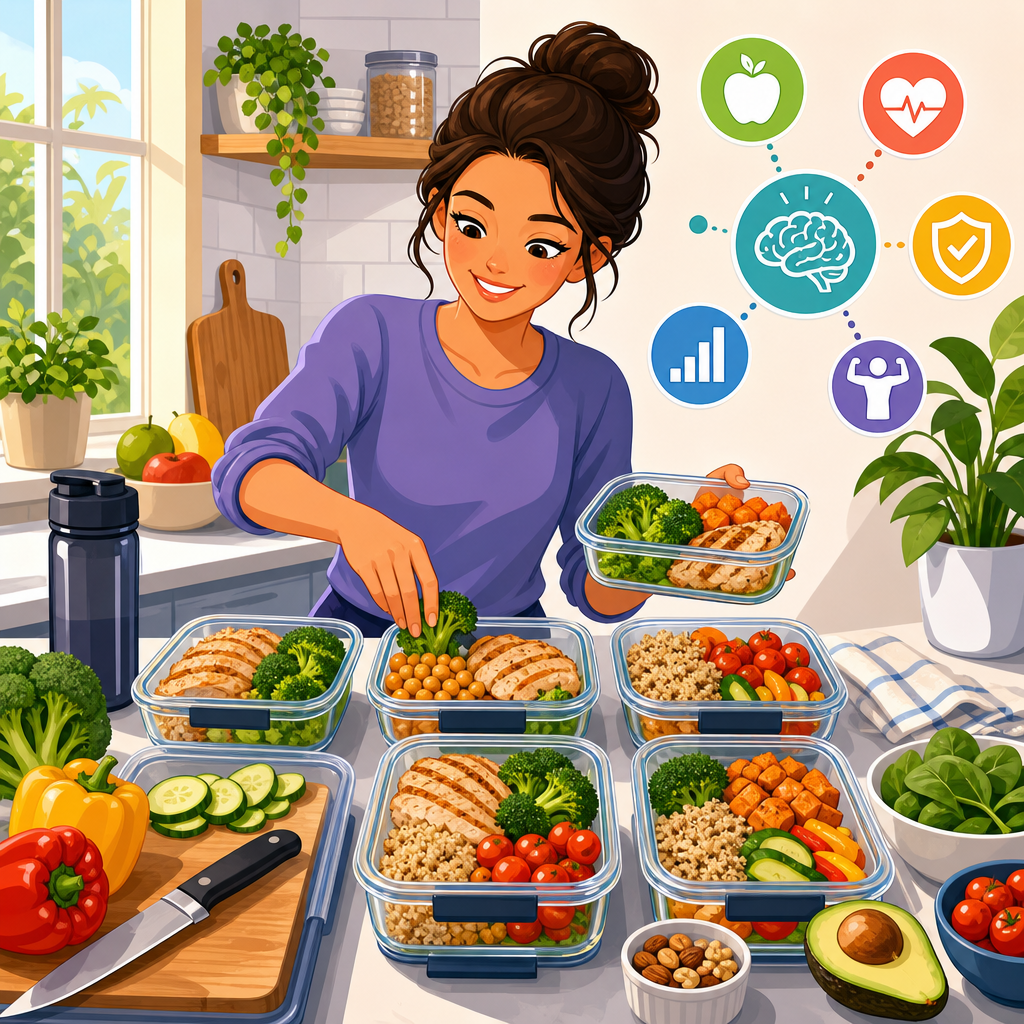
Meal prepping for a healthy week is the practice of planning, shopping for, cooking, and portioning meals ahead of time so eating well becomes the default rather than a daily negotiation. In nutrition work, I have seen the same pattern repeatedly: people rarely struggle because they do not know what healthy food looks like; they struggle because busy schedules, decision fatigue, and limited time make consistent choices difficult. Meal prep solves a practical problem. It turns intention into structure.
Science supports that structure matters. Research on dietary behavior consistently shows that planning is linked with better diet quality, greater variety, and lower odds of excess weight gain. Public health guidance from organizations such as the World Health Organization, the U.S. Department of Agriculture, and the Academy of Nutrition and Dietetics also emphasizes regular meal patterns, fruit and vegetable intake, adequate protein, whole grains, and limiting ultra-processed foods high in sodium, sugar, and saturated fat. Meal prepping is not a diet in itself. It is a delivery system for these evidence-based habits.
Key terms are worth defining. Meal planning means deciding in advance what you will eat. Meal prepping usually means doing some or all of the food preparation before the week begins, whether that is washing produce, batch-cooking proteins, assembling complete lunches, or freezing dinners. Batch cooking refers to making larger quantities at once, while portioning means dividing food into servings that match hunger, activity level, or specific health goals. Weekly meal prep can be strict or flexible, and that distinction matters because the best system is the one you can repeat.
This topic matters because healthy eating is often decided before you feel hungry. When meals are ready, you are less likely to skip breakfast, buy expensive takeout, or rely on vending-machine snacks. You also gain control over ingredients, cooking methods, portion sizes, and food safety. For families, meal prep can reduce weekday stress and make it easier to serve balanced meals. For individuals managing blood sugar, cholesterol, blood pressure, athletic recovery, or weight, it provides consistency that supports measurable outcomes. A well-designed meal prep routine does not have to be elaborate. It needs to be realistic, nutritionally sound, and built around how people actually live.
What science says meal prepping improves
The strongest case for meal prepping comes from behavior science. Planning reduces the number of food decisions you must make under pressure, and fewer decisions usually mean better follow-through. Studies examining meal planning have found associations with higher adherence to dietary guidelines, greater food variety, and lower obesity risk. That does not mean prepping automatically causes weight loss, but it does mean it creates conditions that make healthier choices more likely.
There is also a time-and-environment effect. Behavioral economists describe how defaults shape action. If a prepared lunch is already in the refrigerator, that becomes the easiest option at noon. If cut vegetables and a protein-rich snack are visible, they are more likely to be eaten than chips hidden in a cupboard. In practice, I have watched clients improve fiber intake simply by keeping cooked grains, washed greens, beans, and chopped vegetables ready to combine. They were not suddenly more disciplined. Their environment changed.
Meal prep can also improve portion awareness. Restaurant and takeout meals often exceed energy needs and contain more sodium and added fats than home-cooked meals. Preparing food at home lets you use measuring tools, read labels, and calibrate portions over time. This is especially useful for people working on weight management, sports nutrition, or glucose control. Protein distribution is another benefit. Instead of eating very little during the day and overeating at night, prepped meals can spread protein more evenly, which supports satiety and muscle maintenance.
Another evidence-based benefit is reduced reliance on ultra-processed convenience foods. Not all processed food is harmful; frozen vegetables, canned beans, yogurt, and whole-grain bread can be excellent staples. The issue is habitual dependence on highly palatable, low-satiety products that displace more nutrient-dense meals. Meal prepping narrows that gap by making healthy convenience available at home. It does not eliminate all spontaneous eating, but it shifts the baseline in a favorable direction.
How meal prepping supports nutrition goals
A healthy week of meals usually follows a simple pattern: vegetables and fruit for fiber and micronutrients, adequate protein for fullness and tissue repair, mostly whole-food carbohydrate sources for energy, and fats from foods such as olive oil, nuts, seeds, avocado, and fish. Meal prepping helps build these components intentionally. When I set up plans for busy professionals, I start with anchors: two proteins, two vegetables, one whole grain, one legume, and two easy sauces. From those pieces, people can assemble bowls, salads, wraps, stir-fries, and breakfasts in minutes.
For weight management, meal prep helps by making energy intake more predictable. That matters because unplanned eating often brings larger portions and more calorie-dense choices. For blood sugar control, pairing carbohydrate foods with protein, fiber, and fat slows digestion and reduces sharp glucose excursions. For cardiovascular health, prepping meals around beans, oats, vegetables, nuts, fish, and lower-sodium ingredients can support healthier lipid profiles and blood pressure. For athletes, prepped meals make it easier to hit daily protein targets and maintain carbohydrate availability for training.
Meal prep is also one of the most reliable ways to increase dietary variety. That may sound counterintuitive because people imagine eating the same chicken and rice every day. In reality, variety improves when the process is planned. Roasted vegetables can become a grain bowl Monday, a frittata Tuesday, taco filling Wednesday, and soup Thursday. Different seasonings create distinct meals from the same base ingredients. Variety matters because it broadens micronutrient intake and prevents menu fatigue, which is a common reason healthy routines collapse by midweek.
| Meal prep approach | Best for | Main benefit | Common limitation |
|---|---|---|---|
| Full meals portioned in containers | Busy workweeks, calorie tracking, lunch planning | Fastest weekday routine and strong portion control | Less flexibility if cravings or schedules change |
| Batch-cooked components | Families, mixed preferences, higher variety | Easy to mix and match meals across the week | Requires a few minutes of assembly each day |
| Freezer meals | Shift workers, new parents, irregular schedules | Reduces waste and extends shelf life | Texture can suffer for some vegetables and pasta |
| Prep-only ingredients | People who dislike leftovers | Shortens cooking time while preserving freshness | Provides less immediate convenience than ready meals |
Building a meal prep system that works
The best meal prep plan begins with your actual week, not an idealized one. Look at work hours, commute, school pickups, workouts, and social plans. Then decide where prepared food will have the highest return. For some people that is breakfast, because mornings are rushed. For others it is lunch, because buying food near the office leads to oversized portions. I usually recommend starting with one or two pressure points instead of prepping every meal. Early success builds a repeatable habit.
Next, choose a prep style. Full-meal prep works well when your schedule is fixed. Component prep is more adaptable and often better for households with different appetites. A practical weekly structure is to batch-cook one tray of vegetables, one pot of grains, one bean or lentil dish, and one or two proteins such as baked tofu, shredded chicken, salmon, turkey meatballs, or hard-boiled eggs. Add fast extras like prewashed greens, fruit, Greek yogurt, hummus, and whole-grain wraps. This creates enough material for several balanced meals without feeling repetitive.
Flavor planning is where many healthy meal prep ideas succeed or fail. Use a base-plus-sauce model. The same cooked ingredients can taste Mediterranean with lemon-tahini, Mexican-inspired with salsa and avocado, or Asian-style with ginger, garlic, soy sauce, and sesame. Keeping herbs, citrus, spice blends, vinegars, and condiments on hand increases satisfaction without requiring extra cooking time. This is not a small detail. Palatability affects adherence, and adherence is what produces results.
Containers and workflow matter more than people expect. Clear, stackable containers improve visibility and help you use food before it spoils. Labeling with dates reduces confusion. A standard workflow is plan on Friday, shop on Saturday, prep on Sunday, and do a brief refresh midweek for greens, fruit, or another protein. If two-hour Sunday sessions feel overwhelming, split the work: chop vegetables after shopping, cook proteins the next morning, and assemble lunches the night before. A healthy meal prep routine should lower stress, not create another all-or-nothing project.
Food safety, storage, and shelf life
Meal prep is only beneficial if prepared food remains safe and appealing to eat. The core rules are straightforward and nonnegotiable. Wash hands, clean surfaces, avoid cross-contamination between raw meats and ready-to-eat foods, cook foods to safe temperatures, refrigerate promptly, and keep the refrigerator at or below 40 degrees Fahrenheit, or 4 degrees Celsius. The U.S. Food and Drug Administration and the Centers for Disease Control and Prevention both emphasize the two-hour rule: perishable food should not stay at room temperature longer than two hours, or one hour if the environment is very hot.
Most cooked meals keep well in the refrigerator for about three to four days, though exact shelf life depends on the ingredients. That means a Sunday prep session should usually cover Monday through Thursday, with more delicate items eaten earlier. Fish is best used promptly. Cooked grains, roasted vegetables, soups, and stews generally hold up well. Leafy salads last longer when greens are kept dry and dressing is stored separately. Freezing is the best option for meals intended for later in the week or as backup dinners.
Texture management is part of smart storage. Keep crunchy toppings separate. Store sauces in small containers to avoid sogginess. Slightly undercook vegetables if you plan to reheat them. Cool large batches quickly by dividing them into shallow containers rather than leaving a hot pot in the refrigerator. Reheat leftovers thoroughly, and when in doubt, throw it out. Food waste is frustrating, but foodborne illness is worse. Safe meal prep does not require complexity; it requires consistent habits.
Common mistakes and how to avoid them
The most common mistake is trying to overhaul your entire diet in one weekend. People buy unfamiliar ingredients, cook six recipes, and burn out by Wednesday. A more effective strategy is to keep breakfast and lunch highly repeatable and allow dinner to stay flexible. Another frequent mistake is underestimating appetite. If meals are too small, too low in protein, or missing satisfying fats and fiber, evening snacking rises. A balanced container often includes a palm-sized protein source, plenty of vegetables, a moderate portion of whole-grain or starchy carbohydrate, and enough fat for flavor and fullness.
Boredom is another predictable problem. Repetition is useful, but monotony reduces adherence. Rotate cuisines, not just ingredients. Use the same chicken in a burrito bowl, a chopped salad, and a whole-grain wrap. Change textures with slaws, seeds, pickled onions, or yogurt sauces. For plant-forward meal prep, vary legumes and grains rather than relying on one formula. Lentil soup, chickpea salad, tofu stir-fry, and bean chili all serve different functions while still being efficient.
Finally, do not confuse meal prep with perfection. Travel, social events, and changing cravings are normal. Build buffers: keep frozen vegetables, canned fish, eggs, whole-grain pasta, and beans for backup meals that come together in ten minutes. If you miss a prep session, reset with a mini version instead of abandoning the week. Sustainable healthy eating comes from systems that recover quickly after disruption. That is the real power of meal prepping for a healthy week: it makes consistency easier, and consistency is what science links to better long-term health. Start with one meal, one shopping list, and one prep block this week, then refine the process until it fits your life.
Frequently Asked Questions
What are the main health benefits of meal prepping for the week?
Meal prepping supports healthy eating because it reduces the number of decisions you have to make when you are tired, busy, or stressed. That matters more than many people realize. Research in nutrition behavior consistently shows that food choices are heavily shaped by convenience, routine, and the surrounding environment, not just knowledge or motivation. When balanced meals are already planned, cooked, and portioned, the healthiest option becomes the easiest option. This can lead to better diet quality overall, including more consistent intake of vegetables, lean proteins, whole grains, legumes, fruit, and other nutrient-dense foods.
Another major benefit is portion awareness. Preparing meals in advance makes it easier to match portions to your hunger, energy needs, and health goals instead of relying on oversized restaurant servings or impulse eating. Many people also find that meal prep lowers their intake of ultra-processed convenience foods simply because they are no longer scrambling for last-minute options. Over time, this can support weight management, more stable energy levels, improved blood sugar control, and a more consistent eating pattern. Just as important, meal prepping can reduce stress around food. Instead of renegotiating every meal during a packed week, you create a structure that protects your intentions and makes healthy eating more realistic.
Does meal prepping actually help with weight management?
For many people, yes. Meal prepping can be a very effective tool for weight management because it helps close the gap between good intentions and daily behavior. One of the biggest challenges in managing weight is not knowing what to eat in theory, but following through consistently when life gets hectic. Prepped meals reduce impulsive eating, emotional convenience choices, and the tendency to skip meals and then overeat later. They also make it easier to build meals around protein, fiber, and minimally processed ingredients, which are all linked to better fullness and appetite regulation.
Meal prepping also helps with calorie awareness without requiring extreme dieting. When you portion meals ahead of time, you are less likely to eat mindlessly out of takeout containers, snack continuously while cooking, or rely on large restaurant meals that can contain far more calories than expected. That said, meal prep is not magic. Its value comes from the quality and balance of the meals being prepared and from how sustainable the routine feels. The most helpful approach is usually not rigid restriction, but a practical system that makes nourishing choices easier to repeat. In that sense, meal prepping supports weight management because it improves consistency, and consistency is what drives results over time.
How does meal prepping reduce decision fatigue and improve consistency?
Decision fatigue is the mental wear-down that happens after making repeated choices throughout the day. By the time many people reach lunch or dinner, their self-control is lower, their time is limited, and convenience starts to win. This is one reason healthy eating can feel harder in practice than it does on paper. Meal prepping works because it removes many of those pressure-point decisions in advance. You have already decided what to buy, what to cook, and what to eat, so there is much less room for stress-driven choices in the moment.
From a behavior science perspective, this is powerful because habits are easier to maintain when the desired action is simple, visible, and ready to go. A prepped meal in the fridge is a cue and a solution at the same time. It shortens the distance between intention and action. That is why meal prep often improves consistency more than motivation-based strategies do. It creates a reliable structure during busy weekdays, especially for people juggling work, caregiving, commuting, or unpredictable schedules. Even partial meal prep, such as washing produce, cooking proteins, or portioning snacks ahead of time, can lower friction enough to make healthy eating feel far more automatic.
Is meal prepping safe, and how long do prepared meals last in the fridge?
Meal prepping is safe when it is done with solid food safety practices. In general, most cooked meals can be stored in the refrigerator for about three to four days, though exact timing depends on the ingredients, temperature control, and how the food was handled. Foods should be cooled and refrigerated promptly, ideally within two hours of cooking, and stored in airtight containers. Keeping the refrigerator at or below 40°F, or 4°C, is important for slowing bacterial growth. If you are preparing food for longer than a few days, freezing some portions is often the best strategy.
It is also wise to prep with food quality in mind, not just safety. Some foods hold up better than others. Grains, roasted vegetables, soups, stews, beans, and cooked proteins often store well, while delicate greens, cut fruit, and crispy foods may lose texture faster. Reheating leftovers thoroughly and separating wet ingredients from crunchy toppings can help maintain both safety and enjoyment. If something smells off, looks unusual, or has been sitting too long, it is better to discard it. A simple routine of labeling containers with the date can make the process easier. Safe meal prep is not complicated, but it does require consistency, and that small amount of planning goes a long way.
What is the best way to start meal prepping without getting overwhelmed?
The best way to start is to make meal prepping smaller and more strategic than people often imagine. You do not need to cook every meal for seven days or spend an entire Sunday making a perfect menu. In fact, trying to do too much too soon is one of the fastest ways to burn out. A more effective approach is to begin with one or two pressure points in your week. For example, you might prep three lunches, cook one versatile protein, wash and chop vegetables, or portion snacks for the busiest days. This still creates a meaningful reduction in stress and decision-making without turning meal prep into an exhausting project.
It also helps to build around repeatable formulas rather than complicated recipes. Think in terms of components: a protein source, a fiber-rich carbohydrate, vegetables, healthy fats, and flavor. That framework makes planning easier, simplifies shopping, and gives you flexibility across multiple meals. Choosing foods you genuinely enjoy is important too, because adherence matters more than perfection. If needed, use a hybrid model where some items are fully cooked and others are just prepped for quick assembly. The goal is not to create a social media version of meal prep. The goal is to design a realistic system that fits your schedule, reduces friction, and makes healthy eating the default more often than not.