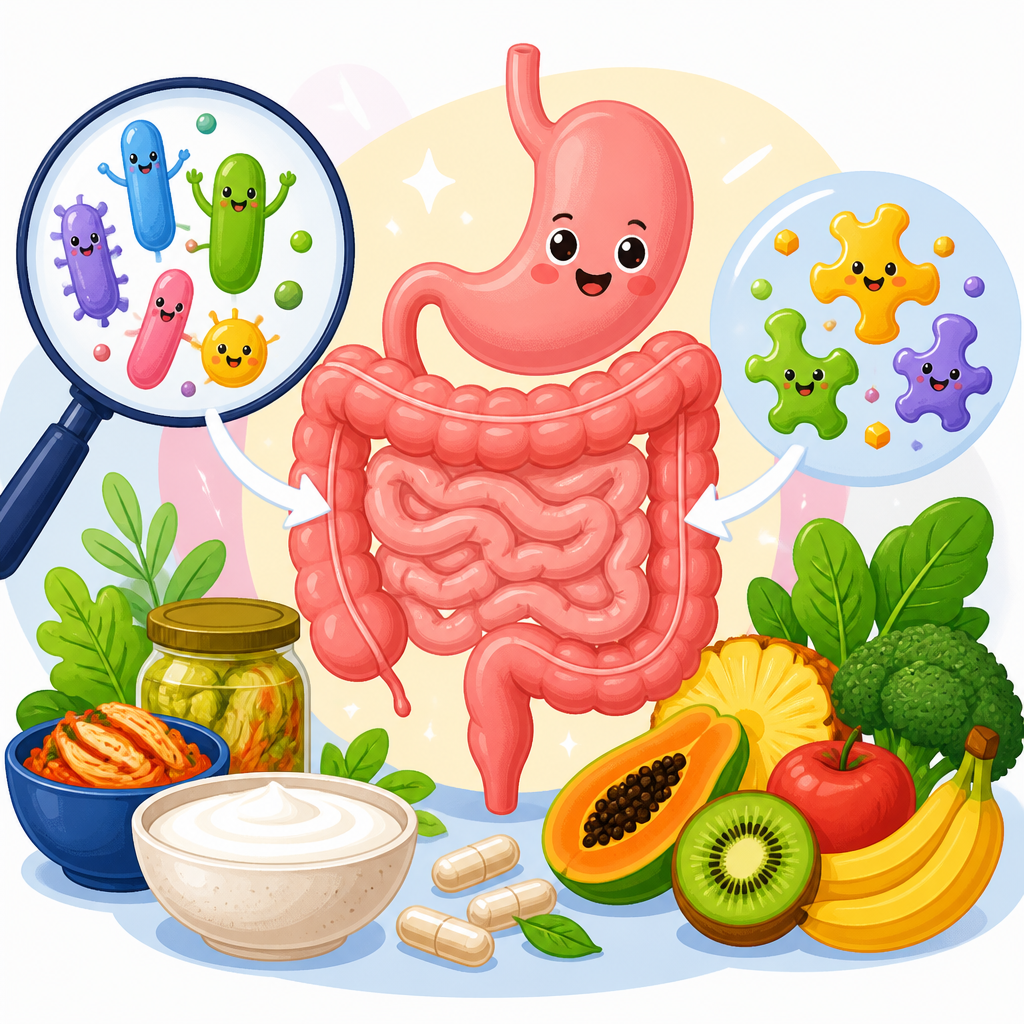
Probiotics and digestive enzymes are often discussed together, yet they do very different jobs in the body, and many of the strongest marketing claims about them are either incomplete or plainly wrong. Probiotics are live microorganisms that, when consumed in adequate amounts, may provide a health benefit in specific situations. Digestive enzymes are proteins that break food into smaller molecules, such as lactase splitting lactose or lipase helping digest fats. They are not interchangeable, they do not solve every gut complaint, and they should never be treated as magic fixes for a poor diet, unmanaged disease, or vague symptoms that have not been evaluated properly.
This distinction matters because digestive complaints are common and expensive. Bloating, irregular stools, reflux, gas, abdominal discomfort, food intolerance, and post-meal heaviness drive millions of clinic visits and supplement purchases every year. In practice, I have seen people take a broad probiotic for months when the real issue was lactose intolerance, low fiber intake, celiac disease, irritable bowel syndrome, or medication side effects. I have also seen people rely on over-the-counter enzyme blends for symptoms caused by gallbladder disease or pancreatic insufficiency, conditions that require medical diagnosis and targeted care. When consumers understand what these products can and cannot do, they make safer choices and get better results.
Several key terms help frame the topic clearly. The gut microbiome refers to the community of bacteria, fungi, viruses, and other microbes living primarily in the large intestine. A probiotic strain is identified precisely by genus, species, and strain designation, such as Lactobacillus rhamnosus GG, because effects are strain specific. A prebiotic is a substance, often a fermentable fiber, that selectively feeds beneficial microbes. Digestive enzymes include amylase for carbohydrates, protease for proteins, lipase for fats, and specialty enzymes such as lactase or alpha-galactosidase. Effective use depends on matching the right tool to the right problem.
As a hub page for probiotics and digestive enzymes within supplements and nutraceuticals, this article addresses the myths that confuse shoppers most. It explains where evidence is strong, where it is mixed, how products are regulated, who may benefit, and when supplements are not enough. If you want a practical, evidence-based understanding of probiotics and digestive enzymes, start with the myths, because that is where most bad decisions begin.
Myth 1: Probiotics and digestive enzymes do the same thing
This is the most common misunderstanding, and clearing it up makes every other decision easier. Probiotics influence the microbial environment of the gut. Depending on the strain, they may compete with pathogens, produce short-chain fatty acids, support intestinal barrier function, or modulate immune signaling. Digestive enzymes, by contrast, act directly on food. They work in the stomach or small intestine to break macronutrients and certain food components into absorbable units. One category changes microbial or host signaling; the other improves chemical digestion.
A simple example shows the difference. Someone who feels gassy after eating ice cream may benefit from lactase taken with dairy if lactose malabsorption is the cause. A probiotic is not a substitute for lactase in that moment. Conversely, someone taking antibiotics who develops antibiotic-associated diarrhea may benefit from a studied probiotic strain, while an enzyme product would not address the disruption in the microbiome. The symptoms can overlap, but the mechanism is different, and mechanism should guide product choice.
There are also cases where both can play a role, but for separate reasons. A person with irritable bowel syndrome may use a targeted probiotic trial for bowel pattern support and alpha-galactosidase before beans to reduce fermentation of hard-to-digest carbohydrates. That does not mean the supplements are interchangeable. It means the gut is a system, and different tools can address different parts of that system.
Myth 2: All probiotics are basically the same
They are not. Probiotic effects are strain specific, dose specific, and condition specific. Saying a product contains “10 billion CFU probiotics” tells you far less than the label appears to suggest. CFU means colony-forming units, a measure of viable organisms, but the strain names matter more than the headline number. Saccharomyces boulardii CNCM I-745 has evidence for reducing the risk of some antibiotic-associated diarrhea. Certain strains of Bifidobacterium infantis and Lactobacillus plantarum have been studied for symptoms of irritable bowel syndrome. Results from one strain cannot be assumed for another strain in the same genus.
Quality matters as much as taxonomy. Viability at the time of manufacture is not the same as viability at the end of shelf life. Storage conditions, moisture control, blister packaging, and temperature stability affect whether the labeled dose survives. Reputable manufacturers identify strains fully, provide expiration-dated potency, and often use third-party quality programs such as NSF, USP verification where available, or in-house stability testing aligned with Good Manufacturing Practice standards.
The strongest probiotic recommendation is never “take any probiotic.” It is “take a studied strain for a defined indication, at a tested dose, for a reasonable time frame, and reassess.” That is how probiotics are used intelligently in clinics and why some people report good results while others say they tried probiotics and felt nothing.
Myth 3: Higher CFU counts always mean a better probiotic
More is not automatically better. A 50 billion CFU product is not inherently superior to a 5 billion CFU product if the lower-dose product uses a strain studied successfully at that dose for your specific goal. Some clinical benefits occur at modest doses, while some products use very high counts largely for marketing impact. Excessive focus on CFU count distracts from the important questions: Which strains are included? For what condition were they studied? Does the product deliver potency through the expiration date? Is the formulation supported by human data?
Higher counts can also increase the chance of transient bloating or gas in sensitive users, especially when multiple strains are introduced quickly. In my experience, people with IBS, recent gastroenteritis, or a highly restricted diet often tolerate a simpler product better than a mega-dose blend. Starting low, using a defined trial period of two to eight weeks depending on the use case, and tracking symptoms usually works better than chasing the biggest number on the bottle.
Myth 4: Digestive enzymes are needed by everyone
Healthy people already make digestive enzymes in the salivary glands, stomach, pancreas, and small intestine. Most do not need routine enzyme supplementation. The people most likely to benefit are those with a clear mismatch between digestive demand and enzyme supply, or those consuming foods known to trigger symptoms through a specific digestive pathway. Lactase for lactose intolerance is a classic example. Alpha-galactosidase before beans, lentils, or cruciferous vegetables helps some people digest oligosaccharides that would otherwise be fermented in the colon. Prescription pancreatic enzyme replacement therapy is essential for pancreatic insufficiency caused by chronic pancreatitis, cystic fibrosis, pancreatic surgery, or pancreatic cancer.
Over-the-counter broad enzyme blends can be helpful in selected cases, but they are often overused. Feeling overly full after a very large meal does not necessarily mean your body lacks enzymes. It may simply mean the meal was too large, too fast, too fatty, or paired with alcohol. Enzymes cannot fully offset eating patterns that overwhelm normal digestion. They also cannot correct conditions such as celiac disease, inflammatory bowel disease, peptic ulcer disease, or gallbladder dysfunction.
Myth 5: Digestive enzymes can treat any bloating or food intolerance
Bloating is a symptom, not a diagnosis. It can result from constipation, aerophagia, IBS, pelvic floor dysfunction, small intestinal bacterial overgrowth, carbohydrate malabsorption, gastroparesis, GERD-related swallowing patterns, or highly processed diets low in fiber diversity. Enzymes help only when the mechanism fits. Lactase helps with lactose. Alpha-galactosidase helps with certain legumes and vegetables. Sucrase may matter in rare sucrose intolerance. Pancreatic enzymes treat pancreatic insufficiency. A generic enzyme mix does not reliably solve all forms of bloating because not all bloating comes from incomplete digestion of food.
Food intolerance is similarly nuanced. Gluten intolerance claims are a frequent source of confusion. No over-the-counter digestive enzyme makes gluten safe for someone with celiac disease. That point is non-negotiable. Some products marketed for “gluten digestion” may break down portions of gluten peptides in a test tube, but they do not replace strict gluten avoidance and are not approved treatment for celiac disease. People with diagnosed celiac disease should not experiment based on label promises.
| Symptom or concern | Supplement that may help | When it makes sense | Important limitation |
|---|---|---|---|
| Bloating after dairy | Lactase | Suspected lactose intolerance | Does not treat milk allergy |
| Gas after beans | Alpha-galactosidase | Before legumes or cruciferous vegetables | Will not fix constipation-related bloating |
| Diarrhea after antibiotics | Specific probiotic strains | During and after antibiotic use in appropriate adults | Not for severely immunocompromised patients without medical guidance |
| Greasy stools and weight loss | Pancreatic enzymes | Confirmed pancreatic insufficiency | Requires medical diagnosis and proper dosing |
Myth 6: Probiotics permanently fix the microbiome
The microbiome is dynamic, and most probiotics do not permanently colonize the gut. They tend to exert effects while being taken and for a limited time afterward. Diet, sleep, stress, physical activity, medications, infections, age, travel, and fiber intake shape the microbiome continuously. That is why a capsule alone rarely creates lasting change if the broader environment stays hostile to beneficial microbes.
The most durable improvements usually come from combining targeted supplementation with dietary changes. In practical terms, that means increasing fiber from foods such as oats, beans, berries, chia, and vegetables if tolerated; diversifying plant intake; reducing ultra-processed foods; and addressing sleep and stress. Fermented foods such as yogurt with live cultures, kefir, kimchi, sauerkraut, and tempeh can support microbial diversity, though they are not one-to-one substitutes for a researched probiotic strain. Supplements can be useful, but they work best as part of a system, not as the whole system.
Myth 7: Natural means risk free
Both probiotics and digestive enzymes are generally safe for many healthy adults, but “generally safe” is not the same as risk free. Probiotics can cause temporary gas, bloating, or changes in bowel habits during initiation. More importantly, they are not appropriate for every patient. People who are severely immunocompromised, critically ill, have central venous catheters, or have certain high-risk medical conditions need individualized guidance because rare cases of bloodstream infection linked to probiotic organisms have been reported.
Digestive enzymes carry their own cautions. Some products are derived from porcine pancreas, which matters for people with dietary restrictions or allergies. Bromelain and papain can interact with medications or cause allergic reactions in susceptible individuals. Very high doses of pancreatic enzymes have been associated with fibrosing colonopathy in specific clinical contexts, particularly in cystic fibrosis, which is why prescription oversight exists. Quality control also matters because the supplement market contains variable formulations and occasional mislabeling.
Trusted use starts with a short list: buy from established brands with transparent labeling, use products matched to your symptom pattern, and seek medical input for red-flag symptoms such as weight loss, rectal bleeding, persistent vomiting, fever, nighttime diarrhea, anemia, or symptoms beginning after age fifty without explanation.
Myth 8: If a supplement helps a little, taking more will help more
This assumption leads to wasted money and sometimes worse symptoms. Probiotics do not follow a simple “more is more” rule. Increasing dose, number of strains, or frequency can add cost without adding benefit. The same is true for enzymes. Taking extra capsules long after a meal starts may not help because enzyme timing matters. Lactase should be taken with the first bites of dairy. Alpha-galactosidase works when taken before the problem food. Pancreatic enzymes must be dosed with meals and snacks according to fat content and clinical guidance.
The better approach is structured testing. Choose one product with a plausible mechanism, use it correctly, track outcomes such as stool form, urgency, pain, bloating, and meal tolerance, then stop if there is no meaningful benefit after an appropriate trial. This is exactly how clinicians separate useful interventions from noise. Random stacking of supplements makes it hard to tell what is working and can mask symptoms that deserve real evaluation.
Choosing wisely and knowing when to get help
The best probiotic or digestive enzyme is the one that fits a defined problem, has credible evidence behind it, and is used correctly. For probiotics, that means looking for full strain identification, expiration-dated potency, storage instructions, and human studies relevant to your goal. For digestive enzymes, it means matching the enzyme to the trigger food or diagnosed deficiency, checking the ingredient source, and using meal timing correctly. If a label relies on buzzwords but avoids specifics, that is a warning sign.
It also helps to know what supplements cannot replace. They do not substitute for testing when symptoms suggest celiac disease, inflammatory bowel disease, chronic pancreatitis, bile acid diarrhea, peptic ulcer disease, or colon cancer. They do not undo the effects of chronic sleep deprivation, highly restrictive dieting, recurrent antibiotic exposure, or low-fiber eating. In many cases, the biggest gains come from a combined plan that includes symptom history, diet review, selective testing, and a targeted supplement trial rather than blind long-term use.
Common myths about probiotics and digestive enzymes persist because both categories sit at the intersection of real science and aggressive marketing. The science is useful when applied precisely. Probiotics are not all the same, higher CFU counts are not automatically better, and they do not permanently fix the microbiome. Digestive enzymes are not necessary for everyone, and they cannot treat every form of bloating or food intolerance. Used well, these supplements can reduce specific symptoms and support digestive function. Used casually, they often disappoint or delay proper care.
The main benefit of understanding probiotics and digestive enzymes is simple: you stop guessing and start matching the right intervention to the right problem. Use this hub as your starting point for smarter decisions within supplements and nutraceuticals, and if symptoms are persistent, severe, or unclear, bring your product list and symptom timeline to a qualified clinician for a focused review.
Frequently Asked Questions
Are probiotics and digestive enzymes basically the same thing?
No. This is one of the most common misunderstandings, and clearing it up makes the rest of the conversation much easier. Probiotics are live microorganisms, usually specific strains of bacteria or yeast, that may support health when taken in adequate amounts. Digestive enzymes, by contrast, are proteins that help break food down into smaller parts so your body can absorb nutrients. In simple terms, probiotics are microbes, while enzymes are tools used in digestion.
They also work in different ways and in different places. Digestive enzymes act directly on food. For example, lactase helps break down lactose in dairy, lipase helps digest fats, and proteases help split proteins into smaller peptides and amino acids. Probiotics do not do that job. Instead, they may influence the gut environment, interact with the immune system, and in some cases help support balance in the intestinal microbiome. That means they are not interchangeable, even though supplement marketing often places them side by side.
The practical takeaway is that a person who has trouble digesting a specific food may benefit more from the right enzyme than from a probiotic, while someone with a different concern may be looking at an entirely separate question. Lumping them together creates unrealistic expectations. They can both relate to digestive health, but they do not solve the same problems and should not be treated as if they are two versions of the same supplement.
Can probiotics “fix” digestion on their own?
Not usually, and certainly not in the broad, universal way many ads imply. Probiotics are not a cure-all for every digestive complaint. Research suggests that certain probiotic strains may be helpful in specific situations, but benefits are often strain-specific and problem-specific. That means it is not enough for a label to say “contains probiotics.” The exact organism, dose, and intended use matter a great deal.
For example, some probiotics have been studied for helping reduce the risk of antibiotic-associated diarrhea or for supporting recovery in certain digestive situations. But that does not mean any probiotic will help with bloating after meals, chronic indigestion, reflux, constipation, or food intolerance. Digestive symptoms can have many causes, including low enzyme activity, irritable bowel syndrome, infections, medication side effects, stress, or underlying medical conditions. A probiotic cannot be expected to address all of those causes.
It is also important to remember that probiotics do not directly digest your meals for you. If someone lacks enough lactase and gets gas or diarrhea after consuming milk, a probiotic is not the same as taking lactase. Similarly, if someone has a condition affecting pancreatic enzyme output, a probiotic is not a substitute for medical treatment. Probiotics may play a supportive role for some people, but the myth is thinking they are a one-step answer for every digestive issue. They are better understood as targeted tools with limited, evidence-based uses rather than a universal digestive reset button.
Do digestive enzymes permanently improve gut health or replace your body’s natural digestion?
No. Digestive enzymes do not permanently “repair” the digestive system, and they do not teach the body to digest better over the long term. Their main role is immediate and functional: they help break down food while they are present. Once they have done that job, their effect is over. This is why enzyme supplements are generally tied to meals and why their usefulness depends heavily on what problem a person is actually trying to address.
A good example is lactase. If someone is lactose intolerant, taking lactase with dairy may help reduce symptoms because the enzyme helps split lactose before it causes trouble. But that does not mean the person has cured lactose intolerance. The same idea applies more broadly: digestive enzymes may help with digestion in the moment, but they are not automatically rebuilding the gut lining, restoring the microbiome, or correcting every source of bloating and discomfort.
This is also why the “more is better” marketing around enzyme blends can be misleading. A long list of enzymes on a bottle does not guarantee better results. What matters is whether those enzymes match a real need. Many healthy people already produce the enzymes they need to digest normal meals. For them, an enzyme supplement may do little or nothing noticeable. In short, digestive enzymes can be useful in the right context, but they are not a permanent upgrade to digestive health and they should not be confused with treatment for underlying disease.
Is it true that everyone should take probiotics and digestive enzymes every day?
No. There is no universal rule that every person needs both supplements daily. That idea is driven more by marketing than by evidence. Whether either one is useful depends on the individual, the symptom, the product, and the reason for taking it. Some people may benefit from a specific probiotic for a defined purpose. Others may only need an enzyme occasionally with certain foods. Many people do not need either at all.
Healthy digestion is influenced by far more than supplements. Overall diet, fiber intake, hydration, sleep, stress, physical activity, medical history, and medication use can all affect how the gut feels and functions. If someone is eating quickly, consuming large meals, dealing with stress, or reacting to poorly tolerated foods, taking random probiotics or enzyme blends may not solve the real issue. Supplements can sound simple, but digestion is rarely that simple.
There is also an important quality issue. Not all probiotic products contain the same strains or amounts, and not all enzyme products are equally formulated or necessary. Daily use only makes sense if there is a clear reason and a product that matches that reason. Otherwise, people may spend money on supplements that offer little benefit. A more evidence-based approach is to identify the actual digestive concern first, then determine whether a specific probiotic strain, a particular enzyme, dietary changes, or medical evaluation makes the most sense.
Are the strongest claims about probiotics and digestive enzymes usually supported by science?
Not always. In fact, some of the boldest claims are the ones that deserve the most skepticism. Statements such as “restores total gut health,” “eliminates bloating forever,” “heals the digestive system,” or “works for everyone” are usually far broader than the evidence supports. Both probiotics and digestive enzymes can be helpful in certain situations, but neither category should be treated as magic.
With probiotics, the science is nuanced. Benefits are often linked to specific strains studied for specific outcomes. One strain cannot automatically stand in for another, and a product with multiple strains is not automatically better than a single-strain product. With digestive enzymes, the science is also very context-dependent. An enzyme only helps if it is the right enzyme for the food or digestive issue involved. Lactase for lactose is a straightforward example. Beyond that, many generalized claims become less certain.
The most accurate way to think about these products is as specialized tools rather than broad wellness shortcuts. That does not mean they are ineffective; it means they should be used with realistic expectations. Good science usually sounds more careful than advertising. It asks which strain, which enzyme, what dose, what symptom, and in whom. If a claim ignores those details and promises sweeping results, it is probably oversimplifying the truth. For readers trying to separate fact from hype, that is one of the most useful filters to remember.