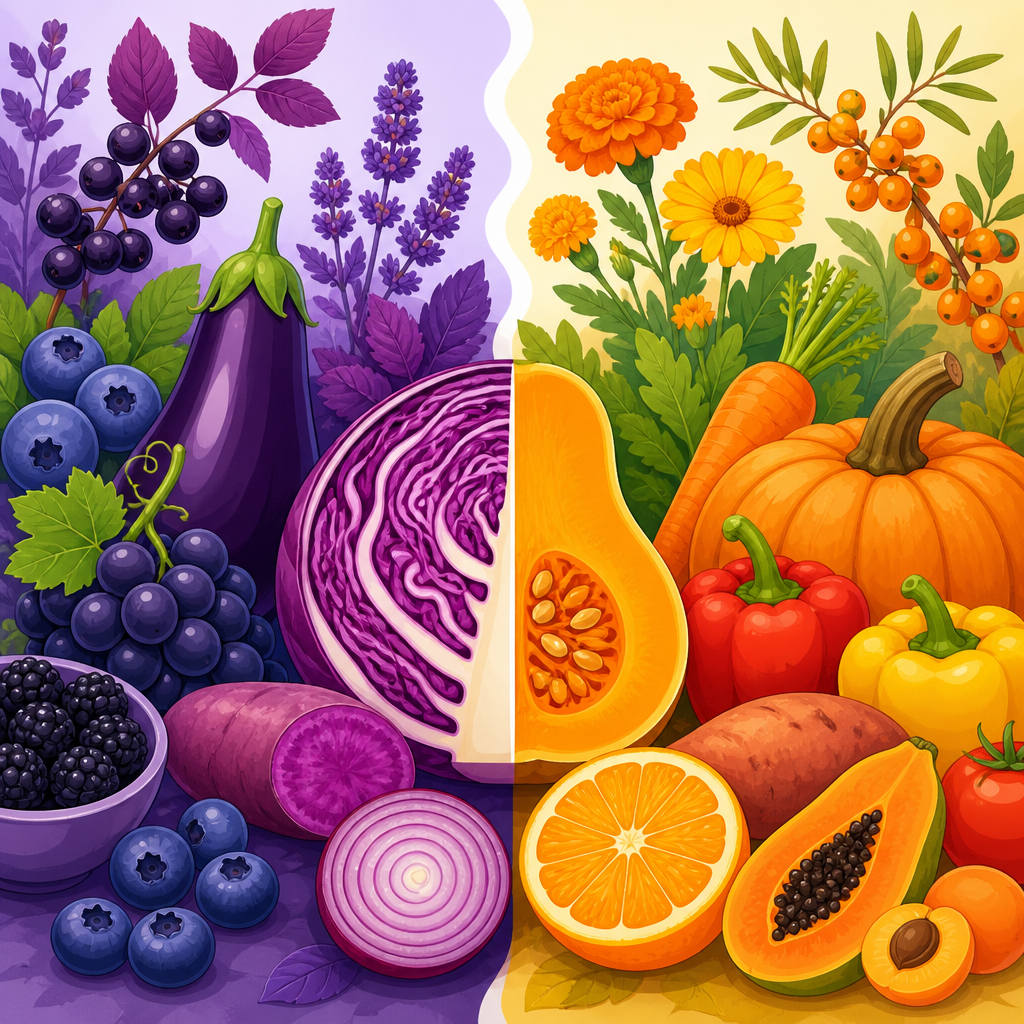
Anthocyanins and carotenoids are two of the most important plant pigments in the human diet, and understanding where to find them is one of the simplest ways to build a colorful, antioxidant-rich eating pattern. In nutrition, a plant pigment is a natural compound that gives fruits, vegetables, grains, and herbs their red, purple, blue, yellow, orange, or deep green color. Anthocyanins are water-soluble flavonoid compounds that create red, purple, and blue tones in foods such as blueberries, black rice, red cabbage, and cherries. Carotenoids are fat-soluble pigments responsible for yellow, orange, and many red hues in carrots, pumpkin, sweet potatoes, mangoes, tomatoes, and peppers. Both groups matter because they do more than color food: they also help protect plants from environmental stress, and when people eat them regularly, they contribute to the broader antioxidant network that supports human health.
When people ask about the importance of antioxidants, the most useful answer is practical rather than abstract. Antioxidants are compounds that help neutralize unstable molecules called free radicals, which are generated during normal metabolism and increased by smoking, excess ultraviolet exposure, pollution, heavy alcohol use, chronic inflammation, and some disease states. Oxidative stress occurs when free radical production outpaces the body’s defense systems. That imbalance can damage lipids, proteins, and DNA over time. In real food, antioxidants do not act as isolated miracle ingredients. They work as part of a matrix that includes vitamin C, vitamin E, polyphenols, carotenoids, minerals, fiber, and thousands of phytochemicals that interact with human biology in overlapping ways. That is why nutrition guidance consistently emphasizes eating a wide variety of plant foods instead of chasing one supplement or one “superfood.”
As a hub topic within nutrition basics, plant pigments are useful because they make antioxidants visible. If a plate includes dark berries, leafy greens, orange vegetables, red tomatoes, purple grains, and fresh herbs, it usually includes a broad spread of protective compounds. In my work reviewing dietary patterns and food composition data, I have found that people remember color far better than biochemical names. Telling someone to eat cyanidin, delphinidin, lutein, zeaxanthin, lycopene, and beta-carotene is not memorable. Telling them to rotate blueberries, red cabbage, spinach, carrots, tomatoes, corn, and sweet potatoes is. This article explains the difference between anthocyanins and carotenoids, where to find each one, how cooking and storage affect them, and how to use color as a reliable shortcut for building an antioxidant-rich diet.
Why antioxidants matter in everyday nutrition
The importance of antioxidants is often overstated in marketing and understated in basic meal planning. They are not a cure-all, but they are central to the value of fruits, vegetables, legumes, nuts, seeds, herbs, spices, tea, cocoa, and whole grains. A diet rich in antioxidant-containing plant foods is consistently associated with lower risk of cardiovascular disease and better long-term health outcomes. That does not mean one antioxidant prevents one disease in a direct, drug-like way. It means dietary patterns high in varied plant foods support healthier blood vessels, reduce chronic inflammatory burden, improve nutrient adequacy, and often displace more heavily processed foods that contribute little protective value.
It also helps to separate food-based antioxidants from high-dose supplements. Large clinical trials have not supported the idea that taking isolated antioxidant pills automatically reproduces the benefits of eating plants. Beta-carotene supplements, for example, have shown harm in smokers in some trials, which is very different from the effect of consuming carotenoid-rich vegetables. Food context matters. Fiber changes absorption. Fat influences carotenoid uptake. Vitamin C can help preserve some compounds. Heat can increase the bioavailability of others. The best evidence still supports a pattern built on diverse whole and minimally processed plant foods. Plant pigments provide one of the clearest ways to understand that pattern because they map directly onto food choice.
Anthocyanins: the red, purple, and blue pigment family
Anthocyanins belong to the flavonoid family, and they are concentrated in many of the foods people recognize as deeply colored: blueberries, blackberries, raspberries, blackcurrants, elderberries, red grapes, tart cherries, blood oranges, purple corn, black rice, red onion, eggplant skin, and red cabbage. The specific shade depends partly on pH, which is why red cabbage can shift toward blue or purple during cooking. Chemically, anthocyanins are glycosides of anthocyanidins such as cyanidin, delphinidin, malvidin, pelargonidin, peonidin, and petunidin. You do not need to memorize those names to eat well, but they matter because different foods contain different dominant forms, and that variation may influence stability and biological activity.
From a nutrition standpoint, anthocyanin-rich foods are valuable because they contribute antioxidant and anti-inflammatory activity and often come packaged with vitamin C, potassium, manganese, and fiber. Berries are the best-known example. A cup of blueberries or blackberries delivers pigment, water, sweetness, and fiber in a relatively low-calorie form. Red cabbage is one of the most overlooked sources: it is inexpensive, available year-round, stores well, and can be eaten raw in slaws or lightly cooked. Black rice and purple corn show that pigments are not limited to produce; they also appear in staple grains, where they can broaden antioxidant intake in populations that rely heavily on refined starches.
Anthocyanins are relatively sensitive compared with some other pigments. Because they are water-soluble, boiling can cause them to leach into cooking liquid. Long storage, high heat, and alkaline conditions can reduce their intensity. That does not mean cooked purple foods are useless. It means preparation matters. Roasting beets preserves color differently than boiling red cabbage. Frozen berries can still be excellent options because they are usually processed soon after harvest. If the cooking liquid is consumed, as in soups or braised dishes, some of the migrated compounds remain part of the meal. In practice, the best strategy is to include anthocyanin-rich foods in both raw and cooked forms across the week.
Carotenoids: the yellow, orange, red, and deep green pigment family
Carotenoids include more than 600 compounds, but several dominate in foods and public health nutrition: beta-carotene, alpha-carotene, beta-cryptoxanthin, lycopene, lutein, and zeaxanthin. Beta-carotene and alpha-carotene are abundant in carrots, sweet potatoes, pumpkin, winter squash, and dark leafy greens. Beta-cryptoxanthin appears in foods such as papaya, tangerines, persimmons, and red peppers. Lycopene is concentrated in tomatoes, watermelon, pink grapefruit, guava, and some papaya varieties. Lutein and zeaxanthin are found in kale, spinach, collard greens, peas, pistachios, zucchini, and yellow corn. Unlike anthocyanins, carotenoids are fat-soluble, which has important implications for absorption and food preparation.
Several carotenoids serve as provitamin A compounds, meaning the body can convert them to retinol as needed. Beta-carotene is the best known in this role. Vitamin A is essential for vision, immune function, reproduction, and epithelial integrity. Other carotenoids, especially lutein and zeaxanthin, are valued for their concentration in the macula of the eye, where they help filter high-energy light and support retinal health. Lycopene stands out because it is not a vitamin A precursor yet has been studied extensively for its antioxidant behavior and its concentration in tomato-based foods. The key point is that carotenoids are not interchangeable. A carrot and a tomato are both colorful, but they deliver different pigment profiles and different nutritional strengths.
Carotenoid absorption improves when foods are eaten with some dietary fat and when cell walls are softened by chopping, blending, or cooking. This is why a tomato salad with olive oil generally offers more usable carotenoid intake than dry tomato slices alone, and why cooked tomato sauce can provide more bioavailable lycopene than raw tomatoes. Similarly, lightly sautéed spinach can deliver lutein effectively because heat reduces volume and makes pigments easier to access. I regularly tell clients that “add color and add a little healthy fat” is one of the most evidence-based shortcuts in practical nutrition. It helps explain why traditional dishes like sofrito, vegetable curries, tomato sauces, and stir-fries can be nutritionally efficient, not just flavorful.
Where to find different plant pigments
For most readers, the easiest way to compare anthocyanins and carotenoids is by looking at foods, colors, and best-use patterns side by side. The table below highlights major sources and practical notes that make these pigments easier to include consistently.
| Pigment group | Typical colors | Common food sources | Key notes for nutrition |
|---|---|---|---|
| Anthocyanins | Red, purple, blue | Blueberries, blackberries, cherries, black rice, purple corn, red cabbage, eggplant skin, red onion | Water-soluble; often paired with vitamin C and fiber; some losses with prolonged boiling |
| Beta-carotene and alpha-carotene | Orange, yellow, deep green | Carrots, sweet potatoes, pumpkin, winter squash, spinach, kale | Fat-soluble; some convert to vitamin A; absorption improves with fat and cooking |
| Lycopene | Red | Tomatoes, tomato paste, watermelon, pink grapefruit, guava | Fat-soluble; more bioavailable in cooked tomato products |
| Lutein and zeaxanthin | Yellow, deep green | Kale, spinach, collards, corn, peas, zucchini, pistachios | Important for eye health; often hidden by chlorophyll in green vegetables |
| Beta-cryptoxanthin | Orange, red-orange | Papaya, tangerines, persimmons, red peppers | Fat-soluble; contributes provitamin A activity |
This food-first lens reveals an important principle: color variety is not cosmetic; it is biochemical diversity. A bowl of oatmeal topped with blueberries gives a different antioxidant profile than yogurt with mango, and both differ from eggs with sautéed spinach and tomato. If someone eats only green salad and bananas, their produce intake may look decent on paper, yet their pigment exposure remains narrow. Expanding color range usually improves nutrient range automatically. That is one reason many dietitians teach clients to “eat the rainbow,” even though the phrase can sound simplistic. When applied thoughtfully, it is a useful organizing tool.
How preparation, storage, and meal design change antioxidant value
The nutrient value of plant pigments depends not only on the food but also on what happens before the food is eaten. Oxygen, light, time, temperature, and water all affect antioxidant compounds. Cut apples brown because polyphenol oxidase interacts with oxygen. Leafy greens lose vitamin content during extended storage. Berry quality declines with bruising and warmth. At the same time, some forms of processing improve usefulness. Canned tomatoes, tomato paste, frozen spinach, and cooked carrots can compare favorably with fresh versions for specific carotenoids because the matrix becomes easier to digest. This is why the idea that “fresh is always best” is too simplistic for serious nutrition guidance.
Good meal design balances preservation and absorption. For anthocyanins, choose minimally damaged produce, store it cold, and use methods like quick sautéing, roasting, or raw preparation when practical. For carotenoids, pair colorful vegetables with fats such as olive oil, avocado, tahini, nuts, seeds, or yogurt. Chopping, pureeing, and cooking often help. Acid can protect color in some anthocyanin-rich foods, which is why red cabbage slaw with vinegar holds up well. Portion size also matters. A token shred of carrot will not provide the same carotenoid exposure as a full serving of roasted carrots or sweet potato. Consistency matters more than perfection. A diet built around repeated, generous servings of varied plant foods will outperform occasional “healthy” meals every time.
Building an antioxidant-rich plate and knowing the limits
The most effective way to use this information is to think in combinations, not isolated nutrients. Breakfast might include plain yogurt with blackberries and ground flaxseed. Lunch could be lentil soup with tomatoes, carrots, and spinach. Dinner might pair salmon or tofu with roasted sweet potatoes, purple cabbage slaw, and sautéed greens. Snacks can do real nutritional work too: cherries, red grapes, baby carrots, orange segments, or bell pepper strips all contribute pigment diversity. Herbs and spices matter as well. Parsley, cilantro, paprika, turmeric, and even cocoa add smaller but meaningful amounts of antioxidant compounds across the day.
It is also important to recognize limitations. Antioxidant capacity measured in a laboratory does not automatically predict a health effect in humans. Bioavailability differs by food, person, gut microbiome, and meal composition. Smoking, sleep deprivation, inactivity, and excess alcohol can overwhelm the benefits of an otherwise colorful diet. No berry can cancel out chronic undernutrition or a diet built mostly on ultra-processed foods. Still, among practical nutrition strategies, increasing plant pigment diversity is one of the safest, most affordable, and most evidence-aligned approaches available. It supports better overall diet quality without requiring rigid rules.
Anthocyanins and carotenoids offer a clear, usable framework for understanding where different plant pigments come from and why antioxidants matter. Anthocyanins dominate red, purple, and blue foods such as berries, red cabbage, black rice, and cherries. Carotenoids shape the yellow, orange, red, and deep green spectrum seen in carrots, tomatoes, sweet potatoes, leafy greens, peppers, and corn. Together, they show that color is one of the easiest signals of nutritional variety. They also remind us that antioxidant nutrition is not about one supplement, one score, or one trendy ingredient. It is about repeated exposure to diverse plant compounds in real meals.
As the hub for the broader topic of the importance of antioxidants, this page points to the main principle that connects every subtopic: eat widely across the color spectrum, prepare foods in ways that preserve or improve useful compounds, and build meals that make those compounds easier to absorb. If you want one simple next step, add one purple or blue food and one orange, red, or deep green food to your shopping list this week. That single habit can move your diet toward better antioxidant coverage, better nutrient diversity, and a stronger nutrition foundation overall.
Frequently Asked Questions
What is the difference between anthocyanins and carotenoids?
Anthocyanins and carotenoids are both plant pigments, but they differ in color, chemistry, and where they appear in foods. Anthocyanins are water-soluble flavonoid compounds that create red, purple, and blue shades in many fruits, vegetables, grains, and flowers. You will commonly find them in foods such as blueberries, blackberries, black rice, red cabbage, purple sweet potatoes, cherries, and eggplant skin. Because they are water-soluble, anthocyanins are often concentrated in the outer layers or juices of foods, and their color can shift depending on acidity.
Carotenoids, by contrast, are fat-soluble pigments responsible for yellow, orange, and many red tones, and they are also hidden in dark leafy greens where chlorophyll masks their color. Well-known carotenoids include beta-carotene, lycopene, lutein, and zeaxanthin. Common food sources include carrots, sweet potatoes, pumpkin, mango, papaya, tomatoes, red peppers, corn, spinach, kale, and egg yolks. Nutritionally, both groups are valued for their antioxidant activity, but they are not interchangeable. Anthocyanin-rich foods are often associated with deeply colored berries and purple produce, while carotenoid-rich foods are often found in orange, yellow, red, and dark green produce. Eating both helps create a broader, more diverse intake of beneficial plant compounds.
Which foods are the best sources of anthocyanins?
The best dietary sources of anthocyanins are typically foods with naturally red, purple, blue, or nearly black skins or flesh. Berries are among the richest options, especially blueberries, blackberries, bilberries, elderberries, chokeberries, black currants, and raspberries. Dark cherries, red and purple grapes, plums, and pomegranate also contribute anthocyanins. Among vegetables and grains, red cabbage, purple cauliflower, purple corn, black rice, purple barley, purple carrots, and purple sweet potatoes are especially notable.
It is important to remember that anthocyanins are not found equally across all produce that looks red or purple. For example, some red foods get their color mainly from other pigments, not anthocyanins. In general, if you want to reliably increase anthocyanin intake, focus on berries, purple vegetables, dark grapes, and pigmented whole grains. Fresh, frozen, dried, and minimally processed versions can all contribute, although processing, prolonged storage, and heating may reduce some anthocyanin content. A practical strategy is to include at least one dark blue, purple, or red plant food each day, such as berries at breakfast, red cabbage at lunch, or black rice with dinner.
Which foods are richest in carotenoids?
Carotenoids are concentrated in bright yellow, orange, and red plant foods, as well as many deep green vegetables. Beta-carotene is especially abundant in carrots, sweet potatoes, winter squash, pumpkin, and cantaloupe. Lycopene is found primarily in tomatoes, watermelon, pink grapefruit, guava, and red papaya. Lutein and zeaxanthin are best known from dark leafy greens such as spinach, kale, collards, and Swiss chard, along with corn, peas, and egg yolks. Red, orange, and yellow bell peppers also provide a valuable mix of carotenoids.
One reason carotenoids can be easy to overlook is that green vegetables may contain large amounts even when they do not appear orange or yellow. Chlorophyll visually dominates, but carotenoids are still present underneath. Another important point is that carotenoids are fat-soluble, so they are generally better absorbed when eaten with a source of dietary fat, such as olive oil, avocado, nuts, seeds, yogurt, or eggs. Cooking can also improve availability for certain carotenoids, particularly lycopene in tomatoes and beta-carotene in some vegetables. Tomato sauce, roasted carrots, sautéed spinach, and pureed pumpkin are all excellent examples of carotenoid-rich foods that fit easily into everyday meals.
Is one type of plant pigment healthier than the other?
Neither anthocyanins nor carotenoids should be viewed as universally “better.” They support health in different ways, and the most evidence-based approach is to eat a wide range of colorful plant foods rather than focusing on a single pigment family. Anthocyanin-rich foods are widely studied for their role in supporting vascular health, healthy aging, and overall antioxidant defenses. Carotenoid-rich foods are equally important, with some carotenoids acting as precursors to vitamin A and others, such as lutein and zeaxanthin, being especially important for eye health.
From a nutrition perspective, the bigger advantage comes from variety. A bowl of blueberries offers a different phytochemical profile than a serving of roasted carrots or cooked spinach. Those differences matter because whole foods contain fiber, vitamins, minerals, and many plant compounds that work together. Instead of comparing anthocyanins and carotenoids as competitors, it is more accurate to think of them as complementary parts of a colorful diet. If your plate regularly includes berries, purple vegetables, tomatoes, leafy greens, orange vegetables, and yellow or red produce, you are much more likely to benefit from the full spectrum of plant pigments.
What is the easiest way to add more anthocyanins and carotenoids to everyday meals?
The simplest method is to build meals around color. For anthocyanins, add blueberries, blackberries, cherries, or purple grapes to breakfast; use red cabbage, purple carrots, or black beans in salads and grain bowls; and choose black rice or purple sweet potatoes as side dishes. For carotenoids, include carrots, sweet potatoes, pumpkin, tomatoes, red peppers, spinach, kale, mango, or cantaloupe throughout the day. A smoothie with berries and spinach, a salad topped with tomatoes and shredded red cabbage, or a dinner plate with salmon, roasted carrots, and sautéed greens can cover both pigment families at once.
It also helps to combine practical nutrition habits with basic food science. Since carotenoids are better absorbed with fat, pair them with foods like olive oil, tahini, avocado, nuts, or eggs. Since anthocyanins are often concentrated in colorful skins and outer layers, keep edible peels on produce when appropriate and choose richly pigmented varieties when shopping. Frozen berries, canned tomato products, and pre-cut vegetables can make consistency easier and are often just as useful as fresh options. Over time, the goal is not perfection but pattern: regularly eating blue, purple, red, orange, yellow, and deep green plant foods is one of the most realistic and effective ways to increase both anthocyanins and carotenoids in the diet.