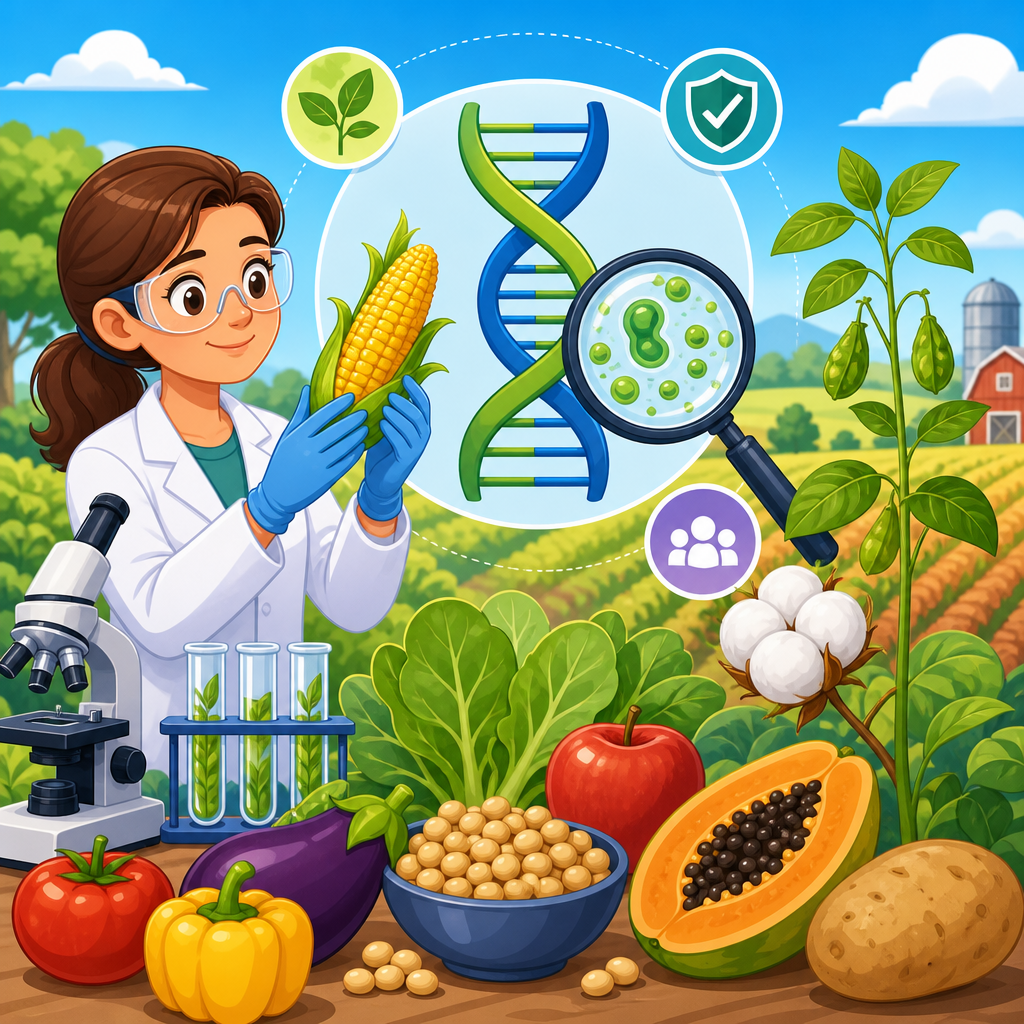
Understanding GMOs and their impact starts with a clear definition: a genetically modified organism is a plant, animal, or microbe whose DNA has been altered using modern biotechnology to introduce, remove, or regulate specific traits. In food science, the term usually refers to crops such as corn, soybeans, cotton, canola, sugar beets, papaya, and some squash varieties that have been engineered for insect resistance, herbicide tolerance, disease resistance, improved oil profiles, or other agronomic traits. This matters because GMOs sit at the intersection of agriculture, nutrition, environmental stewardship, trade, labeling, and public trust. I have worked with food labeling reviews and ingredient traceability projects, and the same questions come up repeatedly: Are GMOs safe to eat, do they reduce pesticide use, who regulates them, and how should consumers think about them in a sustainable food system?
Those questions deserve direct answers. Broadly, major scientific bodies including the National Academies of Sciences, Engineering, and Medicine, the World Health Organization, the American Medical Association, and the European Commission have concluded that approved GMO foods currently on the market are not inherently riskier to human health than comparable conventional foods. At the same time, GMOs are not a single product category with one universal outcome. Each trait, crop, growing system, and region creates different benefits and tradeoffs. A pest-resistant corn hybrid can reduce insecticide spraying in one context, while herbicide-tolerant soybeans can contribute to weed resistance problems if overused in another. A complete guide therefore needs to separate the technology itself from the way it is deployed, regulated, and managed across the food supply chain.
What GMOs Are and How Genetic Modification Works
Genetic modification changes an organism’s genetic material using laboratory techniques more precise than conventional crossbreeding. Traditional breeding shuffles thousands of genes over many generations, while genetic engineering targets a known trait. In practical terms, scientists identify a gene associated with a useful characteristic, insert or edit it, and then test whether the new variety performs as intended. Earlier methods often used Agrobacterium-mediated transformation or a gene gun to introduce DNA into plant cells. Newer methods include gene editing tools such as CRISPR-Cas systems, TALENs, and zinc finger nucleases, which can make smaller, targeted changes. Not every gene-edited crop falls under the same regulatory category as a transgenic GMO, but the scientific principle is similar: deliberate modification of genetic function to achieve a defined trait.
The most common commercial traits are straightforward. Bt crops contain genes from the bacterium Bacillus thuringiensis that enable the plant to produce proteins toxic to specific insect pests but not to humans at approved exposure levels. Herbicide-tolerant crops are engineered to survive applications of herbicides such as glyphosate or glufosinate, allowing farmers to control weeds without harming the crop. Other traits focus on quality and resilience. Virus-resistant papaya saved Hawaii’s papaya industry from ringspot virus. Non-browning Arctic apples reduce enzymatic browning after slicing. Innate potatoes were designed to reduce bruising and lower acrylamide potential during high-temperature cooking. These examples show that “GMO” describes a breeding approach, not a single nutritional profile or environmental effect.
How GMOs Are Evaluated for Food Safety and Regulation
Food safety oversight is one of the most misunderstood parts of the GMO discussion. In the United States, oversight is shared among the USDA, FDA, and EPA. The USDA evaluates plant pest risks and aspects of environmental release. The FDA reviews food and feed safety, including allergenicity, toxicity, nutritional composition, and substantial equivalence compared with conventional counterparts. The EPA regulates pesticidal substances produced by plants, such as Bt proteins, and sets residue tolerances where relevant. In the European Union, the European Food Safety Authority conducts risk assessments, and approvals involve both scientific review and political decision-making by member states. Canada, Brazil, Argentina, and Japan also have established regulatory systems, though the exact triggers and approval pathways differ.
When I review GMO safety documentation, the key point is that assessment is trait-specific and product-specific. Regulators do not simply ask whether a food was genetically engineered. They ask what changed, whether the inserted or edited sequence is stable, whether the new protein resembles known allergens or toxins, whether nutrient levels changed materially, and whether the crop behaves differently in the environment. Developers submit compositional analyses, molecular characterization, agronomic performance data, and animal feed studies when relevant. Post-approval stewardship matters too. Resistance management plans for Bt crops, refuge requirements, and monitoring programs are part of responsible commercialization. That process does not make every debate disappear, but it does mean approved GMO foods go through structured review rather than entering the market unexamined.
Common GMO Crops and the Traits They Deliver
Most GMO acreage worldwide is concentrated in a small number of commodity crops. Soybeans and corn dominate, followed by cotton and canola, with sugar beets, alfalfa, papaya, and some squash occupying smaller but important niches. In the United States, a large share of processed food ingredients are linked to these crops through corn syrup, soy lecithin, canola oil, cottonseed oil, cornstarch, and beet sugar. That is why consumers often encounter GMO discussions in packaged food aisles even though fresh-market GMO produce is relatively limited. The impact is especially strong in animal feed, where GMO corn and soybean meal are major inputs for poultry, dairy, pork, and beef production.
| Crop | Common engineered trait | Main practical benefit | Real-world example |
|---|---|---|---|
| Corn | Bt insect resistance, herbicide tolerance | Lower crop losses, simpler weed control | Reduced damage from European corn borer |
| Soybeans | Herbicide tolerance | Efficient weed management in large fields | Broad adoption in U.S. and Brazil |
| Papaya | Virus resistance | Protects yields against devastating disease | Hawaiian papaya recovery after ringspot virus |
| Canola | Herbicide tolerance, oil quality traits | Improved field management and oil applications | Widely used in Canada |
Adoption rates reflect economics as much as biology. Farmers choose a GMO seed when the added trait improves yield stability, lowers labor requirements, reduces fuel use, or makes pest control more predictable. Insect-resistant cotton in India and Bt maize in several countries illustrate this logic, although outcomes vary by pest pressure, seed cost, weather, and extension support. It is also important to note what is not widely commercialized. There are no mass-market GMO wheat varieties in most major food systems, and many fruits and vegetables remain conventionally bred because market acceptance, supply chain segregation, and regulatory costs shape adoption decisions as much as scientific feasibility.
Environmental Impacts: Benefits, Limits, and Management Challenges
The environmental record of GMOs is mixed in ways that are often flattened by polarized debate. Some traits have delivered measurable benefits. Bt crops have reduced the need for certain broad-spectrum insecticide applications, which can support beneficial insects and lower operator exposure. Herbicide-tolerant systems made conservation tillage and no-till farming easier in many regions, reducing soil erosion, fuel use, and carbon losses from repeated plowing. Several meta-analyses have reported lower pesticide quantities or toxicity impacts in specific contexts, especially where insect pressure is high and Bt crops replace older chemistries. These are meaningful sustainability gains when the technology is integrated into a broader management plan.
However, benefits can erode if the system is oversimplified. Heavy reliance on a single herbicide has accelerated the spread of resistant weeds such as Palmer amaranth and waterhemp in parts of the United States. Likewise, insect resistance can emerge when refuge requirements are ignored or when a trait is planted continuously without integrated pest management. Biodiversity concerns depend on landscape context, crop rotation, and chemical use patterns, not solely on whether a crop is genetically engineered. In practice, the most sustainable outcomes come from stacking tools: crop rotation, cover crops, multiple herbicide modes of action, refuge compliance, scouting, and threshold-based spraying. GMOs can support sustainability, but they do not replace agronomy.
Human Health, Nutrition, and Consumer Concerns
For most shoppers, the first concern is simple: are GMO foods safe to eat? The evidence from decades of consumption and repeated regulatory review supports the conclusion that approved GMO foods are as safe as their conventional counterparts. Safety does not mean every food is equally nutritious, and genetic engineering does not automatically improve health outcomes. A GMO cookie remains a cookie. The nutrition question depends on the product. Some engineered foods aim to improve composition, such as high-oleic soybean oil with a more stable fatty acid profile for frying, or biofortified crops under development intended to address micronutrient gaps. Others are agronomic tools with little direct change to the final nutrient label.
Consumer concern also extends to allergens, antibiotics, and long-term effects. Allergenicity assessment is a standard part of review, and developers evaluate whether newly expressed proteins resemble known allergens, survive digestion unusually well, or alter known allergenic pathways. Early research pathways that raised concerns, such as using antibiotic resistance marker genes, led to stricter scrutiny and alternative methods. The phrase “long-term effects” often reflects a broader worry about trust rather than a single measurable hazard. In my experience, people respond best when the answer is balanced: approved GMO foods have a strong safety record, but consumers are still entitled to ask how crops were grown, how herbicides were used, who controls seed access, and whether a product aligns with their values.
Economics, Labeling, and the Future of GMO Technology
GMOs have reshaped agricultural economics by changing input costs, labor patterns, and yield risk. Seed prices are often higher because traits carry research, licensing, and regulatory costs, yet many growers still adopt them because field operations become more efficient and crop losses decline. For large-acre crops, a simpler weed control program can save labor and machinery passes, while insect-resistant traits can protect revenue in bad pest years. The downsides are real. Market concentration in the seed industry can reduce farmer choice, intellectual property rules can limit seed saving, and export markets with strict approval mismatches can create trade friction. The economic impact therefore depends on region, farm scale, trait package, and downstream market access.
Labeling has become a bridge between regulatory science and consumer autonomy. In the United States, the National Bioengineered Food Disclosure Standard requires certain foods to disclose bioengineered ingredients through text, symbols, or digital links, although highly refined ingredients may qualify differently depending on detectability and sourcing. Other countries use their own thresholds and terminology, which is why labels vary internationally. Looking ahead, gene editing is likely to expand the conversation beyond classic transgenic crops. Developers are working on drought tolerance, disease resistance, reduced food waste, nitrogen-use efficiency, and traits tailored to climate stress. The practical question for the next decade is not whether biotechnology will exist in food production. It is whether regulators, companies, farmers, and communicators can deploy it transparently, measure outcomes honestly, and integrate it with sustainable farming systems.
Understanding GMOs and their impact requires a practical, case-by-case mindset. The strongest conclusion from decades of evidence is that approved GMO foods are not inherently unsafe, and the strongest caution is that agricultural outcomes depend on how traits are used in the field. Some GMO crops reduce insecticide use, protect harvests from disease, and support soil-conserving practices. Others can contribute to herbicide resistance or market concentration when stewardship and competition are weak. That is why the smartest way to evaluate GMOs is to ask four direct questions: what trait was introduced, what problem does it solve, what tradeoffs come with it, and how is it being managed over time?
As a hub within Food Science & Sustainability, this guide should help you read every GMO claim more critically. Separate the breeding method from the final food, distinguish health evidence from environmental management issues, and look for product-specific data instead of broad slogans. If you want to go deeper, continue into related topics such as gene editing, pesticide reduction, food labeling, crop biodiversity, and sustainable farming systems. Better decisions start with better definitions, and on GMOs, clarity is more useful than certainty theater. Use this framework whenever you evaluate a headline, a product label, or a policy proposal, and you will be far better equipped to judge what actually benefits people, farms, and the food system.
Frequently Asked Questions
What is a GMO, and how is it different from traditional plant breeding?
A GMO, or genetically modified organism, is a plant, animal, or microorganism whose genetic material has been altered using modern biotechnology. In the context of food, the term most often refers to crops that have been engineered to express specific traits, such as insect resistance, herbicide tolerance, disease resistance, or improved nutritional or oil profiles. Common examples include certain varieties of corn, soybeans, cotton, canola, sugar beets, papaya, and squash. The goal is usually to introduce, remove, or regulate a trait in a more targeted way than would be possible through conventional methods alone.
Traditional plant breeding, by contrast, relies on crossing plants with desirable characteristics over multiple generations and selecting the offspring that perform best. That approach has shaped agriculture for centuries, but it can be time-consuming and less precise because many genes are mixed together at once. Genetic modification differs in that scientists can work with a specific gene or trait and evaluate its effects in a controlled, measurable way. While both approaches aim to improve crops, modern genetic engineering allows researchers to target outcomes more directly, which is one reason it has become an important tool in agriculture and food production.
Why are GMO crops developed, and what traits are they designed to have?
GMO crops are developed to solve practical agricultural problems and improve crop performance in the field. One of the most widely used traits is insect resistance, where a crop is engineered to help protect itself against certain damaging pests. This can reduce crop losses and, in some cases, lower the need for broad-spectrum insecticide applications. Another common trait is herbicide tolerance, which allows farmers to manage weeds more efficiently without harming the crop itself. Weed control is a major issue in farming because weeds compete with crops for water, nutrients, sunlight, and space, all of which can affect yield and quality.
Beyond pest and weed management, GMO crops may also be engineered for disease resistance, improved drought response, longer shelf life, or enhanced nutritional and processing characteristics. For example, some crops are modified to produce healthier oil profiles or to better withstand plant diseases that might otherwise devastate harvests. In certain cases, genetic engineering has helped preserve important crops in specific regions, such as papaya varieties developed to resist viral disease. Overall, GMO technology is used to address both farm-level challenges and broader food system needs, including productivity, crop stability, and product quality.
Are GMO foods safe to eat?
According to major scientific and regulatory bodies, GMO foods that reach the market are considered safe to eat based on the evidence available from extensive testing and review. Safety assessments typically examine whether the modified food differs meaningfully from its conventional counterpart in ways that affect human health. Scientists evaluate factors such as nutritional composition, potential toxicity, allergenicity, and the stability of the introduced trait. Regulatory systems vary by country, but in general, approved GMO foods undergo detailed review before commercialization.
It is important to understand that GMO safety is assessed on a case-by-case basis, not as a blanket assumption about all genetically engineered products. That means each crop and trait is evaluated for its specific characteristics and intended use. This is similar to how other food technologies are reviewed: the relevant question is not simply whether a food was produced using biotechnology, but whether the final product is safe and suitable for consumption. While public debate continues around labeling, environmental management, and corporate control of seed systems, the scientific consensus on approved GMO foods is that they are not inherently less safe than comparable non-GMO foods.
What impact do GMOs have on the environment and farming practices?
The environmental impact of GMOs depends heavily on the crop, the trait, and how the technology is managed in real-world farming systems. In some situations, GMO crops can offer environmental benefits. Insect-resistant crops, for instance, may reduce the need for certain insecticide applications, which can lessen chemical exposure for farm workers and reduce impacts on surrounding ecosystems when used responsibly. Herbicide-tolerant crops can also support conservation tillage or no-till farming practices, which may help reduce soil erosion, conserve moisture, and lower fuel use by limiting the need for repeated mechanical weed control.
At the same time, GMO use is not environmentally neutral or universally beneficial in every context. Heavy reliance on a single weed-control strategy can contribute to herbicide-resistant weeds over time, just as repeated use of the same pest-control tool can lead to resistant insect populations. That is why stewardship, crop rotation, integrated pest management, and diversified farming practices are essential. In other words, GMOs are tools, not standalone solutions. Their long-term environmental impact is shaped by how thoughtfully they are integrated into broader agricultural systems. When used well, they can support productivity and resource efficiency, but poor management can reduce those benefits.
Do GMOs change the nutritional value or quality of food?
Many GMO foods are designed to be substantially similar to their conventional counterparts in nutritional content, especially when the engineered trait is related to farming performance rather than composition. For example, if a soybean is modified for herbicide tolerance, the resulting food product is generally expected to have a nutritional profile comparable to traditional soybean products. As part of the approval process, scientists often compare protein, fat, carbohydrate, vitamin, mineral, and other compositional data to confirm that the food remains within expected ranges.
However, genetic engineering can also be used intentionally to change food quality or nutrition. Some crops have been developed with improved oil composition, altered starch properties, or enhanced nutrient content to better meet consumer, industrial, or public health needs. This means the technology is capable of doing more than just improving field performance; it can also shape how food functions, tastes, stores, or contributes nutritionally. The key point is that nutritional impact is trait-specific. A GMO food does not automatically have better or worse nutrition simply because it is genetically engineered. What matters is the purpose of the modification and the scientific evidence evaluating the final product.