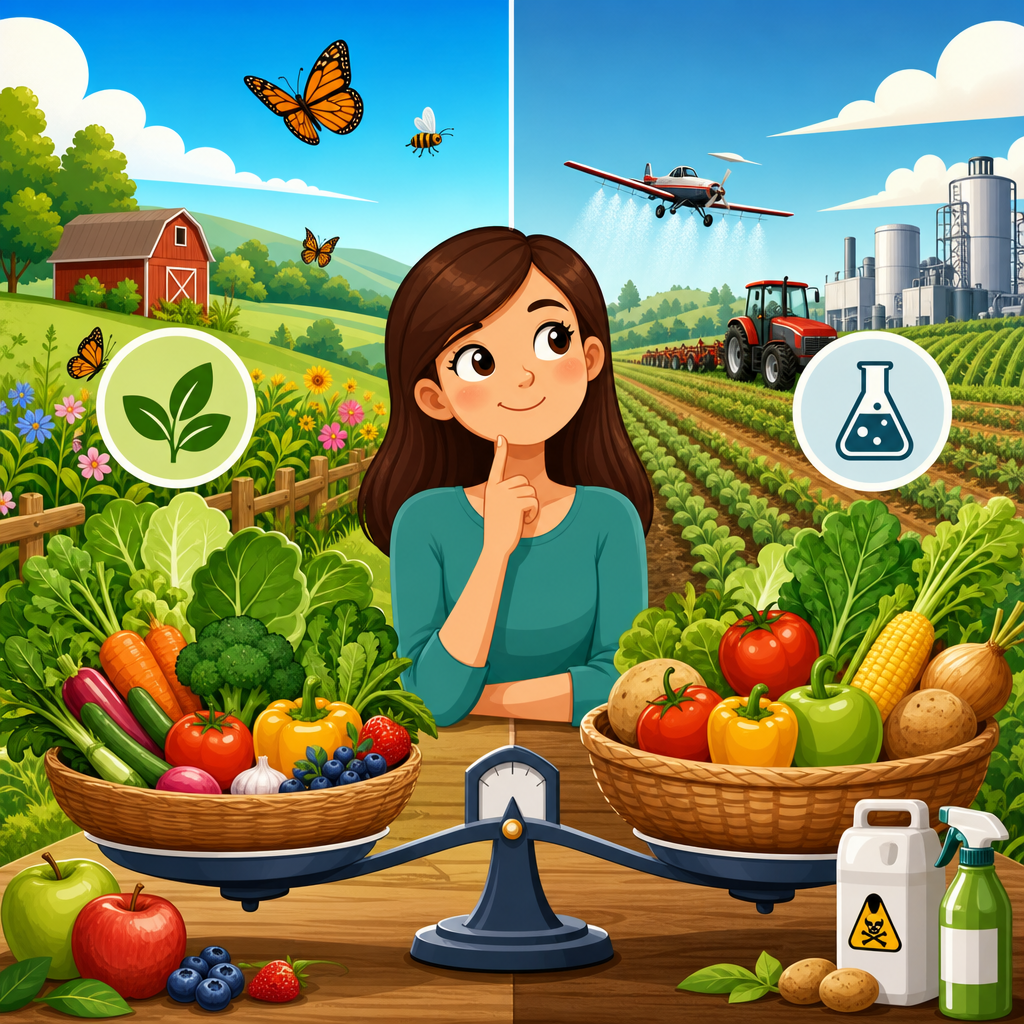
Organic vs. conventional foods shape how people shop, cook, and think about health, yet the terms are often reduced to slogans instead of evidence. In food science, conventional foods are produced with widely used modern agricultural methods, including synthetic fertilizers, approved pesticides, mechanized harvesting, and standard livestock management. Organic foods are produced under legally defined standards that restrict most synthetic pesticides and fertilizers, prohibit genetically engineered seed in certified systems, and require specified animal welfare and soil management practices. In the United States, the USDA National Organic Program sets those rules; in the European Union, parallel regulations govern labeling and certification. I have worked with food labels, ingredient specifications, and supplier audits long enough to see where confusion starts: shoppers assume organic automatically means more nutritious, safer, local, sustainable, and chemical free. None of those claims is fully accurate without context.
This matters because nutrition decisions are rarely made on a single factor. Families compare pesticide exposure, food budgets, taste, shelf life, environmental impact, and access. Public health professionals look at dietary patterns more than any one label, while environmental scientists evaluate soil carbon, biodiversity, water quality, and yield per acre. Farmers balance weed pressure, disease control, labor costs, certification paperwork, and market demand. A useful comparison of organic vs. conventional foods must define the production systems, explain what the labels legally guarantee, and separate measurable differences from marketing language. The goal is better nutrition decisions, not tribal loyalty to one camp. When shoppers understand how certification works, where nutrient differences are modest, and why produce consumption matters more than perfection, they make choices that fit both health goals and real life.
What Organic and Conventional Actually Mean
Organic refers to a regulated production system, not a blanket promise about superior nutrition. Certified organic crop production generally relies on crop rotation, compost, cover crops, biological pest management, and approved natural or minimally processed inputs. Some pesticides are permitted in organic farming, including substances such as copper compounds, spinosad, and certain oils, but they must appear on approved lists and meet use criteria. Organic livestock standards require organic feed, restrictions on routine antibiotic use, and conditions intended to support natural behaviors. Certification involves inspections, recordkeeping, and chain-of-custody controls. A product labeled “100% organic” must contain only organic ingredients except water and salt. “Organic” generally means at least 95 percent certified organic ingredients. “Made with organic ingredients” follows a different threshold and cannot be treated as equivalent.
Conventional food production is the mainstream system used for most global food supply. It may include synthetic nitrogen fertilizers, herbicides, fungicides, insecticides, precision irrigation, hybrid seeds, biotechnology in some regions, and integrated pest management. Conventional does not mean unregulated. Farmers operate under pesticide residue limits, worker safety rules, water laws, and food safety requirements. In many supply chains, conventional producers also use conservation tillage, drip irrigation, satellite mapping, and variable-rate fertilization to reduce inputs and protect yields. I have seen highly disciplined conventional farms with tighter residue testing and stronger traceability than smaller specialty operations. The practical difference is not “safe versus unsafe” but how production tools are selected under different rule sets. Understanding that distinction helps consumers evaluate tradeoffs without assuming one label answers every question.
Nutrition Differences: What the Evidence Really Shows
The most common question is simple: are organic foods more nutritious? The best answer is that differences are usually small, inconsistent, and product specific. Systematic reviews have reported somewhat higher levels of certain polyphenols or antioxidants in some organic crops, while protein, fat, carbohydrates, vitamins, and minerals often fall within overlapping ranges. Weather, soil type, crop variety, ripeness, storage time, and transport conditions can influence nutrient levels as much as production system. In milk and meat, feeding practices can alter fatty acid profiles, and some organic dairy studies show modestly higher omega-3 levels, especially when animals graze more pasture. That is real, but the effect is still small compared with broad dietary improvements such as eating more vegetables, legumes, whole grains, and minimally processed foods.
From a dietitian’s standpoint, the strongest nutrition predictor is not whether a strawberry is organic or conventional; it is whether the person eats strawberries instead of ultra-processed snacks. I regularly tell clients that nutrient density starts with food category and overall pattern. A fresh conventional apple beats skipping fruit because the organic version costs too much. A bag of frozen conventional spinach can be more nutritionally valuable than fresh organic greens that spoil in the refrigerator. Processing level matters too. Organic cookies are still cookies. Organic cane sugar is still sugar. If your goal is better nutrition, prioritize produce intake, fiber, protein quality, and cooking habits first. Use organic purchases selectively where they align with your budget, values, or exposure concerns, rather than treating the label as a shortcut to a healthy diet.
Pesticides, Residues, and Food Safety
Another major concern is pesticide exposure. Organic foods generally have lower detectable synthetic pesticide residues than conventional foods, and that is one of the clearest measurable differences between the systems. However, lower residue does not automatically mean conventional foods are unsafe. Regulatory agencies establish residue tolerances with substantial safety margins, and monitoring programs repeatedly find that most tested foods fall within legal limits. Washing, peeling, and trimming can further reduce some residues, though not all. Organic farming also uses pesticides, and “natural” does not guarantee zero toxicity. Copper-based fungicides, for example, can create environmental concerns if overused. The correct interpretation is nuanced: organic can reduce exposure to certain synthetic residues, especially for people who want to minimize them, but both organic and conventional foods in regulated markets are generally considered safe to eat.
Food safety extends beyond pesticides. Microbiological hazards such as Salmonella, Listeria monocytogenes, pathogenic E. coli, and norovirus can occur in any production system. Organic lettuce is not inherently protected from contamination, and conventional produce is not inherently more contaminated. Risks depend on water quality, worker hygiene, manure handling, sanitation, cold chain control, and processing environment. The Food Safety Modernization Act in the United States and comparable frameworks elsewhere focus on preventive controls because pathogens pose more immediate health risks than trace residues for most consumers. Practical safety steps are the same regardless of label: refrigerate perishables promptly, avoid cross contamination, wash produce under running water, cook animal foods to safe temperatures, and follow date and storage guidance. When consumers understand this hierarchy, they can worry less about simplistic labels and more about the factors that truly affect risk.
Environmental Impact and Sustainability Tradeoffs
Environmental comparisons are where organic vs. conventional foods become most complex. Organic systems often support higher on-farm biodiversity, use fewer synthetic pesticide inputs, and can improve soil structure through cover crops, compost, and diverse rotations. Those practices may benefit pollinators, microbial activity, and water infiltration. Conventional systems can produce higher yields per acre, which may reduce pressure to convert additional land for agriculture. In life-cycle analysis, impacts vary by crop, region, irrigation demand, fertilizer efficiency, and yield gap. A lower-input field that produces much less food is not automatically more sustainable per unit eaten. I have reviewed supplier data where conventional drip-irrigated tomato production used water more efficiently than nearby organic fields, while some organic berry operations showed stronger pollinator habitat practices than conventional peers. Sustainability depends on metrics, not assumptions.
Consumers should also factor in transport, seasonality, waste, and packaging. A local conventional tomato grown in season may have a lower overall footprint than an imported organic tomato shipped long distances under refrigeration. Beef, whether organic or conventional, typically carries a larger greenhouse gas footprint than beans or lentils. Highly perishable organic produce that is discarded creates avoidable emissions and wastes the resources used to grow it. For shoppers trying to align nutrition with sustainability, the most effective moves are often less glamorous than label debates: eat more plants, reduce food waste, buy in-season produce, diversify protein sources, and support farms using transparent soil and water stewardship. Organic certification can be part of that strategy, but it should be viewed as one sustainability signal among many, not the final word.
Cost, Access, and Who Benefits Most
Price is one reason the organic vs. conventional food debate feels personal. Organic foods often cost more because certification adds paperwork and inspection costs, organic feed is more expensive, yields may be lower for some crops, weed control can require more labor, and supply chains are smaller. In many stores, organic produce carries a premium of 10 to 100 percent depending on item, season, and region. That premium can discourage fruit and vegetable intake if shoppers feel the “right” choice is financially out of reach. For public health, that is the wrong outcome. Better nutrition should be accessible, and conventional fruits, vegetables, beans, grains, milk, and eggs still contribute meaningfully to healthy diets. Frozen and canned options can also deliver strong value when fresh organic choices are limited or costly.
Access issues are geographic as well as economic. Urban neighborhoods, rural towns, and small stores may stock little certified organic produce, while warehouse clubs may offer affordable conventional staples in larger volumes. The most practical shopping framework is targeted, not all-or-nothing. Use organic for foods you eat very frequently, for products where certification aligns with your values, or for categories where you notice better quality. Choose conventional when price, freshness, or availability is better. For families with limited budgets, I usually recommend protecting the produce habit first, then upgrading specific items selectively. That strategy prevents nutrition tradeoffs while still honoring personal preferences about farming methods.
| Factor | Organic Foods | Conventional Foods |
|---|---|---|
| Production rules | Certified standards restrict most synthetic inputs and require documented practices | Uses approved modern inputs under general agricultural and food safety regulations |
| Nutrient profile | Sometimes slightly higher in certain compounds, but differences are usually modest | Comparable overall nutrition in most categories |
| Pesticide residues | Usually lower synthetic residue levels | Typically within legal safety limits when monitored correctly |
| Price | Often higher because of labor, certification, and supply constraints | Usually lower and more widely available |
| Best use case | Shoppers prioritizing certified production methods and lower synthetic residue exposure | Shoppers prioritizing affordability, convenience, and broad access |
How to Shop Smarter for Better Nutrition
If you want a clear decision framework, start with what improves health most. First, fill the cart with produce, whole grains, legumes, nuts, dairy or fortified alternatives, and quality protein sources. Second, choose the freshest option you will actually eat before it spoils. Third, compare labels on sodium, added sugar, and saturated fat, because these factors influence cardiometabolic health far more consistently than organic status. Fourth, buy organic strategically rather than universally. For example, if your household eats apples daily, buying organic apples may be reasonable. If organic berries are unaffordable, choose frozen conventional berries rather than skipping them. If conventional carrots are crisp and local while organic ones look tired, buy the better-quality carrots. The best nutrition plan is the one that survives a busy week, a tight budget, and real family preferences.
This hub article also points toward deeper topics worth exploring under Food Science and Sustainability. Readers often want separate guidance on organic dairy, meat, produce washing methods, pesticide regulation, regenerative agriculture, genetically engineered crops, seasonal buying, and food waste reduction. Those subjects deserve dedicated pages because they involve different standards, risk profiles, and nutritional questions. As a central guide, the key lesson is straightforward: organic and conventional foods both have a place in a healthy diet. Organic certification gives meaningful information about production methods, but it does not guarantee better nutrition in every case. Conventional foods remain valuable, safe, and essential for affordability and food access. Use evidence, not identity, to make better choices. Build meals around minimally processed foods, store them safely, and buy the highest-quality options your budget allows. If you want to improve both health and sustainability, start with the next grocery trip and make one smarter comparison at a time.
Frequently Asked Questions
What is the main difference between organic and conventional foods?
The main difference is how the food is produced, not necessarily what the food is. Conventional foods are grown or raised using standard modern agricultural methods, which may include synthetic fertilizers, approved pesticides, mechanized harvesting, and common livestock management practices. Organic foods, by contrast, must follow legally defined production standards. These standards generally restrict most synthetic pesticides and fertilizers, prohibit genetically engineered ingredients in organic production, and require specific practices related to soil health, pest control, animal care, and recordkeeping.
From a nutrition perspective, the distinction is often less dramatic than marketing suggests. A conventional apple and an organic apple are both still apples with fiber, water, natural sugars, and beneficial plant compounds. In many cases, the overall nutritional quality of a diet depends far more on how many fruits, vegetables, whole grains, legumes, nuts, and minimally processed foods a person eats than on whether every item is organic. Organic production does emphasize ecological management practices such as crop rotation, composting, and biological pest control, while conventional farming often prioritizes efficiency, yield, and broad-scale food production. Understanding that difference helps consumers make informed choices without assuming that one label automatically determines healthfulness.
Are organic foods actually more nutritious than conventional foods?
Organic foods can differ somewhat in nutrient composition, but the evidence does not support the idea that organic foods are always substantially more nutritious across the board. Some studies have found modest differences in certain compounds, such as slightly higher levels of some antioxidants in some organic produce, or differences in fatty acid profiles in certain organic dairy products. However, these differences are not consistent for every crop, every season, or every farming region, and they do not necessarily translate into meaningful health advantages for most people.
Nutrition is influenced by many factors beyond whether a food is organic or conventional. Variety, soil conditions, plant genetics, freshness, storage, transportation time, ripeness at harvest, cooking methods, and overall dietary pattern all matter. For example, a freshly harvested conventional spinach may provide more nutritional value than an organic spinach that has been stored too long, and a person who eats plenty of conventional vegetables will likely have a stronger nutritional foundation than someone who buys a small amount of organic produce but eats very few plant foods overall. The most evidence-based takeaway is that eating more nutrient-dense foods consistently matters more than focusing exclusively on the production label.
Do organic foods have fewer pesticides, and does that make them safer?
Organic foods generally have lower levels of synthetic pesticide residues because organic farming standards restrict most synthetic pesticide use. That said, organic farming can still use certain approved pesticides, often derived from natural sources or otherwise permitted under organic regulations. “Organic” does not mean “pesticide-free,” and “conventional” does not mean “unsafe.” Both organic and conventional foods sold legally are subject to safety regulations, residue limits, and monitoring systems designed to keep pesticide exposure below established thresholds.
For many consumers, pesticide exposure is one of the main reasons for choosing organic foods, and that preference is understandable. Lower exposure may be a practical goal for some households, especially for those who want to reduce contact with synthetic residues when possible. However, public health experts consistently emphasize that the benefits of eating fruits and vegetables far outweigh the risks associated with pesticide residues in the food supply. Washing produce under running water, peeling when appropriate, and eating a wide variety of foods can further reduce residue exposure. In other words, if organic options fit your budget and priorities, they can be a reasonable choice, but people should not avoid produce simply because only conventional options are available.
Is organic food better for health, the environment, and animal welfare?
Organic food is often chosen for reasons that go beyond personal nutrition, and that is where the strongest differences may appear. Organic farming standards are designed to support practices such as soil conservation, biodiversity, crop rotation, and reduced reliance on many synthetic inputs. Depending on the crop and region, these practices may improve soil structure, encourage beneficial insects, and reduce certain forms of environmental contamination. However, environmental impact is complex. Conventional farming can sometimes produce higher yields per acre, which can affect land use efficiency, while some organic systems may require more land to produce the same amount of food. The real environmental picture depends on water use, transportation, waste, soil management, local conditions, and farming skill, not just the label alone.
Animal welfare is another area where consumers often perceive organic as superior. Organic livestock standards typically include requirements related to feed, housing conditions, outdoor access, and restricted use of certain medications. Those requirements can align with the values of shoppers who want production practices that are more closely tied to animal living conditions. Still, it is important to remember that animal welfare exists on a spectrum, and quality can vary across farms in both organic and conventional systems. For human health, the evidence is more measured: organic diets may reduce exposure to some agricultural chemicals, but overall long-term health outcomes depend much more on dietary quality, physical activity, sleep, smoking status, and other lifestyle factors than on an organic label alone.
How should shoppers decide whether to buy organic or conventional foods?
The smartest approach is to base the decision on budget, access, personal values, and the goal of building a high-quality diet you can maintain consistently. If buying organic helps you feel more confident about produce, supports farming practices you value, or fits your household spending plan, it can be a worthwhile choice. If organic options are too expensive or hard to find, conventional fruits, vegetables, grains, dairy, and proteins can still be excellent parts of a nutritious eating pattern. The healthiest grocery cart is not necessarily the one with the most organic labels; it is the one filled with foods that support balanced meals and are realistic for you to buy and use regularly.
A practical strategy is to prioritize overall food quality first. Focus on eating more produce, choosing whole grains more often, including legumes and nuts, selecting appropriate protein sources, and limiting heavily processed foods high in added sugar, sodium, and refined fats. You might choose organic selectively for foods you eat often, for items where residue concerns matter most to you, or for products tied to environmental and animal welfare preferences. You can also combine approaches by buying frozen or seasonal organic produce when prices are lower and using conventional options the rest of the time. The key is to avoid all-or-nothing thinking. Better nutrition comes from consistent, evidence-based choices over time, whether the foods are organic, conventional, or a mix of both.