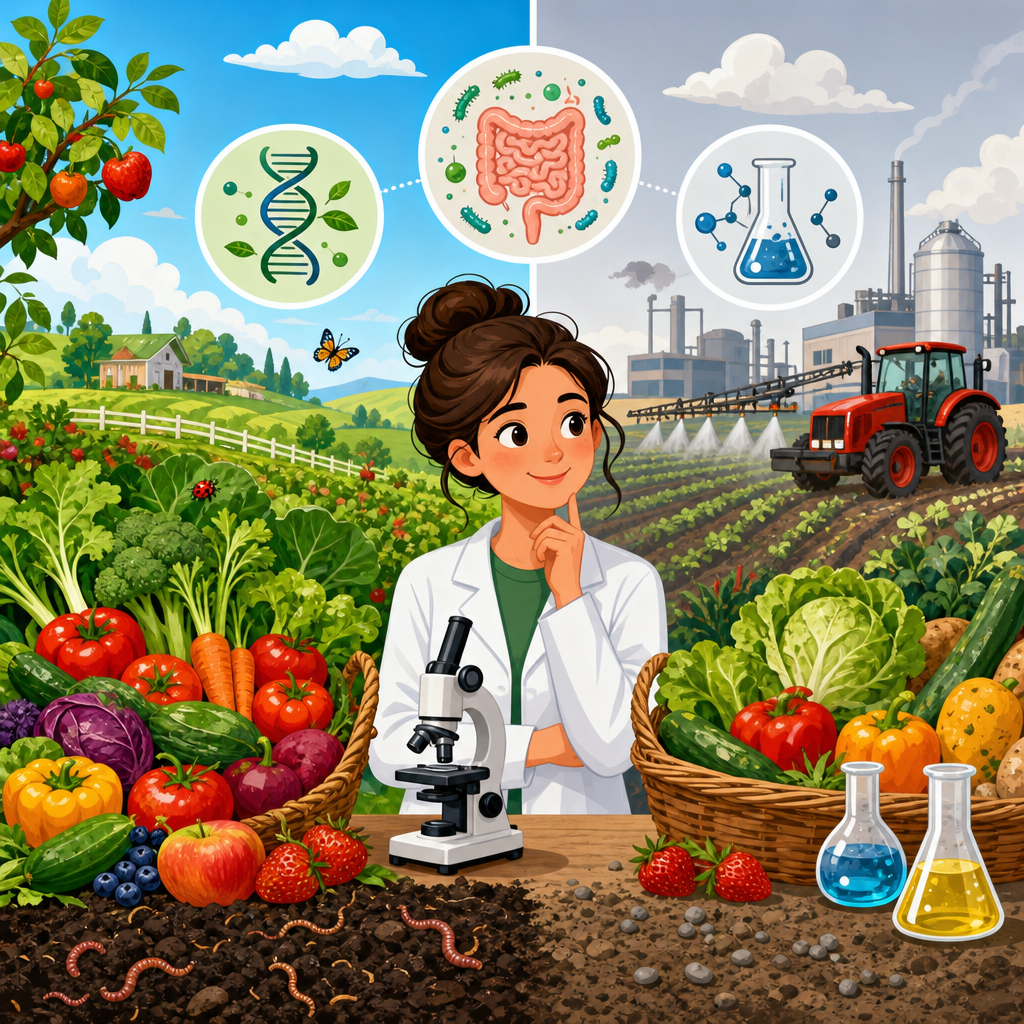
The science behind organic vs. conventional foods and its health benefits starts with a practical question I hear constantly from shoppers, clinicians, and food producers: does the label change what is actually in the food, and does that difference matter for human health? Organic food is produced under certification rules that restrict most synthetic pesticides and fertilizers, prohibit genetically engineered seed in many jurisdictions, and set standards for soil management, animal welfare, and routine antibiotic use. Conventional food refers to the dominant agricultural system, which can use synthetic crop protection products, mineral fertilizers, modern breeding technologies, and intensive production methods to maximize yield and consistency. This distinction matters because food choices affect nutrition, chemical exposure, farming economics, biodiversity, greenhouse gas emissions, and trust in the food system.
In practice, the comparison is not as simple as “organic is healthy, conventional is unhealthy.” I have reviewed farm audits, read residue reports, and compared nutrient panels enough to know that the real science is more nuanced. A conventionally grown apple and an organically grown apple can both be safe, nutritious foods. The meaningful differences tend to appear in patterns: pesticide residue profiles, soil practices, antibiotic policies in livestock, crop diversity, and in some cases levels of certain plant compounds or fats. Consumers also confuse “natural,” “local,” and “organic,” though these terms are not interchangeable. Organic is a regulated production standard. Local describes distance. Natural is often a marketing term with limited legal definition.
Understanding organic vs. conventional foods requires separating three issues. First, production methods: how crops are fertilized, how pests are managed, how animals are raised, and how soil is protected. Second, composition: measurable differences in residues, nutrients, and bioactive compounds such as polyphenols. Third, outcomes: whether those differences translate into better health for individuals and populations. The evidence is strongest on reduced exposure to certain synthetic pesticide residues and lower routine antibiotic use in organic livestock systems. The evidence is mixed but still notable on nutrient differences, with some studies finding modestly higher levels of certain antioxidants in organic crops and more favorable fatty acid profiles in organic dairy.
Why does this matter now? Consumers are paying more attention to chronic disease, environmental sustainability, and food transparency. At the same time, food inflation forces households to decide where an organic premium is justified and where conventional options are perfectly reasonable. A useful hub article on organic vs. conventional foods should answer the core questions directly: what the labels legally mean, how the foods differ, what the health benefits are, where the evidence is uncertain, and how to shop intelligently without turning eating into an ideological test.
What Organic and Conventional Food Standards Actually Mean
Organic standards are legal frameworks, not vague promises. In the United States, the USDA National Organic Program sets requirements for certified organic farms and processors. In the European Union, organic production is regulated under EU organic legislation. While details vary by region, the shared principles are consistent: maintain soil fertility through crop rotation, compost, cover crops, and approved inputs; rely first on preventive pest management and approved natural-origin substances; limit synthetic chemical use to narrow exceptions; and prohibit routine use of antibiotics and growth-promoting hormones in organic livestock systems. Certification requires inspections, records, traceability, and separation from non-organic products throughout handling and processing.
Conventional agriculture operates under a different regulatory model. It is not unregulated; it is governed by pesticide approval systems, residue tolerances, fertilizer rules, environmental laws, animal drug regulations, and food safety standards. In the United States, the Environmental Protection Agency sets pesticide tolerances, and the Food and Drug Administration and USDA monitor residues and food safety. Conventional systems may use synthetic nitrogen fertilizers, herbicides such as glyphosate where permitted, fungicides, insecticides, and hybrid or genetically engineered seeds. These tools often improve yield, reduce labor, and stabilize supply, but they also raise questions about resistance, runoff, biodiversity loss, and cumulative chemical exposure.
A common misunderstanding is that organic means pesticide-free. It does not. Organic farmers can use approved pesticides, including substances such as copper-based fungicides, sulfur, spinosad, and certain biological controls, when preventive measures are insufficient. The difference is that the list of allowed substances is narrower and the management philosophy is prevention-first. Another misconception is that conventional automatically means unsafe. Residue limits are designed with large safety margins, and monitoring programs consistently find that most conventional foods comply with legal limits. The scientific comparison therefore centers on exposure levels, environmental effects, and long-term system performance rather than a simplistic safe-versus-dangerous split.
How Farming Methods Change the Food Itself
The composition of food reflects genetics, soil, climate, ripeness, storage, and farming method. Organic systems often emphasize slower-release fertility from compost, manure, and cover crops instead of highly soluble synthetic fertilizers. That can alter plant growth patterns and stress responses. Plants exposed to more pest pressure or slower nitrogen availability may produce more secondary metabolites, including some polyphenols, which function as defense compounds and can have antioxidant activity in the human diet. This is one reason meta-analyses have reported higher concentrations of some antioxidant compounds in certain organic fruits and vegetables, although the difference varies widely by crop and season.
Livestock products show another pathway. Organic dairy and meat systems typically require access to pasture or forage under stricter standards than many intensive conventional systems. More grazing can change the fatty acid profile of milk and meat, often increasing omega-3 fatty acids and conjugated linoleic acid relative to grain-heavy feeding systems. In my review of dairy sourcing programs, feed composition consistently explains more variation than the organic label alone, but organic standards can push production toward feeding patterns associated with these differences. That does not make organic milk a medicine, yet it does create a measurable compositional shift.
Residues are where the contrast is clearest. Organic produce generally has lower frequencies of detectable synthetic pesticide residues than conventional produce. Studies using national monitoring data repeatedly show this pattern. Lower does not mean zero, because drift, legacy contamination, and post-harvest handling can still contribute trace findings. Conventional crops, by contrast, are more likely to carry legal low-level residues from approved pesticide use. The health significance depends on the specific compound, dose, timing of exposure, and vulnerability of the person consuming it, especially pregnant women, infants, and agricultural workers, who face different exposure profiles than the general population.
| Dimension | Organic foods | Conventional foods | What it means for consumers |
|---|---|---|---|
| Pest management | Prevention-first, limited approved pesticides | Broader synthetic and non-synthetic options | Organic usually lowers synthetic residue exposure |
| Fertility | Compost, manure, crop rotation, cover crops | Synthetic fertilizers plus organic amendments | Differences may influence soil health and plant chemistry |
| Livestock antibiotics | Routine use prohibited | Allowed under veterinary oversight | Organic reduces one driver of antimicrobial resistance |
| Nutrient profile | Sometimes higher in select antioxidants or omega-3s | Often similar for core vitamins and minerals | Nutrition differences exist, but are usually modest |
| Yield and price | Typically lower yield, higher retail cost | Typically higher yield, lower retail cost | Budget and access remain central tradeoffs |
What Research Says About Nutrients, Residues, and Health Benefits
The strongest evidence for health relevance is not that organic food is dramatically richer in every nutrient. It is that organic diets can reduce exposure to certain pesticide residues and, in animal foods, may reduce exposure pathways linked to routine antibiotic use. Controlled dietary intervention studies have shown that switching people from conventional to organic diets lowers urinary biomarkers of several pesticides within days. This is a direct, measurable effect. Whether that reduction leads to major long-term health gains depends on baseline exposure levels and the compounds involved, but for families trying to minimize avoidable exposures, the mechanism is real rather than speculative.
Nutritional evidence is more mixed. Meta-analyses have found higher levels of some phenolic compounds in certain organic produce and lower cadmium concentrations in some organic crops. Organic dairy has also been associated with higher omega-3 content in several analyses. However, for staple nutrients such as vitamin C, total protein, calcium, potassium, and iron, differences are often small, inconsistent, or overwhelmed by variety, freshness, and storage. A fresh conventional strawberry usually beats an old organic strawberry on taste and possibly some nutrient measures. The broad public health message remains unchanged: eating more fruits, vegetables, legumes, and whole grains matters far more than choosing organic versions of a poor diet.
Direct evidence on disease outcomes is harder to interpret because people who buy more organic food often differ in income, education, smoking status, physical activity, and overall diet quality. Observational cohort studies have suggested links between higher organic food consumption and lower risk of some conditions, including certain cancers or obesity-related outcomes, but confounding is difficult to remove completely. The responsible conclusion is that organic food may contribute to health benefits through lower pesticide exposure and some compositional differences, yet it is not a guaranteed shield against chronic disease. Diet pattern, sleep, physical activity, alcohol intake, and smoking still dominate long-term risk.
Antibiotics, Animal Welfare, and Food System Effects
One of the most important science-based arguments for organic animal products concerns antibiotics. Organic standards generally prohibit routine antibiotic use and bar meat, milk, or eggs from being sold as organic if treated animals receive prohibited drugs. Conventional livestock production can use antibiotics therapeutically and, depending on the country and species, may still allow certain preventive uses under veterinary oversight. This matters because antimicrobial resistance is a global public health threat recognized by the World Health Organization, the Centers for Disease Control and Prevention, and the Food and Agriculture Organization. Reducing unnecessary antibiotic use in agriculture is widely considered a prudent policy goal.
Animal welfare is related but distinct. Organic certification usually includes requirements for outdoor access, space, bedding, and species-appropriate behaviors, especially in dairy, poultry, and ruminants. Conventional systems range from high-welfare pasture-based farms to intensive confinement operations, so the label alone does not capture every welfare outcome. Still, organic standards create a minimum framework that many consumers value. From a food science perspective, welfare can also influence product quality indirectly through stress, housing, and feeding practices. For example, pasture access changes the diet of dairy cows, which can shift milk fat composition, while slower-growing poultry systems may alter texture and consumer perception.
The broader food system effects are where organic and conventional agriculture diverge most sharply. Organic systems generally improve indicators such as soil organic matter, pollinator habitat, and on-farm biodiversity. They also tend to reduce synthetic nitrogen runoff and some pesticide-related ecological harms. However, yields are often lower, meaning more land may be required to produce the same amount of food if organic methods are scaled without major dietary or waste changes. Conventional agriculture excels at output per acre and affordability, which is crucial for food security, but that productivity can come with environmental externalities. A serious comparison must hold both truths at once.
How to Shop Smarter: When Organic Is Worth It and When Conventional Is Fine
The best way to use the organic vs. conventional distinction is strategically. If budget is limited, prioritize overall diet quality first: buy more produce, beans, intact grains, nuts, and minimally processed proteins, regardless of label. Then use organic purchasing where it offers the clearest advantage. In my own recommendations, that often includes foods with edible peels and higher residue frequency, such as berries, apples, spinach, and some leafy greens, along with dairy or eggs for shoppers concerned about feed practices and antibiotic policies. For thick-skinned produce like bananas, avocados, oranges, and onions, conventional options are often sensible choices.
Washing and preparation also matter. Rinsing produce under running water reduces dirt and some surface residues, though it does not remove systemic pesticides absorbed into plant tissue. Peeling can further reduce residues on some items, but it may also remove fiber and nutrients concentrated near the skin. Freshness, variety, and storage deserve equal attention. The healthiest choice is often the produce you actually buy, eat, and replace regularly. Frozen conventional vegetables can be nutritionally excellent and reduce waste. Local organic produce may support regional farms, but a well-managed conventional farm nearby can also be a strong sustainability choice if it uses integrated pest management and soil conservation practices.
For this subtopic hub, the clearest takeaway is practical and evidence-based. Organic vs. conventional foods is not a morality play; it is a comparison of production systems with measurable tradeoffs. Organic foods generally lower synthetic pesticide residue exposure, restrict routine antibiotics in livestock, and may offer modest advantages in certain plant compounds or fatty acid profiles. Conventional foods remain safe by regulatory standards, nutritionally valuable, and often more affordable and accessible. Health benefits exist, but they are specific rather than magical, and they are most meaningful when organic choices help people reduce unnecessary exposures without reducing produce intake.
If you want a simple rule, buy the best-quality fruits, vegetables, grains, and proteins your budget can sustain consistently, and use organic selectively where your priorities are residue reduction, pasture-based animal products, or environmental farming practices. Read labels carefully, wash produce, vary your choices, and focus on your total diet over any single badge on the package. That approach protects both health and sanity. Use this hub as your starting point for deeper guides on pesticide residues, soil health, organic dairy, animal welfare standards, and the sustainability tradeoffs that shape the future of food.
Frequently Asked Questions
1. What is the scientific difference between organic and conventional foods?
The main scientific difference lies in how the food is produced, not necessarily in what the food looks like on the shelf. Organic farming operates under certification standards that generally restrict most synthetic pesticides and fertilizers, prohibit many forms of genetic engineering depending on the country, and emphasize practices such as crop rotation, compost use, biodiversity, soil health management, and animal welfare standards. Conventional farming, by contrast, may use a wider range of synthetic crop protection products, readily soluble fertilizers, and other technologies designed to maximize yield, efficiency, and pest control.
From a chemistry and biology standpoint, these production systems can influence several measurable features of food. Researchers often compare pesticide residues, nutrient concentrations, fatty acid profiles in animal products, and the presence of certain plant defense compounds such as polyphenols. Organic foods frequently show lower detectable residues of synthetic pesticides, while some studies also report modest differences in certain nutrients or bioactive compounds. However, the size and consistency of those differences can vary depending on crop type, soil, climate, variety, storage conditions, and how freshness is maintained after harvest.
It is also important to understand that “organic” and “conventional” are broad categories rather than fixed chemical identities. A conventionally grown tomato from a well-managed local farm may be nutritionally excellent, while an organic tomato shipped long distances and stored for extended periods may not automatically be superior in every way. Science therefore approaches this comparison as a systems question: farming methods affect environmental exposures, nutrient dynamics, and food composition, but the final health impact depends on the entire diet, food quality, and overall lifestyle patterns.
2. Is organic food actually more nutritious than conventional food?
This is one of the most studied and most misunderstood questions in food science. The short answer is that organic food is not universally or dramatically more nutritious in every case, but there are some meaningful trends worth paying attention to. Reviews of the evidence have found that organic produce can contain higher levels of certain antioxidants and phenolic compounds in some crops. These compounds are part of a plant’s natural defense system and may increase when the plant grows under conditions with fewer synthetic inputs. In organic dairy and meat, some studies have also found more favorable fatty acid profiles, including higher levels of omega-3 fatty acids, especially when animals spend more time on pasture.
That said, nutrient content is influenced by many factors beyond farming label alone. Variety, ripeness at harvest, soil quality, weather, season, post-harvest handling, and cooking methods all affect nutritional value. In many comparisons, the differences in vitamins and minerals between organic and conventional foods are small or inconsistent. For example, one batch of spinach may have more vitamin C because it was fresher, not simply because it was organic.
So the most evidence-based answer is this: organic foods may offer modest nutritional advantages in some categories, particularly for certain plant compounds and some animal-product fats, but the health impact of those differences is likely smaller than the benefit of simply eating more fruits, vegetables, legumes, whole grains, nuts, and minimally processed foods overall. If choosing organic helps someone eat more produce and cook more at home, that can be a meaningful health win. But a conventional diet rich in whole foods is still far healthier than an organic diet dominated by ultra-processed products.
3. Are pesticide residues in conventional foods a real health concern, and does organic reduce that risk?
Organic food does appear to reduce exposure to many synthetic pesticide residues, and that is one of the clearest scientific distinctions between the two systems. Studies that measure pesticide metabolites in urine have shown that people who switch to an organic diet often experience a noticeable drop in exposure markers within days. This does not mean all conventional food is unsafe, because regulatory agencies establish residue limits intended to stay below known toxic thresholds. In many countries, most conventional foods test within those legal limits.
However, scientists continue to debate how to interpret long-term, low-level exposure, especially for vulnerable populations such as children, pregnant women, and agricultural workers. Toxicology has become more nuanced over time. Researchers are increasingly interested not just in acute poisoning, but also in cumulative exposure, endocrine-disrupting potential, developmental timing, and the effects of mixtures rather than one chemical at a time. This is where the discussion becomes more complex. “Within limits” does not automatically mean “zero concern,” particularly when exposure is repeated over years and comes from multiple dietary and environmental sources.
Organic standards generally reduce reliance on many synthetic pesticides, although organic farming can still use certain approved pesticides, often derived from natural sources or judged acceptable under certification rules. That means organic does not mean pesticide-free, but it often does mean lower exposure to the specific synthetic residues most people worry about. For consumers trying to lower chemical exposure without overcomplicating nutrition, prioritizing organic versions of foods known to carry higher residues can be a practical middle-ground approach. Still, from a public health perspective, eating fruits and vegetables consistently remains more important than avoiding produce out of fear. Washing, peeling when appropriate, and varying food choices also help reduce exposure.
4. Does eating organic food lead to better long-term health outcomes?
The strongest answer is that organic food may contribute to better long-term health for some people, but the evidence is still developing and is not definitive enough to claim that organic eating alone guarantees better outcomes. Observational studies have linked higher organic food consumption with lower exposure to pesticide residues and, in some populations, with lower rates of certain health issues. Some research has explored associations with reduced risk of metabolic disorders, infertility-related concerns, allergic disease, and even some cancers, but these findings must be interpreted carefully because people who buy more organic food often differ in many other health-related ways. They may exercise more, smoke less, have higher incomes, consume more produce overall, and follow healthier dietary patterns.
That is why researchers try to separate the effect of the food production system from the effect of the person’s overall lifestyle. This is challenging in nutrition science. Randomized controlled trials over many years are difficult and expensive, so much of the evidence comes from shorter interventions or large cohort studies. What those studies do show fairly consistently is that organic diets lower pesticide exposure. The more difficult question is whether that lower exposure translates into measurable long-term disease reduction in the general population, and the answer is promising but not fully settled.
From a practical clinical perspective, organic food may be most relevant as part of a broader health strategy: reducing unnecessary chemical exposures, supporting dietary quality, and potentially improving intake of certain beneficial compounds. But it should not overshadow foundational habits with stronger evidence, such as maintaining a healthy weight, eating enough fiber, limiting ultra-processed foods, being physically active, sleeping well, and not smoking. In other words, organic may be a useful layer of protection or optimization, but it is not a substitute for overall dietary quality and healthy living.
5. Is organic food worth the higher price if health is the main concern?
Whether organic food is worth the added cost depends on a person’s budget, goals, and the trade-offs they are making. If the goal is to reduce exposure to synthetic pesticide residues, support farming practices centered on soil stewardship and biodiversity, or choose animal products produced under stricter welfare standards, then many consumers feel the premium is justified. From a health standpoint, the most defensible benefit is reduced pesticide exposure, with possible but less certain advantages related to nutrient composition and long-term disease risk.
For many households, though, buying fully organic is not realistic, and that is completely understandable. The good news is that a healthy diet does not require perfection. If budget is limited, it makes sense to prioritize the foods you eat most often, foods for children, and certain produce items that tend to carry higher residues when conventionally grown. Organic dairy, eggs, and some animal products may also matter to consumers concerned about feed practices, pasture access, and production standards. At the same time, frozen and canned conventional fruits and vegetables can still be highly nutritious, affordable, and far better than skipping produce because organic options are too expensive.
The most evidence-based strategy is to avoid an all-or-nothing mindset. A mixed approach works well for many people: buy organic selectively when it aligns with your concerns and budget, and focus the rest of your food spending on whole, minimally processed staples with strong nutritional value. If the choice is between conventional broccoli and no broccoli, the conventional broccoli is clearly the better health decision. Organic can be a valuable tool, but the biggest benefits still come from the overall pattern of eating plenty of plant foods, choosing quality protein sources, and building a sustainable diet you can maintain over time.