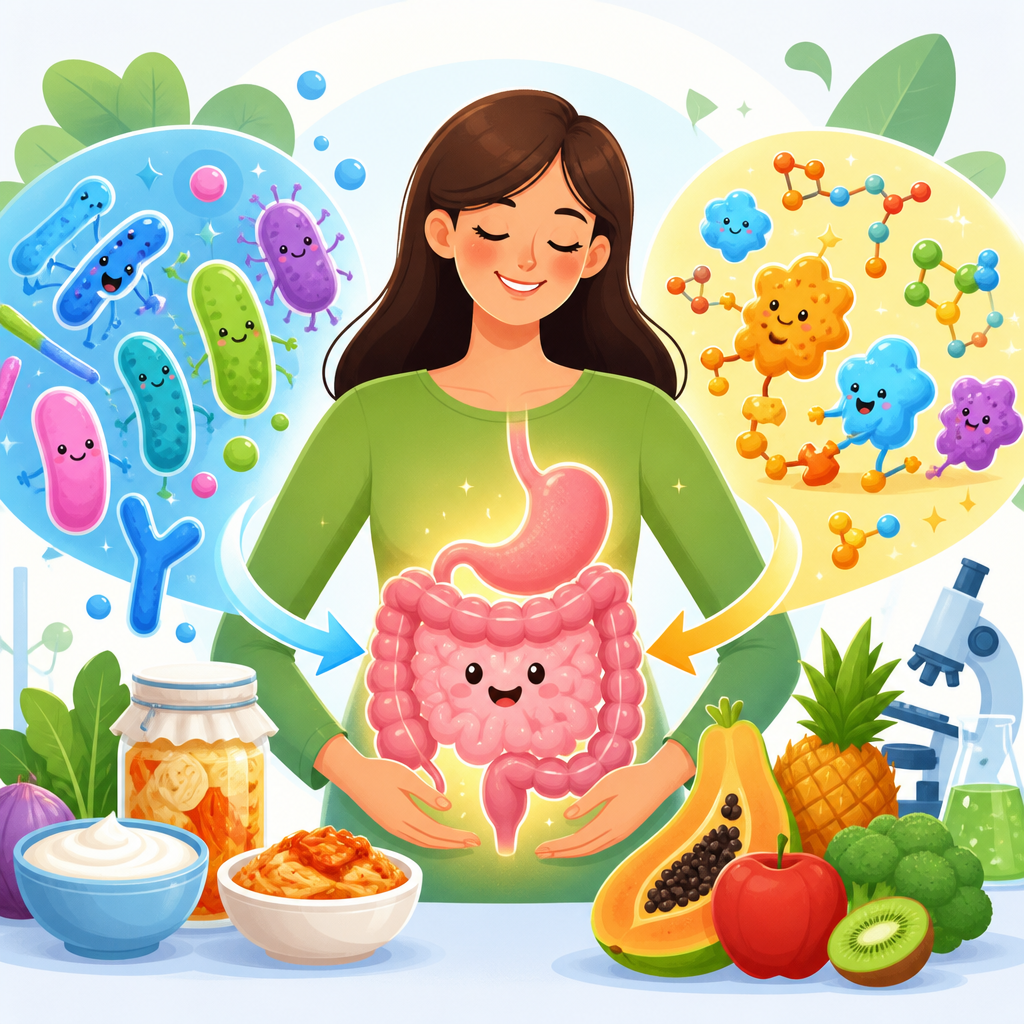
Probiotics and digestive enzymes are two of the most discussed supplement categories in gut health because they target digestion from different but complementary angles. Probiotics are live microorganisms that, when consumed in adequate amounts, confer a health benefit on the host, a definition established by the International Scientific Association for Probiotics and Prebiotics and widely used in clinical research. Digestive enzymes are proteins that catalyze the breakdown of carbohydrates, fats, proteins, and other food components into smaller molecules the body can absorb. In practice, probiotics help shape the microbial ecosystem in the gastrointestinal tract, while digestive enzymes help process food before microbes and human cells use its nutrients.
This distinction matters because many people use the terms interchangeably, even though they address different physiological processes. I have seen clients assume a probiotic should relieve symptoms caused by lactose maldigestion, when the more direct intervention may be lactase. I have also seen people reach for broad enzyme blends to solve bloating driven primarily by antibiotic-associated microbiome disruption, where a targeted probiotic strategy may make more sense. Knowing which tool matches which problem is the difference between a useful supplement plan and an expensive guess.
Digestive health affects much more than comfort after meals. Efficient digestion supports nutrient absorption, bowel regularity, energy metabolism, and immune signaling. The gut houses trillions of microorganisms, interacts with the enteric nervous system, and serves as a barrier between the external environment and the bloodstream. When digestion is impaired, symptoms can include gas, diarrhea, constipation, post-meal heaviness, and nutrient deficiencies. When the gut microbiome is disturbed, effects may extend beyond the intestine, influencing immune resilience, inflammation, and even mood through the gut-brain axis.
For a Supplements & Nutraceuticals hub, probiotics and digestive enzymes deserve to be treated together because consumers often evaluate them side by side. They are sold in similar channels, marketed for overlapping symptoms, and sometimes combined into single formulas. Yet the science, evidence standards, dosing logic, and safety considerations are not the same. This article explains how probiotics and digestive enzymes work, where they can help, where they cannot, and how to choose products grounded in real evidence rather than label claims.
What probiotics are and how they work
Probiotics are not a single ingredient. They are strain-specific microorganisms, most commonly from the Lactobacillus, Bifidobacterium, Saccharomyces, Bacillus, and Streptococcus genera, though health effects depend on the exact strain rather than the genus alone. Lactobacillus rhamnosus GG, Bifidobacterium animalis subsp. lactis BB-12, and Saccharomyces boulardii CNCM I-745 are examples with meaningful human data. This specificity is critical: one strain may reduce the risk of antibiotic-associated diarrhea, while another may have no measurable effect in that context.
Mechanistically, probiotics can compete with less desirable microbes for adhesion sites and nutrients, produce metabolites such as lactic acid and short-chain fatty acids, support mucosal barrier integrity, and modulate immune signaling. They do not permanently colonize in most cases, but transient activity can still be clinically useful. For example, S. boulardii has been studied for reducing antibiotic-associated diarrhea and lowering the recurrence risk of some diarrheal conditions when used appropriately. Certain Bifidobacterium strains have shown benefits for stool frequency and consistency in people with constipation-predominant symptoms.
Probiotic outcomes depend on dose, formulation, viability through shelf life, and matching the strain to the health goal. Colony-forming units, or CFU, indicate viable organisms, but a larger number is not automatically better. A 50 billion CFU blend without clinical validation may be less useful than a 1 to 10 billion CFU product containing a well-studied strain for a specific need. Storage also matters. Some products require refrigeration, while others use freeze-drying, blister packaging, or spore-forming organisms to improve stability at room temperature.
What digestive enzymes are and how they work
Digestive enzymes break chemical bonds in food so nutrients can be absorbed in the small intestine. The body naturally produces enzymes in the salivary glands, stomach, pancreas, and brush border of the small intestine. Amylase helps digest starches, proteases such as pepsin and trypsin break proteins into peptides and amino acids, lipase splits triglycerides into fatty acids and monoglycerides, and lactase hydrolyzes lactose into glucose and galactose. Other enzymes sold in supplements include alpha-galactosidase for certain legumes and cruciferous vegetables, cellulase for plant fibers, and bromelain or papain from pineapple and papaya, though evidence varies by use case.
Enzyme supplementation is most clearly useful when a known digestive limitation exists. Lactase can reduce symptoms in lactose intolerance by replacing the enzyme needed to digest milk sugar. Alpha-galactosidase can help some people digest gas-producing oligosaccharides in beans. Prescription pancreatic enzyme replacement therapy, often using pancrelipase, is standard care for exocrine pancreatic insufficiency associated with chronic pancreatitis, cystic fibrosis, pancreatic cancer, or pancreatic surgery. In those cases, enzymes are not optional wellness products; they are essential treatment that improves fat absorption, weight maintenance, and fat-soluble vitamin status.
Over-the-counter blends are more variable. Many combine amylase, protease, lipase, lactase, and plant-derived enzymes, but labels do not always state activity units clearly. Activity matters more than milligram weight. For instance, lactase is often expressed in FCC units, and lipase or protease should also be listed by standardized activity measures. In my experience reviewing supplement labels, products that disclose enzyme activity and intended use are generally more credible than blends that rely on long ingredient panels and vague digestion claims.
Key differences, overlap, and when each is useful
Probiotics and digestive enzymes overlap in the consumer market because both can influence bloating, irregularity, and digestive comfort, but they do so through different pathways. Probiotics act on the microbiome and gut environment. Enzymes act directly on food substrates. If someone develops bloating after dairy, lactase is the most direct option. If someone experiences diarrhea after a course of antibiotics, a probiotic with evidence for that setting may be more appropriate. If symptoms involve both food intolerance and microbiome disruption, the two may be used together under a sensible plan.
| Scenario | More relevant option | Why |
|---|---|---|
| Lactose intolerance | Digestive enzyme | Lactase directly breaks down lactose before it reaches the colon |
| Antibiotic-associated diarrhea risk | Probiotic | Studied strains can help maintain microbial balance during antibiotic exposure |
| Exocrine pancreatic insufficiency | Prescription enzymes | Pancreatic enzymes are required to digest fats, proteins, and carbohydrates adequately |
| Constipation with low Bifidobacterium diversity | Targeted probiotic | Certain strains can improve stool frequency and consistency |
| Gas after beans | Digestive enzyme | Alpha-galactosidase helps break down fermentable oligosaccharides |
The biggest mistake is expecting either category to diagnose or cure a complex gastrointestinal disorder. Persistent pain, blood in stool, unexplained weight loss, nighttime symptoms, anemia, vomiting, or family history of inflammatory bowel disease or colorectal cancer requires medical evaluation. Supplements can support digestion, but they do not replace workups for celiac disease, gallbladder disease, peptic ulcer disease, small intestinal bacterial overgrowth, microscopic colitis, or pancreatic disorders. Good supplement use begins with correct problem identification.
Evidence-based health benefits of probiotics
The best-supported probiotic benefits are specific, not universal. Research supports selected strains for antibiotic-associated diarrhea, some cases of infectious diarrhea, certain symptoms of irritable bowel syndrome, and support for regularity. Saccharomyces boulardii and Lactobacillus rhamnosus GG are among the strains commonly cited for antibiotic-associated diarrhea prevention. Some Bifidobacterium strains have improved transit and stool form in functional constipation. In neonatal and hospital settings, probiotics have also been studied for necrotizing enterocolitis and Clostridioides difficile risk, though clinical decisions there belong to healthcare teams because patient vulnerability is higher.
Benefits also extend to immune interaction because a large portion of immune activity is associated with the gut. Some strains may modestly reduce the duration of common infections or support mucosal immune function, though effects are strain-specific and not a substitute for vaccines, sleep, nutrition, or hygiene. Emerging areas include support during H. pylori treatment, vaginal microbiome balance, and modulation of inflammatory signaling. The evidence in these areas is promising but uneven, so readers should prioritize products tied to human trials rather than broad claims about “gut balance.”
Prebiotics deserve mention because they are often paired with probiotics in synbiotic formulations. Prebiotics such as inulin, fructooligosaccharides, and galactooligosaccharides are fibers selectively used by beneficial microbes. In some people they support stool regularity and production of short-chain fatty acids like butyrate, which nourishes colon cells. However, highly fermentable fibers can aggravate symptoms in sensitive individuals, especially those with IBS. More is not always better; product design should match tolerance.
Evidence-based health benefits of digestive enzymes
Digestive enzymes have their strongest evidence in clearly defined digestive impairments. Lactase is a straightforward example: taken with dairy, it can reduce lactose intolerance symptoms by digesting lactose before colonic fermentation creates gas and osmotic diarrhea. Alpha-galactosidase may lessen gas from beans and some vegetables by acting on non-digestible oligosaccharides. Pancreatic enzyme replacement therapy is lifesaving for exocrine pancreatic insufficiency, restoring fat digestion and improving steatorrhea, weight stability, and absorption of vitamins A, D, E, and K.
For nonspecific indigestion, evidence is more mixed. Some multi-enzyme supplements may help post-meal fullness or bloating in selected users, especially when meal composition is known to be a trigger, but outcomes vary because symptoms can result from motility issues, visceral hypersensitivity, reflux, functional dyspepsia, gallbladder dysfunction, or microbiome-related fermentation rather than insufficient enzyme activity. This is why enzyme blends often work best as situational tools rather than universal daily solutions. Someone who struggles mainly with high-lactose meals may benefit consistently from lactase, while someone with chronic unexplained bloating needs assessment before adding more supplements.
One practical benefit of enzymes is timing. Because enzymes act on food, they are generally taken immediately before or with meals. This makes cause and effect easier to evaluate than with many supplements. If a person takes lactase with ice cream and symptoms improve repeatedly, the value is obvious. If a broad enzyme formula shows no benefit over several appropriately timed meals, it is reasonable to stop instead of continuing out of habit.
How to choose quality products and use them safely
Quality selection starts with labels that provide meaningful details. For probiotics, look for full strain names, CFU guaranteed through the end of shelf life, storage instructions, and a health purpose aligned with human evidence. Third-party testing from organizations such as USP, NSF, or ConsumerLab can add confidence, although not all good products carry these seals. For digestive enzymes, look for enzyme activity units, meal-based directions, and a formula that matches the trigger food. If the label does not explain what problem the product is designed to solve, the formula is probably too generic.
Safety is usually good for healthy adults, but not universal. Probiotics should be used cautiously in people who are severely immunocompromised, critically ill, or using central venous catheters because rare cases of bloodstream infection have been reported. Digestive enzymes can interact with medications or aggravate ulcers in some cases, and pancreatic enzymes should be dosed medically when true insufficiency is present. People with persistent symptoms, unintended weight loss, greasy stools, swallowing issues, or recurrent diarrhea should seek diagnosis, not self-treat indefinitely. The most effective approach is targeted use, symptom tracking, and adjustment based on response.
As a hub topic within Supplements & Nutraceuticals, probiotics and digestive enzymes represent a practical lesson in precision. One modifies microbial ecology; the other assists biochemical digestion. Used correctly, they can reduce symptoms, improve tolerance to foods, and support nutrient absorption. Used casually, they often disappoint because the wrong mechanism is being applied to the wrong problem. Start with the symptom pattern, choose evidence-based products with transparent labeling, and involve a qualified clinician when symptoms are severe, persistent, or medically complex. That disciplined approach delivers the real health benefit: better digestion with fewer guesses.
Frequently Asked Questions
What is the difference between probiotics and digestive enzymes?
Probiotics and digestive enzymes both support digestive health, but they work in very different ways. Probiotics are live beneficial microorganisms, often specific strains of bacteria or yeast, that help support the balance of the gut microbiome. When consumed in adequate amounts, they may contribute to digestive comfort, help maintain a healthy intestinal environment, and support broader aspects of health tied to the gut, including immune function. Their role is less about directly breaking down food and more about influencing the ecosystem inside the digestive tract.
Digestive enzymes, by contrast, are proteins that catalyze the breakdown of food into smaller molecules the body can absorb. Different enzymes target different nutrients. For example, amylase helps break down carbohydrates, protease helps digest proteins, and lipase helps digest fats. The body naturally produces digestive enzymes in the mouth, stomach, pancreas, and small intestine, but some people may benefit from supplemental enzymes when digestion feels sluggish or when specific foods are harder to tolerate.
In simple terms, digestive enzymes act directly on the meal you eat, while probiotics work more indirectly by helping shape the gut environment over time. That is why they are often described as complementary rather than interchangeable. One supports food breakdown and nutrient availability, and the other supports microbial balance and gut function.
How do probiotics support digestive health and overall wellness?
Probiotics support digestive health by helping maintain a balanced population of microorganisms in the gastrointestinal tract. A healthy gut microbiome plays an important role in digestion, intestinal barrier integrity, regularity, and immune activity. Certain probiotic strains may help crowd out less desirable microbes, produce beneficial compounds such as short-chain fatty acids, and support the normal function of the intestinal lining. This is one reason probiotics are often discussed in relation to bloating, occasional irregularity, and general digestive resilience.
It is important to understand that probiotic effects are strain specific. Not every probiotic does the same thing, and benefits seen in one strain cannot automatically be assumed for another. Clinical research often focuses on named strains within well-studied groups such as Lactobacillus, Bifidobacterium, or Saccharomyces boulardii. The amount consumed also matters, as probiotics must be taken in adequate amounts to provide a health benefit. This is a core part of the accepted scientific definition used in research and product development.
Beyond digestion, probiotics are connected to broader wellness because the gut is deeply integrated with the immune system and with signaling pathways that affect the whole body. While probiotics are not a cure-all, they are increasingly studied for their role in supporting immune balance, recovery after disruptions such as antibiotics, and even aspects of metabolic and skin health. The strongest takeaway is that probiotics can be a meaningful part of a gut health strategy when the right strains are used consistently and appropriately.
What do digestive enzymes do, and who may benefit from them?
Digestive enzymes help convert the food you eat into absorbable nutrients. Without sufficient enzymatic activity, the body may have a harder time efficiently processing meals, particularly those rich in fats, proteins, or complex carbohydrates. Enzymes work by accelerating the chemical reactions that break large food molecules into smaller units, such as amino acids from proteins, fatty acids from fats, and simple sugars from carbohydrates. This process is essential for nutrient absorption and for reducing the amount of undigested material that moves through the gut.
Some people may benefit from digestive enzyme support more than others. Individuals who notice discomfort after certain meals, those who feel especially heavy or bloated after eating, or those with known issues related to specific carbohydrate digestion may be more likely to explore enzyme supplements. Lactase, for example, is commonly used by people who have difficulty digesting lactose in dairy products. In other settings, broad-spectrum enzyme formulas may be used to support digestion of mixed meals containing protein, fat, and carbohydrates.
That said, digestive enzymes are not all the same, and they are not a substitute for addressing underlying digestive disorders. Their usefulness depends on the enzyme type, the food being eaten, the dose, and the individual’s digestive physiology. For many people, digestive enzymes are best understood as targeted tools that can help improve the breakdown of food and support meal-related comfort, especially when used thoughtfully and in line with personal needs.
Can probiotics and digestive enzymes be taken together?
Yes, probiotics and digestive enzymes can often be taken together because they serve different but complementary functions. Digestive enzymes help with the immediate breakdown of food during and shortly after a meal, while probiotics work more gradually to support a healthier microbial environment in the gut. Using both may be appealing for people who want support for both food digestion and longer-term gut balance.
In practical terms, someone might take digestive enzymes with meals to help process proteins, fats, and carbohydrates more efficiently, while taking probiotics daily to help maintain beneficial gut bacteria. This combination may be especially relevant for people who experience occasional bloating after meals and also want to support regularity, microbiome diversity, or resilience during periods of stress, travel, or dietary change.
Timing and product quality still matter. Enzymes are usually intended to be taken at the beginning of a meal so they are present when food arrives in the digestive tract. Probiotics may be taken with or without food depending on the strain and product design. Because formulas vary widely, following label directions is important. While many healthy adults can use both together, anyone with a medical condition, persistent digestive symptoms, or a compromised immune system should speak with a qualified healthcare professional before starting a new supplement routine.
What health benefits are most strongly associated with probiotics and digestive enzymes?
The most established health benefits of probiotics relate to digestive and microbiome support. Depending on the strain and the context, probiotics may help support bowel regularity, aid recovery after disruptions to the gut microbiota, and promote a healthier intestinal environment. They are also closely linked to immune support because a substantial portion of immune activity is connected to the gut. The key scientific point is that probiotic benefits depend heavily on the specific strain, dose, and consistency of use, so broad claims should always be viewed carefully.
Digestive enzymes are most strongly associated with improving the breakdown of food and supporting nutrient absorption. Their clearest benefits are often meal related: helping digest fats, carbohydrates, and proteins more efficiently and reducing the digestive burden when the body’s own enzyme output is insufficient or when certain foods are difficult to process. In some cases, this can translate into greater comfort after meals, less heaviness, and a better overall digestive experience.
Together, probiotics and digestive enzymes may offer a more complete digestive wellness strategy than either one alone. Enzymes can help optimize the mechanical and chemical side of digestion, while probiotics can help support the microbial side. For readers looking at the science behind these supplements, the most accurate conclusion is that both have meaningful potential benefits, but those benefits are most reliable when the products are chosen carefully, used consistently, and matched to individual digestive needs rather than treated as one-size-fits-all solutions.