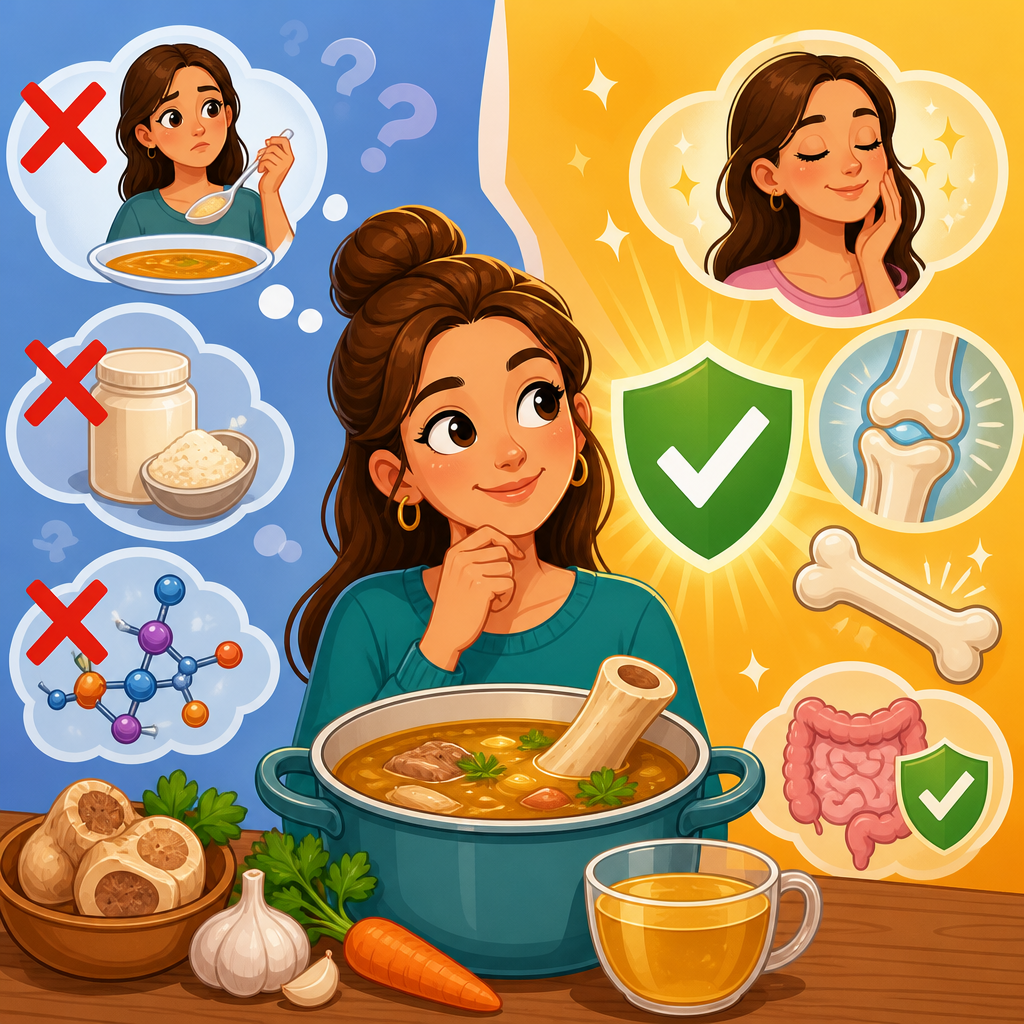
Collagen supplements and bone broth are often treated as miracle products, yet the real role of collagen and bone broth is more specific, more interesting, and more useful than the hype suggests. Collagen is the most abundant structural protein in the human body, forming much of the framework of skin, cartilage, tendons, ligaments, bones, blood vessels, and connective tissue. Bone broth is a slow-simmered stock made from animal bones, connective tissue, and water, sometimes with vinegar and vegetables, that can contain gelatin, minerals, amino acids, and small amounts of collagen-derived peptides. People turn to both for joint comfort, skin appearance, gut support, recovery, and healthy aging, but the evidence is uneven, the formulations vary widely, and many popular claims blur basic biology.
In practice, understanding what these products can and cannot do matters because buyers are spending heavily on powders, capsules, ready-to-drink broths, and beauty-focused functional foods. It also matters because collagen is not a vitamin with a single deficiency state; it is a protein family with at least 28 identified types, and the body continuously synthesizes, breaks down, and remodels it using amino acids, vitamin C, copper, iron, and normal hormonal signaling. When I review supplement labels and research summaries with clients, the biggest confusion usually starts here: consuming collagen is not the same as directly replacing the collagen in your face or knees. The body digests dietary protein, absorbs amino acids and peptides, and then decides where those building blocks are used based on current physiological needs.
This article debunks the most common myths about the role of collagen and bone broth, while also serving as a practical hub for the broader topic. If you are comparing hydrolyzed collagen versus gelatin, wondering whether bone broth can replace protein powder, or trying to judge if a premium beauty formula is worth the price, start with the core principles below. The goal is not to dismiss collagen or bone broth. It is to separate realistic benefits from exaggerated promises so you can use them appropriately within a sound nutrition plan.
Myth 1: Collagen and bone broth are basically the same thing
They overlap, but they are not the same product and should not be evaluated the same way. Collagen supplements are usually made by extracting collagen from bovine hides, fish skin, chicken cartilage, or porcine tissue and then processing it into hydrolyzed collagen peptides or gelatin. Hydrolyzed collagen is broken into smaller peptides that dissolve easily in hot or cold liquid. Gelatin is partially hydrolyzed collagen that gels in liquid. Bone broth, by contrast, is a culinary food prepared by simmering bones and connective tissue. Its nutrient profile depends heavily on raw materials, simmer time, filtration, concentration, and storage.
That difference matters because dose consistency differs dramatically. A collagen peptide tub may provide 10 to 20 grams per serving with standardized protein content. A cup of bone broth may contain far less protein, and one commercial brand may differ sharply from another. Analyses of packaged bone broths have found substantial variation in protein and mineral content, which means consumers cannot assume every carton delivers the same functional amount. If your goal is to test collagen intake for joint or skin support, a measured collagen peptide supplement is easier to study and easier to dose consistently than broth alone.
Bone broth still has value. It can be hydrating, savory, easy to digest for some people, and useful in soups, sauces, and recovery meals. But it should be treated as a food first, not as an exact stand-in for a standardized collagen supplement. That distinction immediately clears up much of the marketing confusion surrounding the role of collagen and bone broth.
Myth 2: Eating collagen sends collagen straight to your skin, hair, and joints
This is the most common misunderstanding. When you ingest collagen, digestive enzymes break much of it into amino acids and small peptides. Some bioactive peptides may be absorbed intact and may influence fibroblast activity or extracellular matrix signaling, which is one reason researchers have studied collagen peptides for skin elasticity and joint comfort. Still, the body does not route a scoop of marine collagen directly to crow’s feet or knee cartilage. It uses absorbed building blocks according to broader metabolic priorities.
Think of collagen intake as supplying raw materials and signaling molecules, not as patching a single body part. If a person is under-eating protein overall, lacking vitamin C, smoking, overexposed to ultraviolet radiation, sleeping poorly, or training hard without recovery, extra collagen alone will not override those factors. Collagen synthesis requires adequate total nutrition and favorable conditions. In skin health, for example, daily sunscreen use often has a larger effect on preserving collagen than any supplement. In joint health, load management, resistance training, body weight, and physical therapy frequently matter more than supplements by themselves.
The good news is that controlled trials do suggest some targeted benefits are plausible. Studies on oral collagen peptides have reported improvements in skin hydration, elasticity, and wrinkle appearance in some populations, often after eight to twelve weeks. Other studies have found modest reductions in activity-related joint discomfort, especially when collagen is paired with exercise. Those findings support a supportive role, not a direct replacement model.
Myth 3: Bone broth is a complete protein powerhouse
Bone broth is often marketed as though it delivers the same protein quality as meat, eggs, whey, or soy isolate. It does not. Collagen is rich in glycine, proline, and hydroxyproline, but it is low in essential amino acids such as tryptophan and contains relatively little leucine compared with proteins typically used to stimulate muscle protein synthesis. That means collagen is not a complete protein source for the same purposes as whey, casein, egg, or a balanced plant protein blend.
If someone drinks bone broth after a workout and expects it to perform like a 25-gram whey shake, they will likely be disappointed. Whey is especially rich in leucine, a key trigger for muscle protein synthesis through the mTOR pathway. Collagen can contribute to total protein intake, but it is better viewed as a specialized protein that may support connective tissue than as a first-choice protein for building muscle mass. In sports nutrition, many practitioners use collagen alongside, not instead of, complete proteins.
This is especially important for older adults, who often need higher-quality protein distribution across the day to help preserve lean mass. Replacing complete proteins with broth-based drinks may worsen, not improve, the diet. A more effective strategy is pairing collagen or broth with protein-rich meals that include dairy, eggs, fish, poultry, legumes, or soy foods.
Myth 4: More collagen always means better results
More is not automatically better, because benefit depends on context, dose, formulation, and outcome measured. Human studies commonly use 2.5 to 15 grams of collagen peptides daily, with many skin and joint studies clustering around 5 to 10 grams. Taking double or triple that amount does not guarantee stronger effects. Past a certain point, extra collagen is simply extra protein calories, and if it crowds out more balanced foods, it may reduce overall diet quality.
There is also a formulation issue. Type I collagen is the dominant form in skin, tendon, and bone, while type II is the principal collagen in cartilage. Undenatured type II collagen, often dosed in much smaller amounts such as 40 milligrams, works through a different proposed mechanism than hydrolyzed collagen peptides. Consumers often compare labels without noticing they are looking at products designed for different aims. In my experience, poor outcomes often come from mismatched expectations rather than inherently ineffective products.
Consistency matters more than megadosing. If a person responds, the effect is usually gradual and assessed over weeks, not days. Standardized intake, paired with sufficient total protein, vitamin C, and realistic goals, produces a much clearer test than jumping between trendy products or taking oversized servings sporadically.
Myth 5: All collagen products are equal
Source, processing, testing, and formulation quality matter. Marine collagen is usually rich in type I collagen and is popular in beauty products. Bovine collagen often provides types I and III. Chicken-derived products may focus on type II collagen for joint formulas. Hydrolysis affects solubility and digestibility characteristics. Flavor systems, sweeteners, added hyaluronic acid, biotin, vitamin C, or zinc can change both the label and the use case, but these additions do not automatically make a product superior.
What deserves more attention is quality assurance. Reputable brands should identify the collagen source, serving size, grams of collagen per serving, allergen status, and third-party testing practices. Because supplements can vary in heavy metal risk, adulteration risk, and label accuracy, programs such as NSF Certified for Sport, Informed Sport, or USP-style quality signals are worth looking for when relevant. Marine collagen is not inherently better than bovine collagen; it is simply different. The best option depends on your dietary restrictions, budget, tolerability, and target outcome.
| Option | Typical source | Main use case | Key limitation |
|---|---|---|---|
| Hydrolyzed collagen peptides | Bovine, marine, porcine | Convenient daily dosing for skin or general connective tissue support | Not a complete protein |
| Gelatin | Bovine or porcine | Cooking, gummies, thickening, some connective tissue support | Less convenient in cold liquids |
| Undenatured type II collagen | Chicken cartilage | Joint-focused formulas | Different mechanism and tiny dose can confuse comparisons |
| Bone broth | Bones and connective tissue | Food-first savory option, hydration, soups | Highly variable protein content |
Myth 6: Bone broth heals the gut and fixes digestive problems
This claim is usually overstated. Bone broth contains gelatin and amino acids such as glycine and glutamine, and warm liquids can be soothing during illness or recovery. However, evidence that bone broth itself heals intestinal permeability, reverses inflammatory bowel disease, or treats chronic digestive disorders is limited. Most dramatic claims come from anecdote, not rigorous clinical trials.
That does not make broth useless. For people recovering from poor appetite, dental work, viral illness, or gastrointestinal upset, broth can be a practical stepping stone back to regular meals. It can provide fluid, sodium, and a small amount of protein in an easy format. But persistent bloating, reflux, abdominal pain, chronic diarrhea, blood in stool, or unexplained weight loss needs medical evaluation, not a broth cleanse. The role of collagen and bone broth in digestive wellness is supportive at best, not curative.
There are also practical caveats. Long-simmered broths may be high in sodium if commercially prepared or if concentrated at home. Some people with histamine sensitivity report symptoms with slow-cooked broths. Others may tolerate broth well but struggle with fatty add-ins. Individual response matters, and broad healing claims should be treated cautiously.
Myth 7: Collagen replaces exercise, skincare, and medical care
Collagen works best as an adjunct, not a substitute. For skin, the fundamentals remain ultraviolet protection, adequate sleep, smoking cessation, total protein sufficiency, and evidence-based skincare such as retinoids when appropriate. For joints and tendons, progressive loading, rehabilitation, and body composition management drive outcomes. For bone health, resistance training, calcium adequacy, vitamin D status, and medical assessment where needed are still central.
One of the most useful applications I have seen is in structured programs where collagen is paired with intent. An athlete with tendon irritation may use collagen peptides before rehab exercises while maintaining a high-quality diet. A middle-aged adult concerned about skin aging may combine collagen with sunscreen, protein adequacy, and consistent skincare. Those are realistic integrations. Expecting broth or peptides to erase arthritis, replace physical therapy, or reverse years of sun damage is not realistic.
There is also a timing discussion. Some research has explored taking gelatin or collagen with vitamin C before tendon-loading exercise to support collagen synthesis in connective tissue. The concept is biologically plausible, but it remains a specialized strategy, not a universal rule. It may be worth discussing in performance or rehab settings, yet it should not be exaggerated into a cure-all protocol.
How to use collagen and bone broth wisely
Start with your actual goal. If you want a convenient, measurable intake for skin or joint support, choose a reputable collagen peptide product providing a clearly labeled daily dose, usually in the 5 to 10 gram range unless a clinician suggests otherwise. If you want a savory food that can support hydration and meal quality, use bone broth in soups, grains, braises, or as a warm beverage, but do not assume every serving delivers a therapeutic amount of collagen. If muscle gain is the priority, emphasize complete proteins first and use collagen as a secondary addition.
Check labels carefully. Look for source transparency, protein grams per serving, sodium content in broth, third-party testing, and any unnecessary proprietary blends. Pair collagen with a balanced diet rich in vitamin C-containing foods such as citrus, kiwi, berries, peppers, and broccoli because vitamin C is required for normal collagen formation. Finally, judge results honestly over time. Skin and joint outcomes, when they occur, are usually modest and gradual. That is still valuable. The main benefit of understanding the role of collagen and bone broth is not chasing miracles. It is using the right product, for the right reason, in the right place within a bigger health strategy. If you are building your supplements and nutraceuticals plan, use this guide as your starting point and compare every new claim against these basics.
Frequently Asked Questions
1. Is collagen a miracle ingredient that can rebuild skin, joints, and bones on its own?
No. Collagen is incredibly important, but it is not a stand-alone miracle fix. It is the most abundant structural protein in the body and helps provide strength, flexibility, and support to tissues such as skin, cartilage, tendons, ligaments, bones, and blood vessels. That said, simply consuming collagen does not mean it travels directly to wrinkles, painful joints, or weak bones and rebuilds them automatically. When collagen is eaten in foods or supplements, it is digested into amino acids and small peptides, which the body then uses according to its needs. Those building blocks may support the body’s natural collagen production, but they do not act like a targeted patch for every problem.
What matters more is the bigger picture: overall protein intake, vitamin C status, mineral intake, age, hormone changes, sleep, exercise, inflammation, smoking, and sun exposure all influence collagen health. For example, the body needs vitamin C to make collagen properly, and resistance exercise helps maintain connective tissue and bone strength. So while collagen can be useful as part of a broader nutrition and lifestyle strategy, it should be understood as a supportive tool, not a cure-all.
2. Does drinking bone broth directly “replace” the collagen your body loses with age?
Not exactly. Bone broth contains compounds that may include gelatin, collagen fragments, amino acids such as glycine and proline, and small amounts of minerals, depending on how it is prepared. However, it does not function like a direct refill for aging tissues. As people age, natural collagen production declines, and changes in skin elasticity, joint comfort, and connective tissue integrity become more noticeable. Bone broth may contribute some of the raw materials involved in tissue maintenance, but it does not stop aging or directly restore collagen in a one-to-one way.
It is better to think of bone broth as a nourishing food rather than a biological shortcut. It can be a comforting, protein-containing addition to the diet, especially when homemade or prepared with a variety of bones and connective tissue. Still, the amount of collagen-related material in bone broth can vary widely from batch to batch. Factors such as simmer time, type of bones used, amount of tissue included, and dilution all affect the final nutrient profile. That means bone broth can be part of a healthy routine, but it should not be relied on as the sole strategy for maintaining skin, joints, or bone health over time.
3. Are collagen supplements and bone broth basically the same thing?
No, and this is one of the most common points of confusion. Collagen supplements are typically processed products made to deliver a more standardized amount of collagen peptides or hydrolyzed collagen per serving. Because they are broken down into smaller peptides, they dissolve easily and are simple to add to drinks or foods. Bone broth, by contrast, is a traditional slow-simmered stock made from animal bones, connective tissue, and water, often with vinegar and vegetables. It may contain collagen-derived gelatin and amino acids, but the exact amount is much less predictable.
They also differ in how they fit into a diet. A collagen supplement is often chosen for convenience and consistency, while bone broth is usually valued as a whole food with culinary uses, warmth, flavor, and hydration. Bone broth may also provide other nutrients, though usually in modest amounts unless it is concentrated. Neither is automatically superior in every case. If someone wants a measured dose of collagen peptides, a supplement may be more practical. If someone wants a savory food that can support overall nourishment, bone broth may make more sense. The key point is that they overlap, but they are not interchangeable in a precise nutritional sense.
4. If collagen is so important, does that mean eating more of it guarantees better skin and fewer joint problems?
It would be nice if it were that simple, but biology is more nuanced. Collagen is essential for the structure of skin and connective tissues, yet outcomes depend on many variables beyond intake alone. Some people may notice benefits from collagen supplementation, especially when their overall protein intake was low or their diet lacked variety. Research has suggested that collagen peptides may support skin hydration, elasticity, and joint comfort in certain groups. Still, “may support” is very different from “guarantees results.” The body is constantly turning tissues over, managing inflammation, responding to movement, and prioritizing nutrients where they are most needed.
Joint pain, for example, can come from overuse, injury, arthritis, muscle imbalance, inactivity, or body weight changes. Skin aging can be influenced by genetics, UV exposure, smoking, stress, and sleep quality. In those situations, collagen may help support the underlying system, but it is not likely to overcome every other factor by itself. A realistic view is that collagen can be one useful piece of a larger plan that includes adequate total protein, fruits and vegetables for vitamin C and antioxidants, regular movement, strength training, hydration, and good recovery habits.
5. Is bone broth a nutritional powerhouse that everyone needs to drink every day?
Bone broth can be a wholesome food, but calling it something everyone needs every day is an exaggeration. It has become popular because it sounds traditional, rich in collagen, and easy to associate with gut health, immunity, joints, and skin. While it can absolutely fit into a healthy eating pattern, it is not essential in the way water, total calories, protein, vitamins, and minerals are essential. Many people can meet their nutritional needs and support collagen production without ever drinking bone broth.
Its real value is more specific and practical. Bone broth can be easy to digest, flavorful, soothing, and useful as a base for soups, stews, grains, and sauces. It may contribute protein-related compounds and can help diversify the diet. But it should not be treated as a magic tonic. The actual nutrition depends heavily on the recipe and preparation method, and some store-bought products contain less protein than consumers expect. In other words, bone broth can be a smart addition if you enjoy it, but it works best when viewed as one supportive food among many, not as a daily requirement or universal health solution.