Protein powders can simplify nutrition, support muscle repair, and help people meet daily protein goals, but choosing the right one requires understanding ingredients, digestion, quality, and intended use. Protein powder is a concentrated protein source made from dairy, eggs, or plants, then processed into a form that mixes easily into drinks or foods. In practice, I have seen people buy a large tub based on marketing claims alone, then stop using it because of bloating, taste fatigue, or poor fit with their diet. The better approach is to match the powder to your routine, protein target, training load, digestive tolerance, and budget.
At the most basic level, protein supports muscle protein synthesis, immune function, enzyme production, hormone signaling, and satiety. Active adults often use powders because whole-food protein is not always convenient after training, during travel, or when appetite is low. The common choices include whey concentrate, whey isolate, whey hydrolysate, casein, egg white, soy, pea, rice, hemp, and mixed plant blends. Each differs in amino acid profile, leucine content, digestion speed, lactose content, texture, and cost. Those differences matter because protein quality is not just about the grams listed on the label. It is also about digestibility, essential amino acid composition, and whether the powder fits your day-to-day habits well enough that you will actually use it consistently.
Daily protein needs vary by person. The Recommended Dietary Allowance for sedentary adults is 0.8 grams per kilogram of body weight, but that is a minimum to prevent deficiency, not an optimal target for athletes, older adults, or people dieting to lose fat while preserving lean mass. Sports nutrition research commonly supports around 1.4 to 2.2 grams per kilogram for active people, with higher ends often useful during calorie restriction. A powder is only a tool within that broader plan. If a serving gives 20 to 30 grams of high-quality protein and helps you hit total daily intake, it can be valuable. If it replaces balanced meals unnecessarily or causes gastrointestinal distress, it becomes less useful.
This guide serves as a practical hub for protein powders within supplements and nutraceuticals. It explains how major protein types compare, who each option suits best, what label details deserve attention, and how to use powders effectively without treating them as magic. By the end, you should be able to answer the question “Which protein powder is right for you?” based on your own physiology and goals rather than advertising language.
What protein powder does and who benefits most
Protein powder helps close the gap between how much protein you should eat and how much you realistically consume. It does not outperform whole food by default, but it is efficient. A scoop can deliver as much protein as several eggs or a serving of chicken with far less prep time. In coaching and practical meal planning, the people who benefit most are those with elevated protein needs or constrained schedules: strength trainees, endurance athletes, older adults trying to maintain muscle, people recovering appetite after illness, and busy professionals who skip meals. For them, convenience improves adherence, and adherence is what changes outcomes.
The core reason protein matters for performance is muscle protein synthesis, the process by which the body builds and repairs muscle tissue. Essential amino acids drive this process, and leucine acts as a key trigger. Whey protein is often favored because it is rich in leucine and digests quickly, making it useful after training. Casein digests more slowly and can help spread amino acid delivery over several hours. Plant proteins can also work well, but some contain less leucine or have lower digestibility, so serving size and blend composition matter more.
Protein powder can also support weight management. High-protein diets generally increase satiety and help preserve lean mass during calorie deficits. A shake at breakfast or after exercise may prevent the cascade of under-eating protein early in the day and over-snacking later. That said, powders are not inherently slimming. Some mass-gainer formulas contain large amounts of added carbohydrate and calories, while many flavored products use sweeteners that people tolerate differently. The best protein powder for weight loss is simply one that provides enough protein with calories and ingredients that fit your plan.
Comparing the main protein powder types
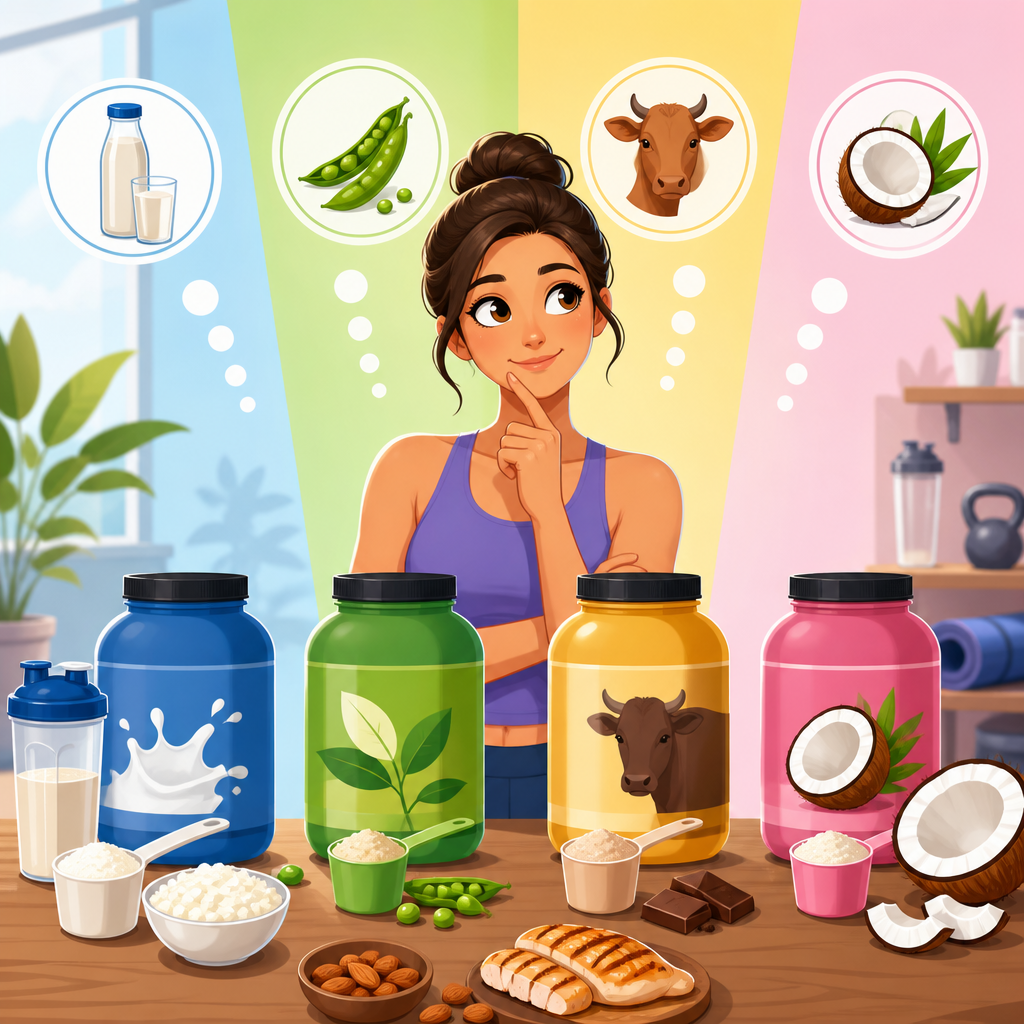
Different protein powders exist because no single option meets every need equally well. Animal-based powders usually score highest for digestibility and amino acid density, while plant-based powders broaden access for vegans, people with allergies, and those seeking different sustainability priorities. The table below highlights the most relevant distinctions I use when helping someone narrow choices.
| Type | Main strengths | Potential drawbacks | Best fit |
|---|---|---|---|
| Whey concentrate | Complete protein, good leucine content, affordable, mixes well | Contains more lactose than isolate, may upset sensitive stomachs | General fitness, value-focused buyers |
| Whey isolate | Higher protein percentage, lower lactose and fat, fast digestion | Costs more, can taste thinner | Lactose-sensitive users, cutting phases, post-workout shakes |
| Whey hydrolysate | Pre-digested peptides, rapid absorption | Most expensive, often bitter | Elite sport use, specialized medical or digestive needs |
| Casein | Slow digestion, highly satiating, complete protein | Thicker texture, dairy-based | Meal replacement support, evening use |
| Egg white | Complete protein, dairy-free, good amino acid quality | Less creamy, often pricier than whey | Dairy avoidance without going plant-based |
| Soy | Complete plant protein, good research base, versatile | Flavor can be polarizing | Vegans wanting a single-source complete protein |
| Pea or pea-rice blend | Good plant option, better texture in blends, allergen-friendly | Lower leucine than whey, can be gritty | Plant-based diets, mixed smoothies and oats |
| Hemp | Whole-food appeal, fiber and fats retained | Lower protein density, less ideal amino acid profile | Users prioritizing minimally refined ingredients |
Whey remains the benchmark for many lifters because it is complete, rich in branched-chain amino acids, and supported by a large body of sports nutrition research. Whey concentrate typically contains around 70 to 80 percent protein by weight, while isolate is more refined and usually reaches 90 percent or higher. If you tolerate dairy well, concentrate is often the best value. If regular milk causes issues, isolate may still work because much of the lactose is removed during processing.
Casein is often misunderstood as only a nighttime protein. In reality, its slower gastric emptying can be useful any time you want greater fullness, such as between long meetings or during fat-loss phases. Egg white protein sits in a practical middle ground: high quality, dairy-free, and usually easier to digest than many blends loaded with gums. For plant-based users, soy has the strongest overall evidence as a standalone option, while pea-rice blends can better balance amino acid limitations and improve texture.
How to choose based on goals, diet, and digestion
The right protein powder depends first on your goal. For muscle gain, prioritize total daily protein intake and consistency over exotic ingredients. A whey concentrate or isolate with 20 to 30 grams per serving is usually sufficient. For weight loss, choose a powder with strong protein density, modest calories, and minimal added sugar. For convenience during meal replacement, a thicker casein or blended product can help control hunger better than a very lean isolate. For endurance athletes, the shake often matters less than total daily recovery nutrition, but a quickly digested protein after long sessions can still be practical.
Dietary pattern is the next filter. If you are vegan, the choice narrows to soy, pea, rice, hemp, pumpkin seed, or mixed plant formulas. In that category, blends often outperform single-source powders because they create a more balanced amino acid profile and improve taste. If you avoid dairy because of lactose intolerance, whey isolate or egg white may work better than whey concentrate. If you have a milk protein allergy, skip all dairy proteins entirely, including whey and casein. Gluten-free users should still verify manufacturing claims because cross-contact standards differ by brand.
Digestive tolerance can determine success faster than any macronutrient ratio. I have seen excellent formulas abandoned because sucralose, sugar alcohols, xanthan gum, or large serving sizes caused bloating. If you are sensitive, start with a half serving in water rather than milk, and assess tolerance before buying large containers. Simpler ingredient lists usually make troubleshooting easier. A formula with protein, natural flavor, lecithin, and one sweetener is easier to evaluate than one containing multiple gums, digestive enzyme blends, creamers, and fortified additives.
Reading labels like an informed buyer
A protein label should tell you more than grams per scoop. First, compare serving size with actual protein content. If a 40-gram scoop provides only 20 grams of protein, the rest is coming from flavoring, carbohydrate, fat, or fillers. Second, look at ingredient order. Ingredients are listed by weight, so if maltodextrin or creamer appears high on the list, the product is not primarily a lean protein supplement. Third, check whether the brand discloses the specific protein source rather than hiding behind a “proprietary blend.” Transparency is a positive signal.
Quality verification matters, especially because supplements are not regulated like prescription drugs. Reputable brands often use third-party testing from organizations such as NSF Certified for Sport, Informed Sport, or USP-related quality programs depending on category. For competitive athletes, third-party certification is not optional. It reduces the risk of banned substance contamination, which has ended careers and caused failed drug tests from seemingly routine supplements. Even for non-athletes, independent testing provides confidence that the label reflects what is in the tub.
Do not overvalue amino acid spiking claims. Some low-quality products artificially inflate nitrogen content by adding cheap amino acids such as glycine or taurine, making total protein appear higher on paper than its functional quality suggests. Strong brands avoid that practice and clearly state complete protein source and testing standards. Also watch sodium, sweetener load, and allergen statements. These details are small until they affect blood pressure management, gastrointestinal comfort, or daily compliance.
Using protein powder effectively in a nutrition plan
How you use protein powder matters as much as what you buy. For most active adults, distributing protein across three to five meals works better than consuming the majority at dinner. A serving of 25 to 40 grams per meal is a useful rule of thumb, with exact needs depending on body size, age, and total intake. Older adults may benefit from slightly higher per-meal doses because muscle protein synthesis becomes less responsive with age. Post-workout timing helps, but the daily total remains the main driver. If you trained hard and do not eat a protein-rich meal within a couple of hours, a shake is a practical bridge.
Protein powder is also versatile beyond shaker bottles. Whey works in smoothies, overnight oats, yogurt bowls, and pancake batter. Casein thickens into pudding-like textures that suit snacks. Plant proteins often perform best in blended recipes with fruit, cocoa, or nut butter because these mask earthy notes. In real-world meal planning, I usually recommend pairing a shake with fiber and micronutrients rather than treating it as a standalone fix. Adding berries, oats, or chia can improve satiety and overall nutritional value without making preparation complicated.
The key limitation is displacement. If protein powder causes you to skip whole-food meals routinely, you may miss out on iron, zinc, calcium, omega-3 fats, and the satiety that comes from chewing and mixed meals. Think of powder as support, not replacement, unless a clinician or dietitian has directed otherwise. Used this way, it becomes one of the most efficient tools in sports nutrition and general health.
Protein powders are most useful when they solve a clear problem: low protein intake, poor meal timing, limited appetite, or the need for portable recovery nutrition. The best choice is not the most expensive tub or the trendiest ingredient. It is the product that matches your goals, diet pattern, digestion, and budget while delivering a reliable amount of high-quality protein. Whey is often the best all-around option for omnivores, casein helps with fullness, egg white offers a dairy-free animal protein, and soy or pea-rice blends can serve plant-based users extremely well.
When comparing products, focus on protein source, protein per serving, digestibility, third-party testing, and ingredient simplicity. Be cautious with proprietary blends, exaggerated performance claims, and formulas padded with fillers or unnecessary extras. If you tolerate a powder well and use it consistently enough to reach your daily protein target, you have already solved the most important part of the equation. Supplements work best when they reinforce sound habits rather than distract from them.
Use this hub as your starting point for better protein decisions within supplements and nutraceuticals. Review your daily protein needs, pick a type that fits your routine, and test it in a practical serving pattern for two weeks. A well-chosen protein powder can make better nutrition easier, more consistent, and more effective. Start with the option that best fits your body and your schedule, then build from there.
Frequently Asked Questions
1. How do I choose the right protein powder for my goals?
The best protein powder depends on why you want to use it in the first place. If your main goal is muscle repair and recovery after training, a fast-digesting option such as whey protein is often a practical choice because it is rich in essential amino acids, especially leucine, which plays a major role in muscle protein synthesis. If you want a slower-digesting option that may feel more filling between meals or before bed, casein can be useful. For people who avoid dairy, plant-based blends made from pea, rice, soy, or other sources can work very well, especially when they are formulated to provide a complete amino acid profile.
It also helps to think beyond muscle building. Some people use protein powder simply to make breakfast more balanced, to increase satiety, or to support daily protein intake during busy weeks. In those cases, taste, texture, ingredient quality, and how well the product fits into your routine may matter more than whether it is marketed as a “performance” supplement. In practice, the right choice is usually the one you can digest comfortably, enjoy consistently, and use often enough to help you meet your nutrition targets.
2. What is the difference between whey, casein, and plant-based protein powders?
Whey and casein both come from milk, but they behave differently in the body. Whey is quickly digested and is commonly used after exercise or when someone wants a convenient, high-quality protein source that mixes easily. It is available in forms such as concentrate, isolate, and hydrolysate. Concentrate usually contains some lactose and fat, isolate is more filtered and often lower in lactose, and hydrolysate is partially broken down for faster digestion, though it can cost more and may have a slightly different taste.
Casein digests more slowly and forms a thicker texture, which some people prefer in shakes, puddings, or evening meals. Because it releases amino acids more gradually, it may help with fullness and provide a steadier supply of protein over time. Plant-based protein powders vary more widely. Pea protein is popular for texture and protein content, rice protein is often combined with other plant sources, and soy protein is one of the more complete plant proteins on its own. The main takeaway is that each type has strengths. There is no single “best” option for everyone. Your digestion, dietary preferences, flavor tolerance, and budget all matter.
3. Why do some protein powders cause bloating, stomach discomfort, or taste fatigue?
Digestive issues with protein powder are common, and they are not always caused by the protein itself. One major factor is lactose content. People who are sensitive to lactose may feel better with whey isolate, egg protein, or a plant-based option instead of whey concentrate. Another possible issue is the use of sugar alcohols, gums, artificial sweeteners, or fiber blends that can upset digestion in some individuals. Even “healthy” extras such as probiotics, MCT oil, or greens powders may not agree with everyone, especially in large servings.
Taste fatigue is another real issue that gets overlooked. A protein powder can look impressive on the label, but if the flavor becomes unpleasant after a week or the texture is chalky, the tub often ends up unused. This is one reason it helps to start with a smaller container or single-serve packets before committing to a large purchase. I have seen many people buy a big product based on marketing claims alone, only to stop using it because of bloating, heaviness, or simply getting tired of the taste. Choosing a simpler formula, rotating flavors, or mixing powder into oats, yogurt, or smoothies instead of just water can make long-term use more sustainable.
4. What ingredients should I look for on a high-quality protein powder label?
A good protein powder label should be straightforward and transparent. Start with the protein source and the amount of protein per serving. Then check how many ingredients are included and whether those ingredients make sense for your needs. In general, fewer unnecessary fillers can be a good sign, although “simple” does not automatically mean “better” for everyone. Look for products that clearly list protein type, serving size, sweeteners, allergens, and any added ingredients such as digestive enzymes, vitamins, or flavoring compounds.
It is also smart to pay attention to third-party testing or certifications when available. These can add confidence that the product contains what it claims and is screened for contaminants or banned substances. This matters even more for competitive athletes or anyone who wants added assurance about quality control. Finally, look at the broader nutrition panel. A powder marketed as protein-focused should not be overloaded with added sugars if your goal is better daily nutrition. The ideal label is one that matches your priorities: enough protein per serving, ingredients you tolerate well, reliable quality standards, and no extra additions that work against your goals.
5. Can protein powder replace meals, or is it better used as a supplement?
Protein powder is usually best viewed as a supplement, not a full replacement for whole meals. It can be extremely helpful when you are busy, struggling to hit your protein needs, or needing a convenient option after exercise, but it does not automatically offer the same nutritional value as a balanced meal. Whole foods provide a wider range of nutrients, including fiber, healthy fats, vitamins, minerals, and the satisfaction that comes from chewing and eating a complete plate of food. Relying too heavily on shakes can leave those pieces missing.
That said, protein powder can absolutely be part of a more complete meal when used thoughtfully. Adding it to a smoothie with fruit, oats, yogurt, seeds, or nut butter creates something far more balanced than protein powder mixed with water alone. It can also improve the protein content of breakfast foods such as oatmeal, pancakes, or yogurt bowls. In most cases, the smartest approach is to use protein powder to fill gaps rather than replace solid food by default. When it supports your routine, digestion, and daily protein targets without crowding out nutritious meals, it becomes a practical tool for better nutrition rather than just another supplement purchase.