
Digestive enzymes are marketed as a simple way to get more from food, but the question matters most when it is asked precisely: do digestive enzymes improve nutrient absorption in healthy adults with normal digestion? In most cases, the answer is only marginally, and often not in a clinically meaningful way. Healthy adults already produce a coordinated mix of salivary, gastric, pancreatic, and intestinal enzymes that break carbohydrates, proteins, and fats into absorbable units. Nutrient absorption is the movement of those digested components across the intestinal lining, while bioavailability refers to how much of a nutrient is absorbed and then available for use in the body. Those are related but not identical concepts, and both are influenced by far more than an enzyme capsule.
I have worked with clients who assumed bloating after a large meal automatically meant “poor absorption” and that an over-the-counter enzyme would fix it. Usually the real issue was meal size, fiber load, alcohol intake, lactose intolerance, low overall diet quality, or an undiagnosed gastrointestinal condition rather than a broad enzyme deficiency. That distinction is important because enzyme supplements can be useful in specific medical situations, yet the evidence for routine use in otherwise healthy adults remains limited. If your digestion is normal, your body is already doing the main job enzymes are sold to do.
This hub article explains how nutrient absorption and bioavailability actually work, where digestive enzymes fit, when they may help, and what affects absorption more powerfully than supplementation. It also provides the framework that supports deeper articles on protein digestion, fat-soluble vitamin uptake, mineral inhibitors such as phytate, gut health, medication interactions, and food preparation methods. If you want to understand whether digestive enzymes improve nutrient absorption in healthy adults, start with the baseline physiology: efficient absorption depends on digestive secretions, intestinal surface area, transporter activity, meal composition, microbiome activity, and the nutrient form itself. Enzymes matter, but they are only one part of the system.
How nutrient absorption and bioavailability work
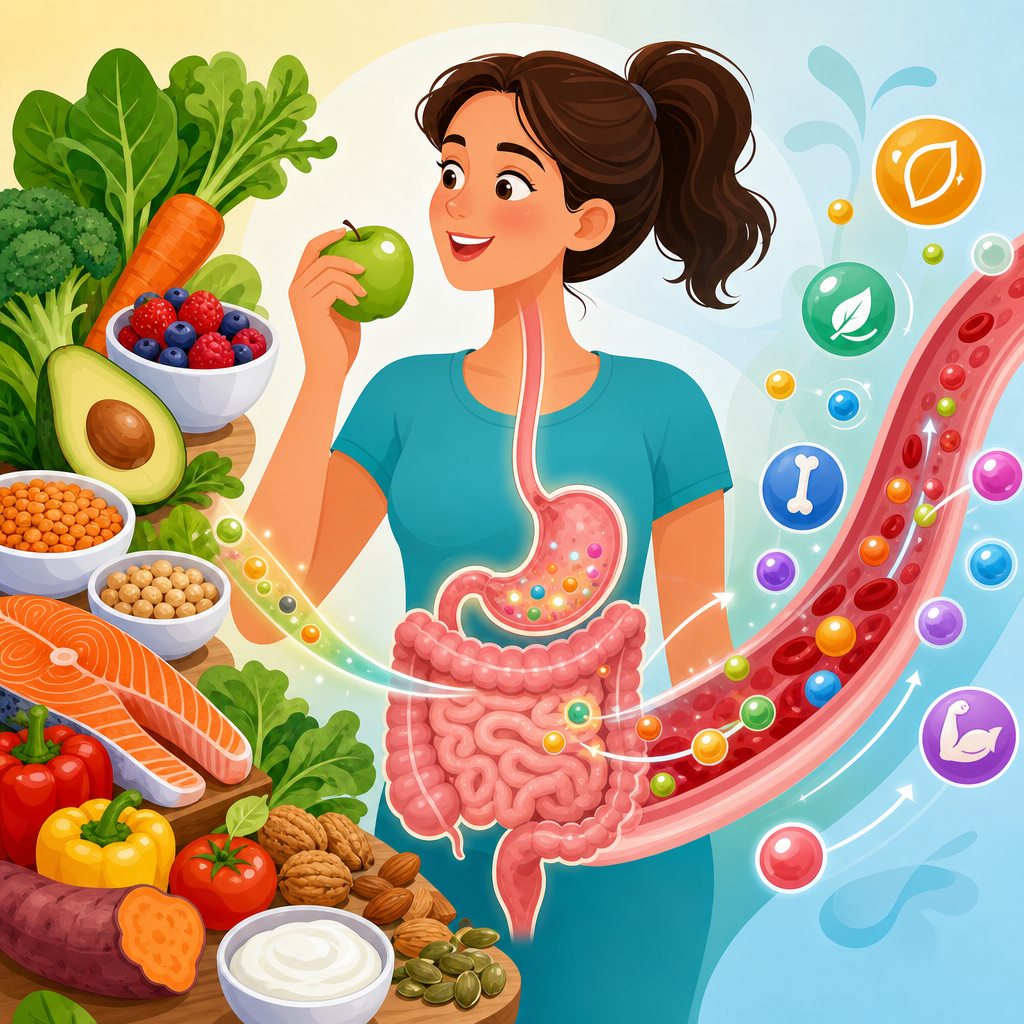
Most nutrient absorption happens in the small intestine, where an enormous surface area created by folds, villi, and microvilli allows contact between digested food and transport mechanisms in the gut lining. Carbohydrates are absorbed mainly as glucose, galactose, and fructose after enzymes such as amylase and brush-border disaccharidases break starches and sugars down. Proteins are reduced to amino acids and small peptides through pepsin in the stomach and pancreatic proteases like trypsin and chymotrypsin in the small intestine. Fats require emulsification by bile and then digestion by pancreatic lipase into fatty acids and monoglycerides before they can be packaged into micelles and absorbed.
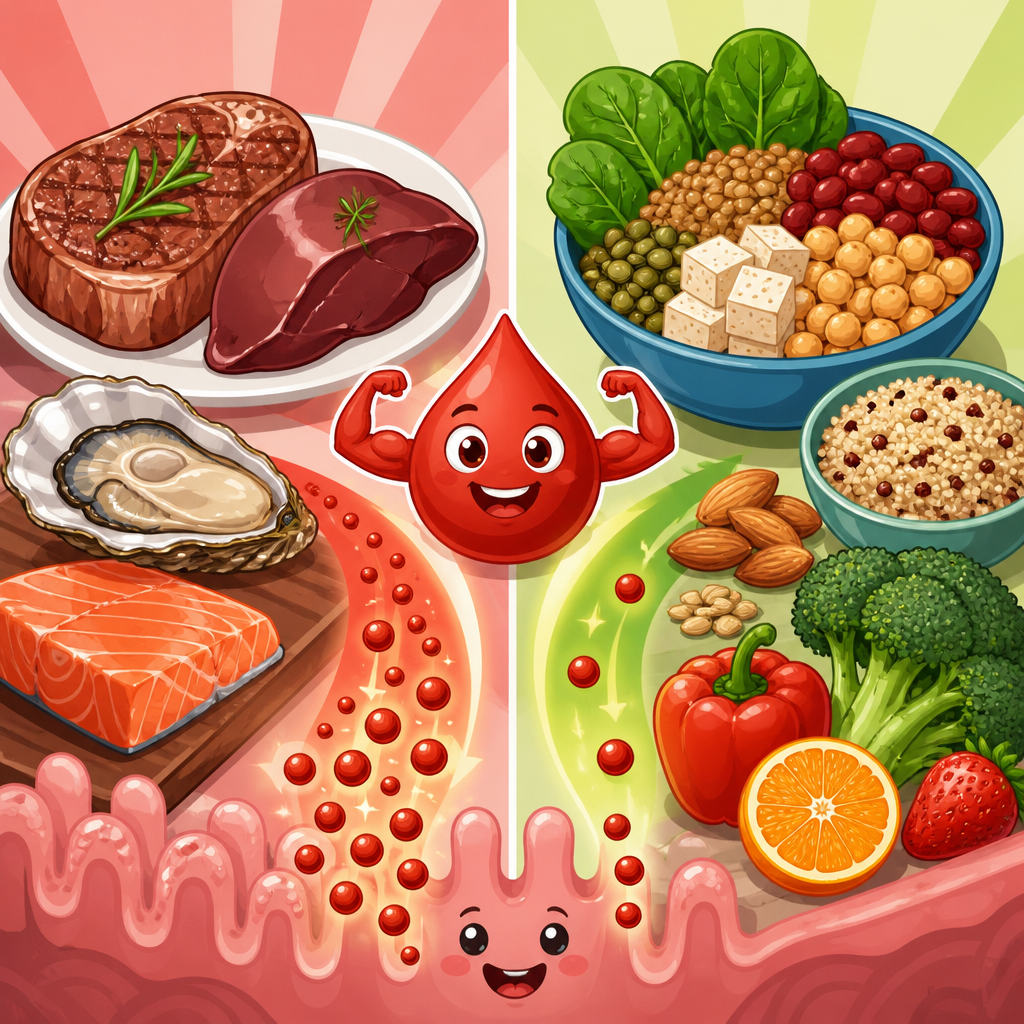
Bioavailability goes beyond digestion. Iron is a clear example: heme iron from meat is generally more bioavailable than nonheme iron from plants, and vitamin C can enhance nonheme iron absorption by reducing ferric iron to the more absorbable ferrous form. Calcium absorption depends partly on vitamin D status. Vitamin B12 requires stomach acid, intrinsic factor, and uptake in the ileum. Fat-soluble vitamins A, D, E, and K depend on normal fat digestion and bile flow. In practice, this means someone can digest food adequately yet still absorb one nutrient poorly because of a specific bottleneck. That is why the broad claim that digestive enzymes “boost absorption” is too simplistic.
Absorption efficiency also changes with dose. Small amounts of some nutrients are absorbed proportionally better than large boluses because transporter systems can saturate. Magnesium, for example, often shows lower fractional absorption at higher intakes. Fiber, food matrix, gastric emptying rate, and interactions among nutrients also matter. From a Nutrition Basics standpoint, nutrient absorption and bioavailability are best understood as the outcome of digestion plus intestinal transport plus post-absorption handling, not digestion alone.
What digestive enzymes do in healthy adults
Digestive enzymes are biological catalysts that speed the breakdown of food. Endogenous enzymes are made by the body; supplemental enzymes usually contain amylase, protease, lipase, lactase, alpha-galactosidase, bromelain, papain, or fungal enzyme blends. In healthy adults, pancreatic output has a wide reserve capacity. The pancreas does not need to operate at its maximum for normal absorption to occur, and the small intestine likewise has substantial redundancy. In other words, normal digestion is built with physiological backup.
That reserve is why adding more enzymes does not automatically translate into better nutrient absorption. If starch, protein, and fat are already being adequately digested, providing extra amylase, protease, or lipase may not create a measurable gain in blood nutrient levels, body composition, micronutrient status, or clinical outcomes. The body is not a machine where doubling an input doubles performance. Once digestion is sufficient, other steps become the limiting factors.
There are exceptions. Lactase can reduce symptoms and improve lactose digestion in people with lactose malabsorption. Alpha-galactosidase can help digest fermentable oligosaccharides from beans and some vegetables, reducing gas for some users. Prescription pancreatic enzyme replacement therapy is essential for pancreatic exocrine insufficiency caused by conditions such as chronic pancreatitis, cystic fibrosis, pancreatic cancer, or pancreatic surgery. Those are real, evidence-based uses. They should not be generalized to healthy adults with intact digestive function.
What the evidence says about absorption benefits
Clinical evidence supporting digestive enzymes for healthy adults is much thinner than marketing suggests. Studies often focus on symptom relief after difficult-to-digest foods rather than improved nutritional status. That is an important difference. Feeling less full or gassy after pizza or a bean-heavy meal does not necessarily mean your body absorbed significantly more protein, iron, calcium, or vitamins over time.
Trials on enzyme blends are also hard to interpret because products vary widely in composition, activity units, enteric protection, and quality control. Some include herbs or probiotics, making the enzyme effect difficult to isolate. Outcomes are inconsistent, sample sizes are often small, and endpoints sometimes rely on self-reported symptoms rather than direct markers of nutrient absorption. In my review work, that pattern appears repeatedly: stronger claims than the data justify.
Where evidence is strongest, it is usually targeted. Lactase supplementation can improve lactose digestion and reduce symptoms in lactose-intolerant individuals. Pancreatic enzymes improve fat absorption, reduce steatorrhea, and support nutritional status in people with pancreatic insufficiency. Those are treatment scenarios for impaired digestion. For healthy adults, there is little convincing evidence that routine digestive enzyme use meaningfully improves absorption of a balanced diet across the board.
| Situation | Likely effect of digestive enzymes | Evidence strength |
|---|---|---|
| Healthy adult with normal digestion | Usually minimal change in nutrient absorption | Limited |
| Lactose intolerance using lactase with dairy | Improves lactose digestion and often symptom control | Moderate to strong |
| Pancreatic exocrine insufficiency | Improves fat and overall macronutrient absorption | Strong |
| High-FODMAP meal with alpha-galactosidase | May reduce gas; absorption benefit is indirect and limited | Moderate for symptoms |
Factors that matter more than enzyme supplements
If the goal is better nutrient absorption and bioavailability, several factors usually have a larger effect than taking a general digestive enzyme. Food form is one. Cooking tomatoes increases lycopene bioavailability, while soaking, sprouting, fermenting, or leavening grains and legumes can reduce phytate and improve the availability of minerals such as iron and zinc. Pairing strategies matter too: vitamin C with beans or spinach can enhance nonheme iron absorption, and dietary fat helps absorb carotenoids and vitamins A, D, E, and K.
Stomach acid status matters because acid helps release nutrients from food and supports absorption pathways, especially for iron, calcium, and vitamin B12 from protein-bound sources. Medication use matters as well. Proton pump inhibitors can reduce stomach acidity, metformin is associated with lower B12 status in some users, bile acid sequestrants can interfere with fat-soluble vitamin absorption, and orlistat reduces fat absorption by inhibiting lipase. None of these issues are solved well by a generic enzyme blend.
Gut health also plays a role, though it is often overstated online. Celiac disease, inflammatory bowel disease, small intestinal bacterial overgrowth, short bowel syndrome, and bile acid disorders can all impair absorption through mechanisms unrelated to simple enzyme insufficiency. Even in less severe situations, chronic diarrhea, persistent bloating, unexplained weight loss, iron deficiency, or greasy stools point toward evaluation, not self-treatment. For healthy adults, improving diet pattern, meal composition, and identified intolerances is usually more effective than adding broad-spectrum enzymes.
When digestive enzymes may help despite overall good health
There is a middle ground between disease treatment and unnecessary supplementation. Some healthy adults experience predictable discomfort with particular foods and may benefit from a targeted enzyme used strategically. The best example is lactase taken with dairy in someone who is lactose intolerant but otherwise healthy. Another is alpha-galactosidase before a meal rich in beans, lentils, or cruciferous vegetables if those foods reliably cause gas. In these cases, the primary benefit is better digestion of a specific carbohydrate and improved meal tolerance.
That improved tolerance can indirectly support nutrient intake. A person who avoids dairy because of lactose symptoms may fall short on calcium, riboflavin, iodine, or protein depending on the rest of the diet. If lactase allows that person to consume yogurt or milk comfortably, nutrient intake may improve. The enzyme did not supercharge absorption beyond normal physiology; it removed a barrier to consuming a useful food. That is a practical distinction and one I emphasize in counseling.
Older adults sometimes ask whether age alone justifies digestive enzymes. Aging can alter gastric acid secretion, appetite, dentition, medication burden, and motility, but it does not automatically create a need for broad enzyme supplementation. If symptoms or deficiencies are present, the right response is to identify the cause. Sometimes the answer is texture modification, protein distribution, B12 monitoring, or treating a medical condition rather than adding an enzyme blend.
How to evaluate enzyme products and claims
If you are considering a digestive enzyme supplement, look first for a clear match between the product and the problem. Lactase should be labeled in FCC lactase units; pancreatic enzymes are prescribed and dosed in lipase units; alpha-galactosidase should specify activity. Vague “digestive support” labels with proprietary blends tell you little about potency or likely effect. Because supplements are not regulated like prescription drugs, quality varies. Third-party testing from organizations such as USP, NSF, or ConsumerLab adds confidence, although not every good product carries every seal.
Timing matters. Enzymes need to be present with the food they are intended to digest, so taking them long before or after a meal is less logical. Product formulation matters too. Some enzymes function best in acidic conditions, others need protection to reach the small intestine, and activity can be reduced by heat and moisture during storage. More is not always better, and side effects such as nausea, cramping, diarrhea, or allergic reactions can occur.
Most importantly, claims should be proportional to evidence. Be skeptical of supplements advertised to improve absorption of every nutrient, treat bloating of any cause, repair the gut, or compensate for poor diet quality. Those promises overreach. The most reliable use cases are specific, measurable, and tied to a known digestive limitation.
For healthy adults, digestive enzymes are not a universal shortcut to better nutrient absorption. Human digestion is already highly effective when the gastrointestinal tract is functioning normally, and nutrient bioavailability depends on many steps beyond enzyme action. The strongest evidence for supplemental enzymes applies to targeted situations such as lactase for lactose intolerance and prescription pancreatic enzymes for pancreatic insufficiency, not routine use after ordinary meals.
The larger lesson for this Nutrition Basics hub on nutrient absorption and bioavailability is that food form, meal composition, nutrient pairing, gut integrity, medication effects, and underlying health status usually matter more than general enzyme blends. If you want to improve what your body gets from food, focus first on a varied diet, smart preparation methods, adequate stomach and gut health, and evaluation of persistent symptoms or deficiencies. That approach produces clearer, more durable benefits than relying on marketing language.
Use digestive enzymes when there is a defined reason, not as default insurance. If you have ongoing bloating, diarrhea, unexplained weight change, anemia, greasy stools, or suspected food intolerance, speak with a qualified clinician and investigate the cause. If your digestion is normal, your best strategy is simple: eat well, pair foods intelligently, and build from the basics of bioavailability rather than supplementing blindly.
Frequently Asked Questions
Do digestive enzymes improve nutrient absorption in healthy adults with normal digestion?
For most healthy adults, digestive enzyme supplements do not significantly improve nutrient absorption in a clinically meaningful way. The reason is straightforward: a healthy digestive system already produces a well-coordinated supply of enzymes from the salivary glands, stomach, pancreas, and small intestine. These enzymes break down carbohydrates into simple sugars, proteins into amino acids and small peptides, and fats into fatty acids and monoglycerides that the intestinal lining can absorb efficiently. In people without digestive disease, this process is usually highly effective on its own.
That is why the key issue is not whether enzymes can help digestion in general, but whether they add measurable benefit when digestion is already normal. In most cases, they do not create a major increase in vitamin, mineral, protein, fat, or carbohydrate absorption because the body is not starting from a deficit. If someone is already digesting and absorbing nutrients adequately, adding more enzymes tends to have limited room to improve the outcome. Marketing often suggests a broad “get more from your food” benefit, but in healthy adults, the evidence usually points to only small or inconsistent effects rather than a meaningful enhancement in nutritional status.
If healthy adults already make digestive enzymes, why are enzyme supplements so popular?
Digestive enzyme supplements are popular largely because the idea behind them is simple and appealing. Many people assume that if enzymes help break food down, then taking extra enzymes must help the body extract more nutrients. That message is easy to market, especially to people interested in wellness, sports nutrition, anti-bloating products, or “optimization” supplements. The promise sounds practical: eat the same food, absorb more, and feel better. But popularity does not necessarily mean broad physiological necessity.
Another reason for their popularity is that digestive discomfort after meals is common, even in otherwise healthy people. Symptoms such as fullness, gas, or occasional bloating can make people think they are not digesting food properly, when those experiences may actually relate to meal size, fiber load, food intolerances, eating speed, carbonation, stress, or individual sensitivity rather than a true enzyme shortage. In that context, digestive enzyme products can seem like an easy fix. However, perceived symptom relief is not the same as proven improvement in nutrient absorption. For healthy adults, the body’s own digestive machinery is typically sufficient, and supplements often offer more marketing appeal than measurable nutritional advantage.
Are there any situations where digestive enzymes are actually helpful?
Yes. Digestive enzymes can be very helpful when there is a genuine impairment in digestion. The clearest examples involve medical conditions in which the body does not produce enough enzymes or cannot deliver them effectively. Pancreatic exocrine insufficiency, which can occur with chronic pancreatitis, cystic fibrosis, pancreatic surgery, or other pancreatic disorders, is a classic case. In that setting, enzyme replacement is not a wellness extra; it is an important treatment used to improve digestion and reduce malabsorption.
There are also more specific examples. People with lactose intolerance may benefit from lactase when consuming dairy because lactase helps break down lactose, reducing symptoms and sometimes improving tolerance of dairy foods. In those cases, the issue is not that every healthy person needs more enzymes, but that a particular enzyme is lacking or insufficient for a particular food. Some individuals with diagnosed digestive disorders may also be advised by a clinician to use enzyme therapy as part of treatment. The important distinction is that these are targeted uses based on a real digestive limitation. For healthy adults with normal digestion, that same benefit usually does not translate into a general improvement in nutrient absorption.
Can digestive enzymes at least help with bloating or discomfort after meals, even if they do not improve nutrient absorption much?
Sometimes they can, but the effect depends heavily on the cause of the symptoms. If discomfort is related to difficulty digesting a specific component of food, a targeted enzyme may be useful. For example, lactase may help with dairy-related symptoms in people who do not tolerate lactose well. In other cases, however, bloating and fullness are not caused by a shortage of digestive enzymes. Large meals, high-fat meals, rapidly eating, swallowing air, carbonated drinks, high-fiber foods, certain fermentable carbohydrates, and stress can all contribute to digestive symptoms without any true enzyme deficiency being present.
This matters because symptom relief and nutrient absorption are not identical outcomes. A person might feel slightly better after taking a supplement and assume it is improving absorption, when the actual benefit may be modest, food-specific, or not directly related to nutritional uptake at all. In healthy adults, occasional digestive discomfort does not automatically mean enzymes are needed. If symptoms are persistent, severe, or linked to weight loss, diarrhea, greasy stools, anemia, or other warning signs, it is worth seeking medical evaluation instead of relying on over-the-counter enzymes as a catch-all solution. Those patterns can point to an underlying condition that needs proper diagnosis.
What is the practical takeaway for healthy adults considering digestive enzyme supplements?
The practical takeaway is that healthy adults with normal digestion should not expect digestive enzymes to dramatically increase nutrient absorption. The digestive tract is already designed to break food down efficiently, and in most people, it does that job well without supplementation. Any benefit from adding enzymes is usually small, inconsistent, or too limited to make a real difference in overall nutritional status. That makes these products less of a necessity and more of a situational option that may or may not be worth the cost.
If someone is curious about trying a digestive enzyme supplement, it helps to define the goal clearly. If the goal is to treat a diagnosed medical problem, that should be guided by a healthcare professional. If the goal is simply to “get more nutrients” from food despite already being healthy, the expected payoff is generally modest at best. In many cases, focusing on proven foundations such as a balanced diet, adequate protein, sufficient fiber tolerance, meal timing, chewing thoroughly, and managing known food intolerances will do more for digestion and nutrition than a broad-spectrum enzyme product. In short, digestive enzymes have legitimate uses, but for healthy adults with normal digestion, they are unlikely to be a game-changing tool for nutrient absorption.