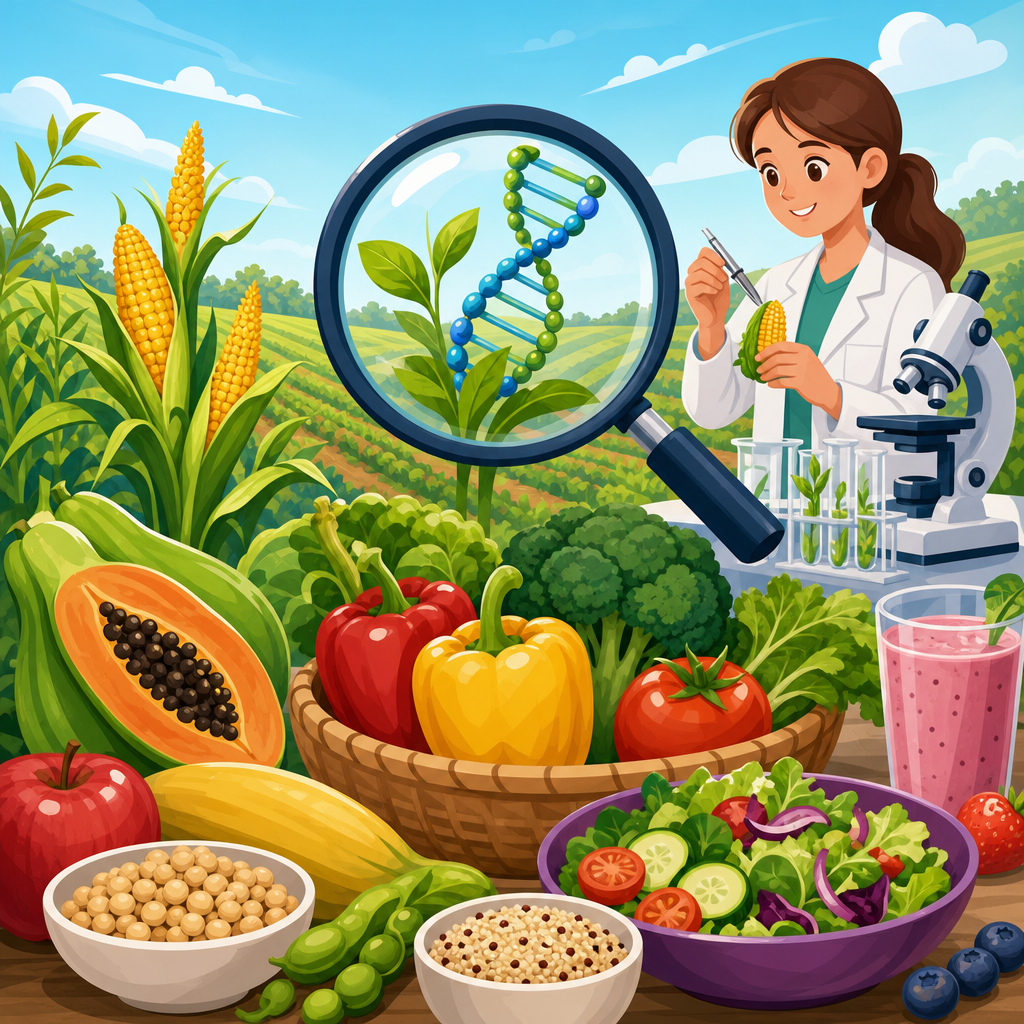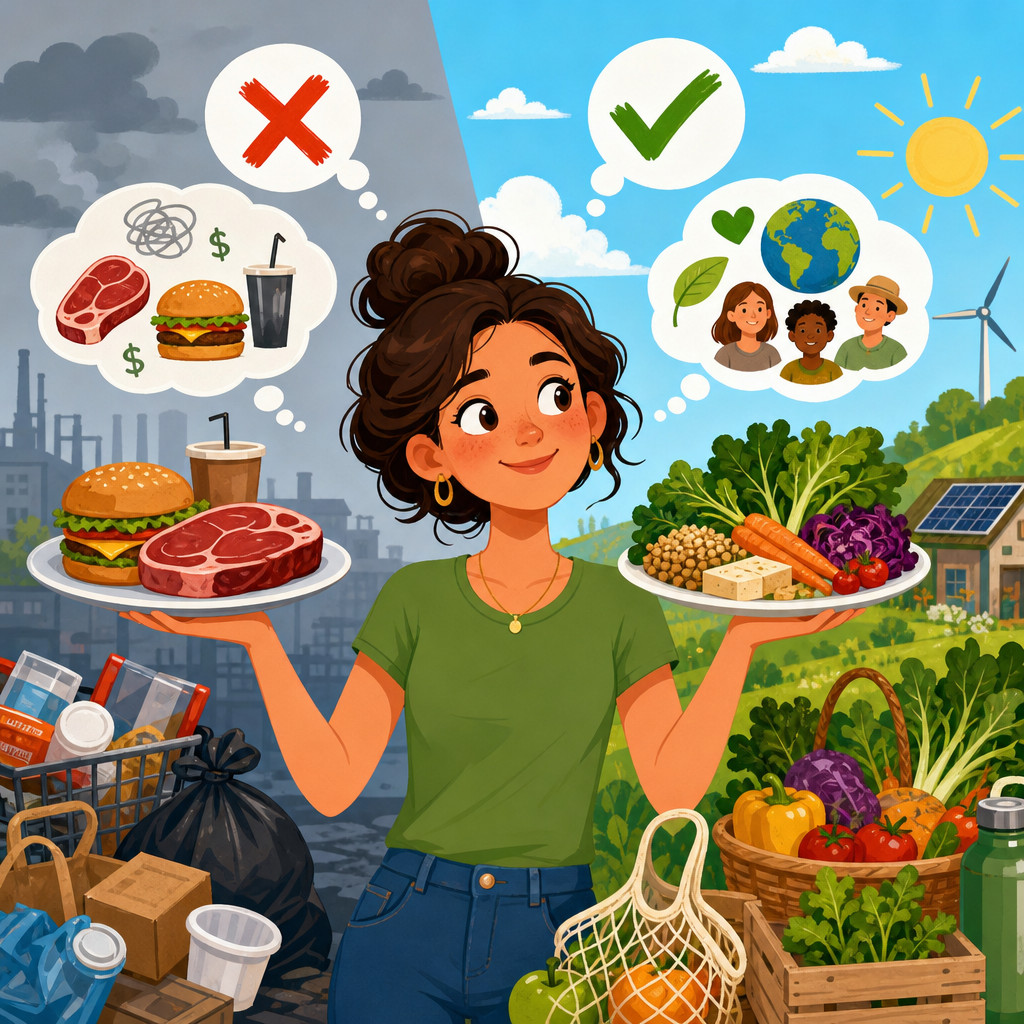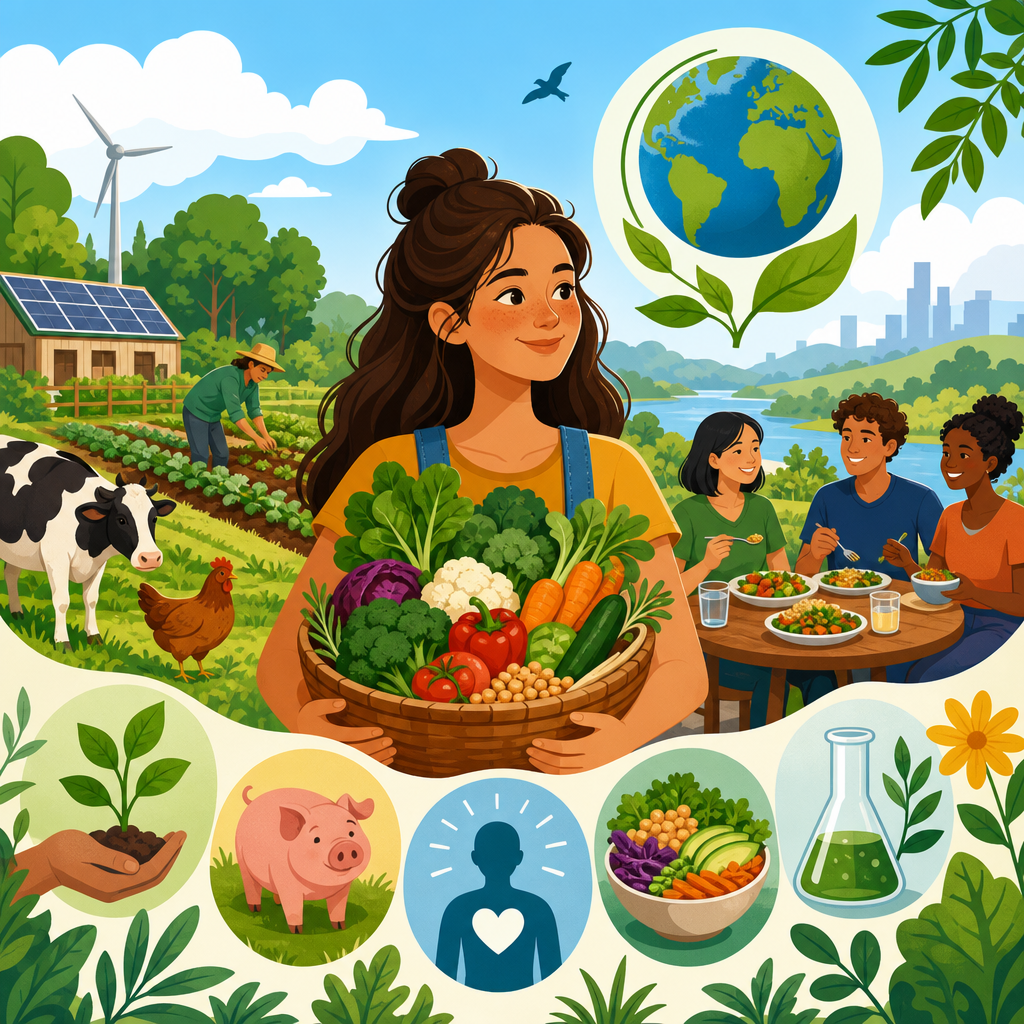
Ethical and sustainable food choices shape personal health, environmental stability, animal welfare, and the long-term resilience of food systems. In practice, the phrase refers to buying, cooking, and eating in ways that reduce ecological harm, support fair labor, respect animal well-being, and deliver adequate nutrition. Sustainable food usually emphasizes lower greenhouse gas emissions, responsible water and land use, biodiversity protection, and less waste. Ethical food adds questions about how workers are treated, how animals are raised, and who has access to nutritious meals at a fair price. These ideas overlap, but they are not identical. A tomato grown locally with low emissions may still raise ethical concerns if farm labor is exploitative. A certified high-welfare egg may still carry a sizable environmental footprint compared with plant proteins.
The science matters because food systems account for more than a quarter of global greenhouse gas emissions, use roughly half of habitable land, and drive major freshwater withdrawals and biodiversity loss. Public health matters just as much. Dietary patterns rich in legumes, whole grains, fruits, vegetables, nuts, and moderate amounts of minimally processed animal foods are consistently associated with lower risk of cardiovascular disease, type 2 diabetes, and some cancers. In my work reviewing food footprint data and nutrition standards, the strongest conclusion has been clear: the most ethical and sustainable food choices are rarely about a single perfect ingredient. They are about patterns. Shifting meals toward nutrient-dense plant foods, choosing better-produced animal foods when used, reducing waste, and understanding labels creates measurable benefits for households and the wider food system.
This hub article explains what science says about those benefits, where tradeoffs exist, and how to make practical decisions without turning food into a moral purity test. It covers environmental impact, health outcomes, animal welfare, social fairness, labeling, budget strategy, and realistic habits that move the needle. If you want one guiding principle, it is this: choose foods that nourish people while using fewer resources and causing less avoidable harm across the supply chain.
Why sustainable diets consistently show environmental benefits
A sustainable diet lowers pressure on climate, water, land, and ecosystems while still meeting nutritional needs. The best evidence comes from life cycle assessment, a method that estimates impacts from farming, feed production, processing, packaging, transport, retail, and sometimes cooking. Across hundreds of assessments, ruminant meats such as beef and lamb generally have the highest greenhouse gas emissions per kilogram and per gram of protein because methane from digestion and manure is potent, and feed and grazing land demands are large. By contrast, beans, peas, lentils, soy foods, oats, and many vegetables usually have much lower emissions. Poultry, eggs, and yogurt often fall between legumes and beef. Seafood varies sharply depending on species and fishing or farming method.
One reason this matters is scale. Replacing even a few weekly servings of beef with beans or lentils can materially reduce an individual food footprint. The same logic applies to dairy-heavy meals, imported out-of-season produce grown in heated greenhouses, and heavily wasted perishables. Environmental gains are not only about carbon. Nitrogen runoff from fertilizer contributes to water pollution and dead zones. Irrigation can stress rivers and aquifers. Habitat conversion for feed crops and pasture threatens biodiversity. Scientists evaluating planetary boundaries repeatedly identify food production as a major driver of climate change, biosphere integrity loss, land-system change, and disrupted nitrogen and phosphorus cycles.
Transportation gets attention, but it is often a smaller share of total food emissions than production, especially for high-impact foods. I often see shoppers assume local beef must beat imported beans. In most cases, production method dominates. Local can still matter for freshness, regional economies, and some products moved by air freight, but it does not erase the large emissions associated with methane-intensive livestock systems. The most reliable environmental strategy is to prioritize lower-impact food categories first, then refine choices within them.
How ethical food choices support animal welfare and social responsibility
Ethical food choices ask who bears the hidden costs of cheap food. For animals, the science and policy literature focus on welfare indicators such as ability to express natural behaviors, freedom from pain and distress, stocking density, housing quality, transport conditions, and slaughter practices. Systems that reduce overcrowding, improve bedding and enrichment, limit painful procedures, and use stronger welfare standards generally perform better on welfare outcomes. Labels can help, but they differ widely in rigor. Broad marketing terms like natural are not welfare standards. More meaningful signals include certified welfare programs with audited criteria, species-specific standards, and transparent producer reporting.
For people, ethics means looking at labor conditions, fair pay, worker safety, and community impacts. Agriculture can involve exposure to heat, pesticides, repetitive strain, and insecure seasonal employment. Fair trade and similar certification systems aim to improve producer income stability and labor standards, especially in commodities such as coffee, cocoa, bananas, and sugar. These programs are not flawless; premiums can vary, auditing is imperfect, and not every farmer can afford certification. Still, the evidence suggests they can improve bargaining power, organizational capacity, and household income in many contexts. Supporting farms and brands that disclose sourcing, labor practices, and traceability is one practical way to align purchases with social responsibility.
Access and affordability are part of ethics too. A food system cannot be called ethical if its healthiest options are priced out of reach for many families. That is why policy matters alongside individual action: school meals, produce incentives, anti-waste programs, procurement standards, and transparent labeling all influence whether sustainable choices are truly available. Personal choices help, but systemic support determines how widely those benefits are shared.
What the research says about health benefits
Science links sustainable dietary patterns with strong health outcomes because many lower-impact foods are also nutrient-dense. Diets centered on legumes, vegetables, fruits, whole grains, nuts, seeds, and unsaturated fats provide fiber, folate, potassium, magnesium, and phytochemicals while reducing excess saturated fat and processed meat intake. Large cohort studies and dietary pattern research consistently associate these eating patterns with lower rates of cardiovascular disease, hypertension, type 2 diabetes, and premature mortality. The Mediterranean and DASH patterns are well-known examples, and both can be adapted to emphasize sustainable sourcing and reduced waste.
That said, sustainability does not automatically equal health. Refined grains, sugary drinks, and ultra-processed snack foods can be plant-based yet poor nutritional choices. Likewise, some animal foods can fit into sustainable diets when portions are moderate and production standards are stronger. Oily fish, yogurt, eggs, and shellfish can contribute high-quality protein and key micronutrients, though environmental and ethical impacts differ by source. The most defensible science-based position is not absolutism but nutrient adequacy with lower average impact.
For households making changes, the health benefits usually come from substitution, not simple removal. Replacing processed meat with lentil chili improves fiber intake and lowers saturated fat. Swapping part of the ground beef in tacos for black beans cuts emissions while preserving protein. Choosing whole grains over refined grains supports blood sugar control and satiety. When people increase plant foods thoughtfully, they often eat more fiber and less sodium and calorie-dense convenience food. That is why food quality matters as much as food category.
How to evaluate labels, sourcing claims, and practical tradeoffs
Food labels can guide better decisions, but they also create confusion. Organic standards generally restrict most synthetic pesticides and fertilizers and can benefit soil health and biodiversity in some systems, but organic does not always mean lower climate impact per kilogram if yields are lower. Regenerative agriculture is promising, especially where it improves soil cover, crop diversity, grazing management, and water retention, yet the term is not consistently regulated. Local can support nearby farmers and seasonal eating, but local alone says little about labor standards, pesticide use, or animal welfare. Wild-caught versus farmed seafood is not a simple good-bad split either; some fisheries are well managed and low impact, while some aquaculture systems are efficient and others create pollution or habitat damage.
| Claim or choice | What it usually signals | Main limitation | Best use |
|---|---|---|---|
| Organic | Restricted synthetic inputs, defined certification rules | Not automatically lower emissions or higher welfare | Prioritize for produce where pesticide concerns or soil practices matter to you |
| Local | Shorter supply chains, regional support, seasonal freshness | Production impact may outweigh transport savings | Use for seasonal produce and community resilience |
| Fair trade | Producer standards, premiums, labor safeguards | Coverage and auditing vary | Useful for coffee, cocoa, bananas, sugar |
| Higher-welfare certified | Audited animal care standards | Criteria differ by program and species | Best for eggs, dairy, poultry, and meat when buying animal foods |
| Plant-based | Usually lower average emissions than meat-heavy alternatives | Can still be highly processed and low in nutrients | Choose minimally processed staples first |
When I assess labels, I look for independent certification, transparent standards, and measurable outcomes rather than broad marketing language. If details are missing, assume the claim is weak. A practical hierarchy helps: first choose foods with lower average impact, then check production method, then consider transport, packaging, and brand values. This approach avoids getting stuck debating minor differences while ignoring the biggest drivers.
Affordable ways to build an ethical and sustainable kitchen
Many people assume ethical and sustainable food choices are expensive, but the evidence is more nuanced. The lowest-cost nutrient-dense staples in many markets are dried beans, lentils, oats, rice, potatoes, frozen vegetables, seasonal produce, peanut butter, and canned fish. Costs rise when shoppers rely on specialty substitutes, single-serve convenience products, or premium branding. In household budget planning, the biggest savings often come from meal structure and waste reduction rather than from chasing the cheapest calories.
Start with flexible core meals: bean chili, lentil soup, vegetable stir-fry with tofu, chickpea curry, pasta with white beans and greens, oatmeal with fruit and seeds, and grain bowls built around leftovers. Buy animal foods in smaller portions and use them as accents instead of centerpieces. Plan around perishability. Salad greens spoil quickly, while cabbage, carrots, onions, apples, and frozen produce last longer. Store food correctly, freeze extra bread or herbs, and cook once for multiple meals. In food service audits I have reviewed, waste routinely erases the perceived savings from bargain buying.
Affordability also improves when expectations are realistic. You do not need every ingredient to be local, organic, fair trade, and artisan. A better pattern is to decide where each label matters most. Many families prioritize fair trade coffee and cocoa, higher-welfare eggs, seasonal produce, and mostly plant-based dinners. That combination captures meaningful benefits without making grocery shopping exhausting or financially strained.
Building a long-term pattern that actually lasts
The most effective ethical and sustainable diet is the one a household can maintain. Lasting change usually comes from repeatable habits, not dramatic identity shifts. Set a baseline for the week: two or three bean-based dinners, one lower-impact seafood meal if desired, one leftovers night, and a produce plan that matches your schedule. Learn a handful of high-protein plant staples, including lentils, tofu, tempeh, edamame, and canned beans. Keep sauces, herbs, and spices on hand so meals stay appealing.
For families with children, involve them in choosing one new plant-forward recipe each week and pair unfamiliar foods with familiar formats such as tacos, pasta, or soups. For institutions and workplaces, the same principle scales through procurement policies, menu engineering, and waste tracking. Hospitals and schools that shift default menus toward legumes and whole grains can lower environmental footprints while supporting diet quality, especially when recipes are tested for acceptance and kitchen staff are trained properly.
Progress should be measured by direction, not perfection. If your current pattern is heavy in red meat and food waste, reducing both delivers outsized gains. If you already eat mostly plant foods, the next step may be better sourcing, stronger labor standards, or less packaging. Ethical and sustainable food choices work best as a practical decision framework: eat mostly minimally processed plant foods, use animal foods carefully and consciously, trust rigorous labels over slogans, and waste far less.
The scientific case is strong because the benefits stack. Lower-impact diets can cut emissions, ease pressure on land and water, and support biodiversity. The same dietary patterns often improve fiber intake, cardiometabolic health, and overall diet quality. Better sourcing can reduce animal suffering and support fairer treatment of workers and producers. Smarter purchasing and meal planning can also save money, especially when households lean on staple foods and reduce waste. No single shopping trip solves the problems of the global food system, but repeated choices change demand and normalize better standards.
As a hub for food science and sustainability, this topic connects every part of eating: production, nutrition, equity, and everyday habits. The evidence does not demand perfection or a one-size-fits-all diet. It supports informed tradeoffs, better defaults, and gradual change anchored in measurable outcomes. Start with the highest-impact moves: eat more beans, whole grains, fruits, and vegetables; cut food waste; reduce red and processed meat; and choose transparent certifications when buying coffee, chocolate, eggs, dairy, seafood, or meat. Those steps are scientifically grounded, ethically meaningful, and realistic enough to last. Use this framework to review your pantry, your weekly menu, and the products you buy most often, then make one better choice this week and build from there.
Frequently Asked Questions
What do “ethical” and “sustainable” food choices actually mean?
Ethical and sustainable food choices refer to the everyday decisions people make about what they buy, prepare, and eat in order to reduce harm and increase long-term benefits for people, animals, and the planet. In scientific and policy discussions, sustainable food generally focuses on environmental outcomes such as lower greenhouse gas emissions, efficient water use, responsible land management, biodiversity protection, and reduced food waste. Ethical food adds another layer by asking how food is produced and traded: Were workers treated fairly and paid appropriately? Were animals raised with better welfare standards? Did farming practices support local communities and protect ecosystems rather than exploit them?
Importantly, these ideas are related but not always identical. A food can be environmentally efficient in one respect but still raise concerns in another, such as labor conditions or animal treatment. That is why many nutrition and sustainability experts describe ethical and sustainable eating as a pattern rather than a perfect label. In practice, it often includes eating more minimally processed plant foods, choosing products from producers with transparent standards, reducing overconsumption of resource-intensive foods, supporting seasonal and regionally appropriate foods when practical, and wasting less edible food. Science suggests that when these habits are combined, they can help improve dietary quality while also lowering pressure on climate, soil, water, and food supply chains.
Does science show that sustainable diets are also good for human health?
Yes, a growing body of research suggests that many sustainable eating patterns can also support better health, especially when they emphasize whole plant foods and balanced nutrition. Diets built around vegetables, fruits, legumes, whole grains, nuts, and seeds are consistently associated with lower risks of several chronic diseases, including cardiovascular disease, type 2 diabetes, hypertension, and in some cases certain cancers. These foods tend to provide fiber, vitamins, minerals, and beneficial plant compounds while being lower in saturated fat and often lower in environmental impact than diets centered heavily on red and processed meats.
That said, “sustainable” does not automatically mean “healthy.” A diet can be low in environmental impact but still lack important nutrients if it is poorly planned or based heavily on ultra-processed foods. Science supports the strongest health benefits when sustainability is paired with nutritional adequacy. This means paying attention to protein quality, iron, vitamin B12, calcium, omega-3 fats, iodine, and overall energy intake, especially for people following vegetarian or vegan diets. The best evidence points toward dietary patterns that are plant-forward rather than necessarily all-or-nothing. For many people, reducing excess meat intake, increasing legumes and whole grains, and improving food variety can deliver meaningful health gains without requiring a completely rigid eating style.
Why are plant-forward diets so often recommended in discussions about sustainability?
Plant-forward diets are frequently recommended because the scientific evidence shows that, on average, producing plant foods requires fewer natural resources and generates fewer greenhouse gas emissions than producing many animal-based foods, particularly beef and lamb. Livestock production can involve substantial land use, feed inputs, methane emissions, and water demands, depending on the species and production system. By contrast, staples such as beans, lentils, peas, oats, and many vegetables typically have a much smaller environmental footprint per serving or per gram of protein. This is one reason climate and food system researchers often identify shifts toward more plant-rich eating patterns as a practical strategy for reducing food-related environmental pressures.
There are also broader system-level reasons. Feeding crops directly to people is often more resource-efficient than routing large quantities of crops through animals first. Increased demand for resource-intensive foods can contribute to deforestation, biodiversity loss, and pollution from fertilizers and manure. A plant-forward approach helps ease some of those pressures while still allowing room for cultural preferences, local farming realities, and nutritional needs. Importantly, the scientific case is not that every animal food is equally harmful or that every plant food is equally sustainable. Production methods matter. But overall, diets that shift the balance toward legumes, grains, produce, and other plant staples tend to align well with both public health goals and environmental targets.
How do ethical and sustainable food choices affect animals, workers, and local communities?
Ethical food choices expand the conversation beyond nutrition and emissions to include the human and animal realities behind food production. From an animal welfare perspective, many consumers and researchers are concerned with whether animals are given adequate space, healthier living conditions, reduced stress, and more humane treatment throughout their lives. Scientific and veterinary literature supports the idea that better welfare standards can improve animal well-being and, in some cases, reduce disease pressures associated with crowded or poor-quality systems. For people who prioritize reducing animal suffering, choosing fewer animal products or buying from producers with stronger welfare standards becomes an important part of ethical eating.
On the human side, ethical sourcing often involves fair wages, safer working conditions, respect for labor rights, and support for farming communities that might otherwise be squeezed by low prices and unstable markets. Food systems rely on farmworkers, processors, transport workers, and retailers, yet these groups are not always protected equally. Ethical purchasing can include looking for credible fair trade or labor-focused certifications, buying from producers with transparent practices, and supporting local or regional food economies where appropriate. While no purchase can solve every structural issue, consumer choices can reinforce demand for systems that value dignity, accountability, and resilience. Science and policy research increasingly recognize that a truly sustainable food system must protect ecosystems and human well-being at the same time.
What are the most practical ways to make more ethical and sustainable food choices without becoming overwhelmed?
The most practical approach is to focus on a few high-impact habits rather than trying to optimize every single item in your diet. Research suggests that some of the biggest improvements come from eating more plant-based meals, reducing food waste, cutting back on red and processed meat, choosing seasonal produce when realistic, and favoring minimally processed staples such as beans, lentils, whole grains, and frozen vegetables. Planning meals, storing food properly, and using leftovers creatively can have a surprisingly meaningful effect, because wasted food also wastes the land, water, energy, and labor that went into producing it. In many households, simply buying more intentionally is one of the easiest sustainability upgrades available.
It also helps to think in terms of progress, not perfection. You do not need to follow a strict diet label to make evidence-based changes. Swapping a few meals each week toward legumes or whole grains, trying certified products that align with your values, and learning which foods in your routine have the largest environmental footprint can go a long way. If affordability is a concern, many of the most sustainable staples are also budget-friendly, including dried beans, lentils, rice, oats, potatoes, and seasonal produce. The science is clear that small, consistent shifts across many meals are more realistic and often more effective than extreme changes that are hard to maintain. The goal is a pattern of eating that is nourishing, practical, and aligned with long-term health, fairness, and environmental stability.