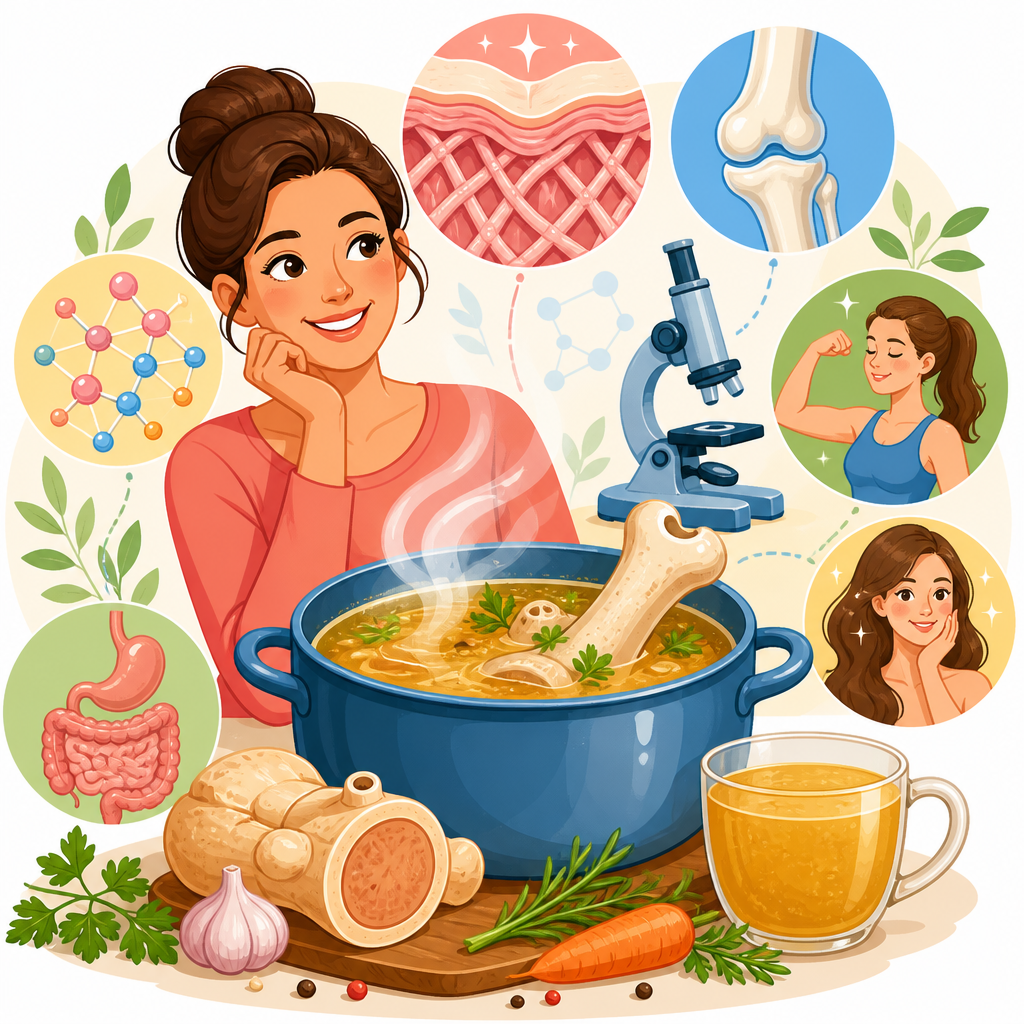
Collagen and bone broth sit at the center of today’s joint, skin, and gut health conversation because they promise something people want deeply: support for the body’s structural tissues using nutrients that are familiar, food based, and biologically relevant. Collagen is the most abundant protein in the human body, forming the scaffold for skin, tendons, ligaments, cartilage, bone, blood vessels, and connective tissue. Bone broth is a slow simmered stock made from bones, joints, skin, and connective tissues that can contain collagen fragments, gelatin, amino acids, and minerals. In clinical practice and product formulation work, I have seen these terms used interchangeably, but they are not the same thing. Collagen supplements are standardized ingredients, usually hydrolyzed peptides or undenatured collagen from bovine, marine, porcine, or chicken sources. Bone broth is a whole-food preparation or packaged beverage with variable composition depending on raw materials, cooking time, acidity, and filtration.
This distinction matters because the science on benefits depends on the form used, the dose delivered, and the outcome measured. A study on 10 grams of hydrolyzed collagen peptides cannot be assumed to apply to a mug of homemade broth containing an unknown protein amount. At the same time, dismissing bone broth entirely misses its value as a protein-containing, easy-to-digest food that may support hydration, meal quality, and dietary variety. The evidence base is strongest for specific collagen peptides and for undenatured type II collagen in joint support. The evidence for bone broth is more indirect, tied to protein intake, gelatin content, and culinary context rather than large randomized trials. For anyone navigating supplements and nutraceuticals, understanding where evidence is strong, where it is emerging, and where marketing outruns data is the key to making informed decisions.
Science says collagen and bone broth can be useful, but usefulness is not magic. Benefits depend on age, baseline protein intake, activity level, skin care habits, joint load, and overall diet quality. Collagen is not a complete protein and should not replace higher-quality protein sources such as dairy, eggs, fish, soy, or lean meats. Bone broth is not a cure for arthritis, intestinal permeability, or aging. Still, there are legitimate reasons clinicians, athletes, and healthy aging consumers use these products. Collagen peptides may improve skin elasticity and hydration in some adults, support subjective joint comfort, and provide targeted amino acids such as glycine, proline, and hydroxyproline that are central to connective tissue. Bone broth can offer gelatin-rich protein in an accessible format, especially during illness, reduced appetite, or recovery. The real question is not whether they are perfect, but where they fit within evidence-based nutrition.
What collagen is, how bone broth differs, and why source matters
Collagen is a family of structural proteins, not a single substance. At least 28 types have been identified, with types I, II, and III discussed most often in nutrition. Type I predominates in skin, tendon, bone, and many connective tissues. Type II is concentrated in cartilage. Type III appears in skin, blood vessels, and reticular tissues. Supplement labels often emphasize one type, but the manufacturing process matters just as much. Hydrolyzed collagen, also called collagen peptides, has been enzymatically broken into smaller chains to improve solubility and digestion. Gelatin is partially broken-down collagen that thickens liquids when cooled. Undenatured type II collagen, commonly dosed at 40 milligrams daily, is a distinct ingredient used primarily for joint health and appears to work through immune modulation rather than simply serving as protein.
Bone broth, by contrast, is a food matrix. Traditional recipes simmer bones and connective tissue for hours with water, vegetables, herbs, and often an acid such as vinegar to assist extraction. The resulting broth may contain gelatin if enough collagen converts during cooking, but actual protein levels vary widely. Independent testing of commercial bone broths has shown notable differences from brand to brand, with some products delivering meaningful protein and others only a few grams per serving. Sodium can also be high, which matters for people with hypertension or those using broth daily. Source quality matters too. Bovine collagen may come from hides or bones; marine collagen often comes from fish skin and scales; chicken collagen often targets type II. Consumers with fish allergies, religious dietary restrictions, or sustainability concerns should check sourcing carefully rather than assuming all collagen products are equivalent.
What the science says about skin, hair, and nail benefits
The best human evidence for collagen supplementation is in skin health, especially hydration, elasticity, and wrinkle appearance. Multiple randomized controlled trials and systematic reviews suggest that oral collagen peptides, usually in the range of 2.5 to 10 grams daily for 8 to 12 weeks, can modestly improve skin hydration and elasticity in adults. The proposed mechanism is not that collagen travels intact to the face. After digestion, collagen-derived peptides and amino acids are absorbed, and some bioactive dipeptides such as prolyl-hydroxyproline may stimulate fibroblast activity, extracellular matrix production, and dermal remodeling. Vitamin C remains important because it is an essential cofactor for collagen synthesis; without adequate vitamin C, supplying collagen peptides alone is less compelling biologically.
Results are meaningful but should be framed correctly. In practice, collagen works best as an adjunct to sunscreen, retinoids when appropriate, adequate protein intake, and smoking avoidance. It does not replace core dermatologic care. Claims around hair and nails are more mixed. Some users report less nail brittleness after consistent collagen intake, and small studies suggest potential improvement in nail growth or fragility, but the evidence base is thinner than for skin. Hair benefits are plausible indirectly through protein adequacy and overall nutrition, yet robust trial data remain limited. Bone broth may contribute some gelatin and amino acids, but it has not been studied with the same precision for cosmetic outcomes. If the goal is evidence-based skin support, standardized collagen peptides have a clearer research trail than broth alone.
Joint comfort, exercise recovery, and connective tissue support
Collagen’s role in joint health is where nuance matters most. For osteoarthritis, physically active adults, and athletes with repetitive load, studies suggest that collagen supplementation may improve subjective joint comfort and function in some populations. Hydrolyzed collagen has been studied at daily intakes often around 5 to 10 grams, while undenatured type II collagen is typically studied at much lower doses, often 40 milligrams. These are not interchangeable products. Undenatured type II collagen appears to act through oral tolerance mechanisms that may reduce immune reactivity related to cartilage components. Hydrolyzed collagen functions more like a targeted protein ingredient providing specific amino acids and peptides. In both cases, benefits tend to be modest rather than dramatic, and they usually appear after several weeks or months, not days.
Sports nutrition has added an important layer to this discussion. Research associated with Keith Baar and others suggests that consuming gelatin or collagen with vitamin C about 30 to 60 minutes before tendon or ligament loading may increase collagen synthesis markers in engineered or exercise-related models. This has influenced protocols used by some sports dietitians for jumpers, runners, and field-sport athletes managing tendon issues. It is not a standalone fix for tendinopathy; progressive loading remains the primary treatment. Still, as a low-risk nutritional adjunct, collagen has practical appeal. Bone broth can support recovery meals, but its variable protein content makes dosing uncertain. When specific connective tissue support is the target, a tested collagen product offers greater precision than broth from a carton or kitchen pot.
| Form | Typical studied use | Common dose | Key limitation |
|---|---|---|---|
| Hydrolyzed collagen peptides | Skin support, joint comfort, connective tissue nutrition | 2.5 to 10 g daily | Not a complete protein |
| Undenatured type II collagen | Joint support, especially cartilage-related symptoms | 40 mg daily | Not interchangeable with peptides |
| Gelatin | Pre-exercise connective tissue protocols, culinary use | Often 5 to 15 g | Less convenient to mix than peptides |
| Bone broth | Food-based protein, hydration, recovery meals | Variable by serving | Highly inconsistent composition |
Gut health, digestion, and the limits of current evidence
Bone broth is often marketed for gut healing, leaky gut, and digestive repair. The scientific support for these claims is much weaker than consumers are usually led to believe. The logic comes from its content of gelatin, glutamine in small amounts, glycine, and minerals, plus the fact that warm liquids and simple foods are often easier to tolerate during digestive upset. From a practical standpoint, I have seen broth work well as a gentle recovery food after illness, dental procedures, or periods of low appetite. That is a real benefit. However, there is a major gap between using broth as a soothing, nutritious liquid and claiming it repairs intestinal barrier function in a clinically proven way.
Human research directly testing bone broth for intestinal permeability or inflammatory bowel conditions is sparse. Glycine and gelatin have mechanistic interest, and animal or cell studies can be useful for hypothesis generation, but they do not establish treatment effects in people. For functional gut complaints, overall diet pattern, fermentable carbohydrate tolerance, fiber strategy, medication review, and diagnosis of conditions such as celiac disease, IBS, or IBD matter far more. Collagen peptides may be a tolerable protein option for some people who dislike thicker protein shakes, but they should not displace comprehensive medical evaluation. In short, bone broth can fit a gut-friendly eating pattern, yet current evidence does not justify broad therapeutic claims.
Bone health, muscle protein quality, safety, and smart use
Because collagen is concentrated in bone matrix, many people assume collagen or bone broth directly strengthens bones. The reality is more measured. Bone is a composite tissue requiring not only collagen framework but also adequate calcium, phosphorus, vitamin D, vitamin K, magnesium, resistance exercise, and hormonal support. Some studies suggest collagen peptides may favor bone turnover markers or bone mineral density when combined with calcium and vitamin D in older adults, but this area remains smaller than the skin literature. Bone broth is not a reliable calcium source unless analyzed, and many broths contain less calcium than people expect. Long simmering extracts some minerals, yet the amounts are usually not high enough to treat inadequate calcium intake on their own.
Another critical point is protein quality. Collagen is rich in glycine, proline, and hydroxyproline but low in essential amino acids and lacks tryptophan. It contains relatively little leucine compared with whey, dairy, eggs, or soy, so it is inferior for stimulating muscle protein synthesis. That does not make collagen useless; it means it is specialized. I often recommend treating collagen as a targeted supplement for connective tissue, not as the main protein in a meal. Safety is generally good, but buyers should vet products for third-party testing from groups such as NSF Certified for Sport, Informed Sport, or USP when relevant. People with kidney disease, sodium restrictions, food allergies, or histamine sensitivity should review labels and serving sizes carefully. The smartest approach is simple: use collagen or bone broth for a defined purpose, track whether it helps, and keep the rest of the diet anchored in proven fundamentals.
Collagen and bone broth deserve a place in the supplements and nutraceuticals conversation because they sit at the intersection of food, structural biology, and practical self-care. The science is strongest for oral collagen peptides in skin support and for selected collagen forms in joint comfort, with emerging but still limited evidence for bone and connective tissue applications. Bone broth has value as a nourishing food, especially when appetite is low or a warm, protein-containing option is useful, but its benefits are less standardized and less studied than supplemental collagen. That distinction helps cut through marketing confusion. A scoop of clinically studied peptides and a mug of broth are not nutritionally identical, even if both come from collagen-rich tissues.
The main benefit of understanding this topic is better decision-making. If your goal is healthier skin or more predictable joint support, choose a product with a researched form, a meaningful dose, and transparent sourcing. If your goal is comfort, hydration, and an easy whole-food addition to meals, bone broth can be worthwhile, provided you check sodium and protein content. In both cases, results are most credible when combined with adequate total protein, vitamin C, resistance training, sun protection, and evidence-based medical care where needed. Use collagen and bone broth as tools, not miracles, and you will get far more value from them. Review your current routine, identify the outcome you actually want, and build from there with products and habits supported by science.
Frequently Asked Questions
What is the difference between collagen and bone broth?
Collagen and bone broth are closely related, but they are not the same thing. Collagen is a structural protein found throughout the body, especially in skin, cartilage, tendons, ligaments, bones, and blood vessels. It gives tissues strength, flexibility, and resilience. When people talk about collagen supplements, they are usually referring to collagen peptides or hydrolyzed collagen, which are forms of collagen that have been broken down into smaller protein fragments for easier digestion and mixing into foods or drinks.
Bone broth, by contrast, is a whole-food preparation made by simmering bones, joints, connective tissue, and sometimes skin for an extended period. This process releases a mix of compounds into the liquid, including gelatin, collagen-derived amino acids, minerals, and other naturally occurring nutrients depending on the ingredients used and how the broth is prepared. In practical terms, bone broth is a food, while collagen powder is a concentrated supplement ingredient.
From a science perspective, bone broth is less standardized than collagen supplements. The nutrient profile of bone broth can vary widely based on the animal source, the amount of connective tissue used, cooking time, acidity, and whether the broth is homemade or commercially produced. Collagen supplements tend to provide a more predictable amount of protein per serving. So while both can contribute collagen-related building blocks, bone broth offers a broader food-based matrix, whereas collagen supplements offer consistency and convenience.
Does taking collagen or drinking bone broth actually help joints?
There is some encouraging evidence that collagen supplementation may support joint health, particularly in people dealing with exercise-related joint discomfort or age-related wear in connective tissue. Collagen is rich in amino acids such as glycine, proline, and hydroxyproline, which are important components of cartilage and other connective tissues. Some studies suggest that regular collagen peptide supplementation may help reduce joint pain and improve function over time, especially when taken consistently for several weeks or months.
That said, it is important to keep expectations realistic. Collagen is not a cure for arthritis, it does not rebuild a severely damaged joint overnight, and it should not be viewed as a replacement for medical care, physical therapy, strength training, weight management, or other evidence-based treatments. The most reasonable interpretation of the research is that collagen may offer modest support as part of a broader joint health strategy. Benefits, when they occur, are usually gradual rather than dramatic.
Bone broth may also play a supportive role, but the direct evidence is much thinner. Because bone broth can contain gelatin and collagen-derived amino acids, it may contribute some of the same raw materials. However, unlike a measured collagen supplement, one cup of bone broth may contain very different amounts of protein and collagen from another. In other words, bone broth can be a nourishing addition to the diet, but the science is stronger for standardized collagen supplementation than for bone broth specifically when it comes to joint outcomes.
Can collagen or bone broth improve skin, hair, and nails?
Skin health is one of the most widely discussed reasons people turn to collagen. Scientifically, that interest makes sense. Collagen is a major structural component of the dermis, the deeper layer of skin responsible for firmness and elasticity. As people age, natural collagen production declines, and factors such as sun exposure, smoking, poor sleep, and chronic stress can further affect skin quality. Several clinical studies have found that collagen peptide supplementation may improve measures such as skin hydration, elasticity, and the appearance of fine lines in some individuals.
Even so, collagen is not a magic beauty treatment. Once consumed, it is digested into amino acids and small peptides, and the body decides how to use those materials based on overall needs. Skin benefits appear to be possible, but they are influenced by the bigger picture: total protein intake, vitamin C status, sun protection, hormonal factors, hydration, and general health. Someone who takes collagen but neglects sleep, nutrition, and UV protection is unlikely to see the same results as someone with a well-rounded routine.
For hair and nails, the claims are common but the evidence is less robust than it is for skin. Some people report stronger nails or less brittleness, and there is biological plausibility because structural proteins and amino acids matter for tissue integrity. Bone broth may offer similar supportive nutrition, but again, it is harder to study because each preparation is different. The bottom line is that collagen may help support skin health in a meaningful but not miraculous way, while hair and nail benefits are possible yet less firmly established by current research.
Is bone broth good for gut health, and what does science really say?
Bone broth is often promoted as a gut-healing food, especially in conversations about digestive comfort, intestinal permeability, or recovery from illness. Part of this belief comes from the fact that bone broth is easy to digest, hydrating, warm, and rich in amino acids associated with connective tissue, particularly glycine and glutamine. These nutrients are involved in many normal physiological processes, including tissue repair and maintenance. Because the lining of the digestive tract depends on adequate nutrition and overall metabolic support, it is understandable why bone broth has earned a reputation as a soothing food.
However, the scientific evidence needs to be described carefully. While there are theoretical reasons bone broth could support digestive wellness, there is not strong high-quality human research proving that bone broth specifically “heals the gut” in the broad way it is often advertised. Much of the enthusiasm comes from traditional use, nutrition logic, and the known roles of protein and amino acids in the body rather than direct clinical trials on bone broth itself. That does not mean bone broth is ineffective; it means the claims often run ahead of the data.
What can be said confidently is that bone broth can fit well into a gut-supportive diet because it is gentle, savory, protein-containing, and useful during times when appetite is low or digestion feels sensitive. It may be especially helpful as part of a broader pattern that includes adequate protein, fiber, fermented foods when tolerated, hydration, and medical evaluation for persistent digestive symptoms. In short, bone broth may be a supportive food for gut health, but it should be seen as one helpful tool rather than a stand-alone solution.
How should someone use collagen or bone broth for the best results?
Consistency matters more than hype. If someone wants to try collagen, the most evidence-based approach is usually a daily serving of collagen peptides from a reputable brand that clearly lists the amount of protein per serving. Many studies use amounts in the range of roughly 5 to 15 grams per day, though ideal intake may vary depending on the goal. For skin support, lower daily doses may still be useful, while for joints or connective tissue support, people often choose the middle to higher end of that range. Because collagen works as nutritional support rather than a drug, benefits are usually assessed over weeks to months, not days.
Bone broth works best when viewed as a nutrient-dense food rather than a miracle tonic. It can be sipped on its own, used as a base for soups and stews, or incorporated into meals to increase protein and flavor. If the goal is maximizing collagen-related intake, broths made with more joints, connective tissue, and skin may provide more gelatin, but exact amounts still vary. Commercial products differ widely, so checking the protein content on the label is useful if someone wants a stronger collagen contribution.
It also helps to remember that the body needs more than collagen alone to maintain connective tissue. Vitamin C is especially important because it plays a direct role in collagen synthesis. Adequate total protein intake, resistance exercise, sleep, and avoiding smoking all matter as well. For people with allergies, dietary restrictions, kidney concerns, or complex medical conditions, it is smart to talk with a healthcare professional before relying heavily on supplements or specialty foods. The strongest results usually come from using collagen or bone broth as part of an overall health strategy, not as a shortcut.