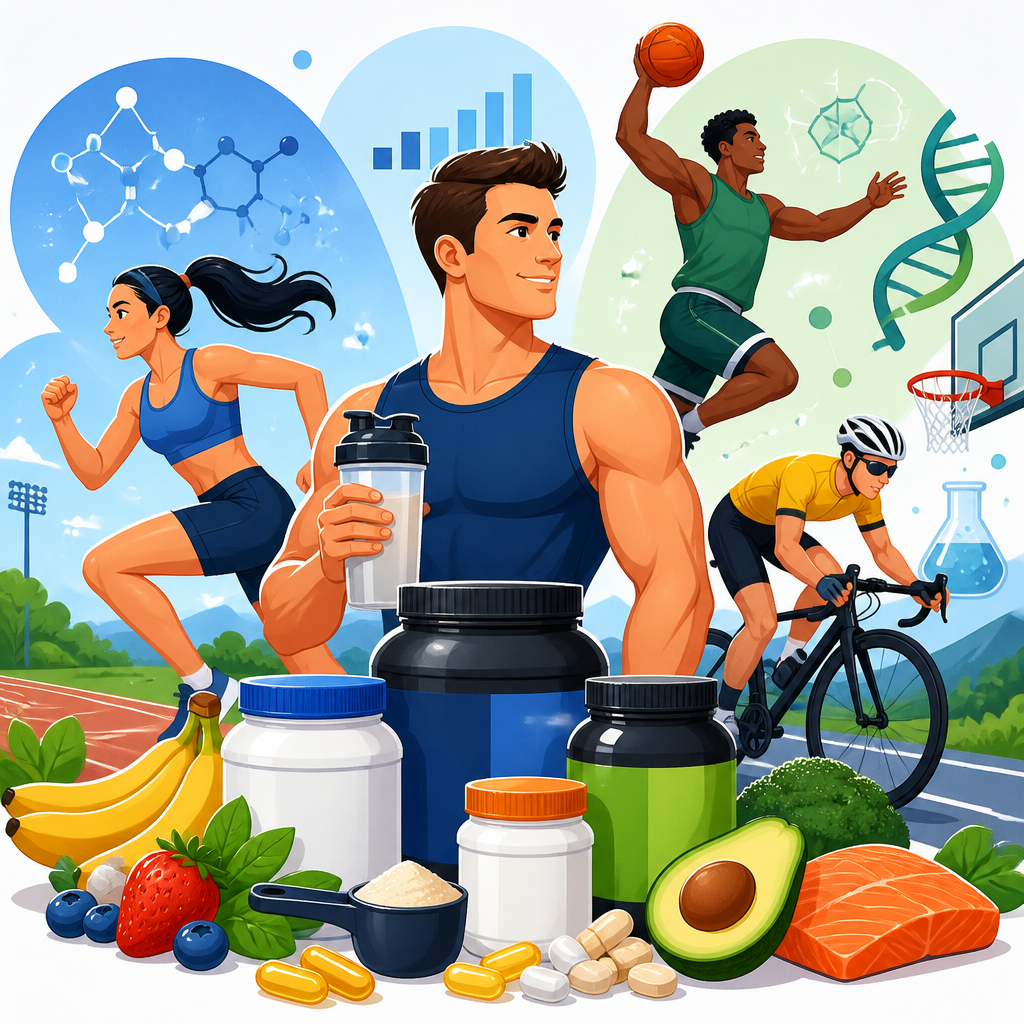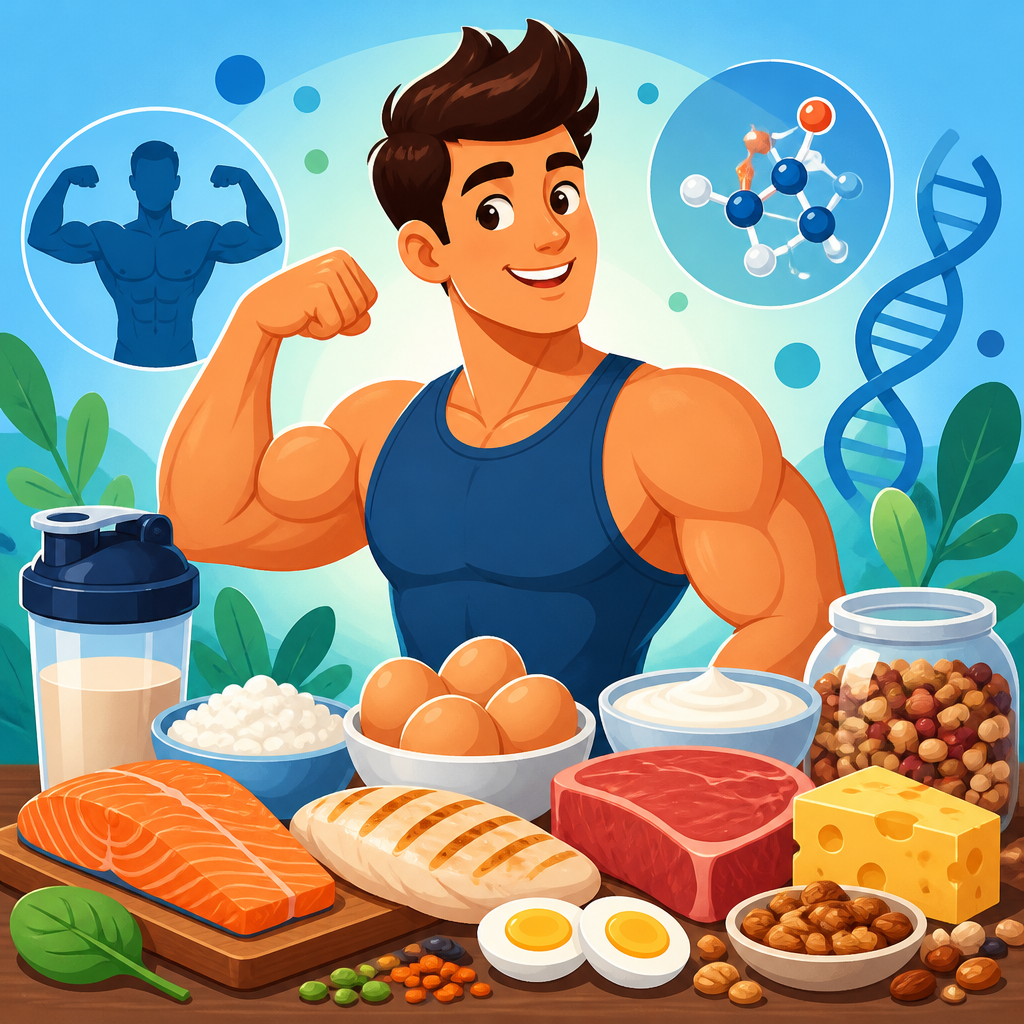
Muscle building and protein needs sit at the center of sports and performance nutrition because muscle growth depends on training stimulus, sufficient energy, and an adequate supply of amino acids. In practice, people usually ask a simpler question: how much protein do you need to build muscle, recover well, and improve body composition without wasting money or eating far more than necessary? Science gives a clear answer, but the answer depends on context. Age, training status, total calorie intake, meal timing, protein quality, and the amount of resistance training performed all change the target.
Protein is the macronutrient that provides amino acids, including nine essential amino acids the body cannot make on its own. Those amino acids support muscle protein synthesis, the process of building new muscle proteins after training and feeding. Muscle building, often called hypertrophy, happens when muscle protein synthesis exceeds muscle protein breakdown over time. That sounds technical, yet the practical meaning is straightforward: if you train hard enough, eat enough total calories, and distribute high-quality protein through the day, your body has the raw materials to repair and enlarge muscle fibers.
This topic matters because misinformation is everywhere. I routinely see beginners underestimate how much consistency matters and overestimate the value of supplements. Others eat huge amounts of protein while neglecting carbohydrates, sleep, progressive overload, and overall calorie intake. Research from organizations such as the International Society of Sports Nutrition and the American College of Sports Medicine shows that protein is essential, but it works best as one part of a complete plan. Understanding muscle building and protein needs helps athletes, lifters, and active adults make better decisions, avoid common mistakes, and get more from every training block.
How muscle growth works and why protein matters
Muscle growth begins with resistance training. Lifting weights, using machines, performing bodyweight exercises, or sprinting creates mechanical tension and microscopic disruption within muscle tissue. Those signals activate pathways such as mTOR, which helps regulate muscle protein synthesis. Protein matters because training creates the demand, but amino acids allow the adaptation. Without enough protein, recovery slows and the muscle-building response is smaller, especially during hard training phases or calorie restriction.
Leucine deserves special attention because it acts as a key trigger for muscle protein synthesis. High-quality proteins such as whey, milk, eggs, fish, poultry, and lean meat provide a strong leucine dose along with the full essential amino acid profile. Many plant proteins can support hypertrophy too, but some are lower in leucine or one or more essential amino acids, which means meal planning matters more. Soy, pea-rice blends, tofu, tempeh, edamame, and higher total daily intake can close much of that gap.
One important limitation is that protein alone does not create muscle in the absence of training. Sedentary people can improve satiety and preserve lean mass with higher protein diets, but substantial hypertrophy requires progressive resistance training. Another limitation is energy balance. In a calorie surplus, muscle gain is generally easier because the body has more energy available for adaptation. In maintenance calories or a deficit, protein becomes even more valuable for preserving lean mass, but the rate of gain usually slows.
How much protein do you need to build muscle?
For healthy adults who regularly perform resistance training, the strongest evidence supports a daily intake around 1.6 to 2.2 grams of protein per kilogram of body weight. A 75 kilogram lifter therefore benefits from roughly 120 to 165 grams per day. Reviews and meta-analyses repeatedly show that intakes near 1.6 grams per kilogram are sufficient for many people, while higher intakes can be useful during dieting, very high training volumes, or when meals are less evenly distributed.
The general Recommended Dietary Allowance of 0.8 grams per kilogram is designed to prevent deficiency in the average sedentary adult, not to maximize muscle gain, performance recovery, or body composition. That distinction causes confusion. If your goal is hypertrophy, the RDA is a floor, not an optimal target. Older adults also often need more protein per meal because anabolic resistance reduces the muscle-building response to feeding. In practice, I usually push older trainees toward the upper end of the range and pair that with regular resistance exercise.
Very high intakes above 2.2 grams per kilogram are not automatically harmful for healthy people, but they are rarely necessary for muscle gain. They can also displace carbohydrates and fats that support training performance, hormone production, and overall diet quality. The best target is the one you can sustain while still eating enough energy and micronutrient-rich foods. Practical consistency beats theoretical perfection.
Daily distribution, meal timing, and protein quality
Once total daily intake is appropriate, the next question is how to spread protein across the day. The most effective pattern for many lifters is three to five meals containing about 0.25 to 0.40 grams of protein per kilogram per meal. For a 75 kilogram athlete, that means about 20 to 30 grams per meal on the lower end and 30 to 40 grams when aiming higher. This approach repeatedly stimulates muscle protein synthesis rather than front-loading most protein into one dinner.
Post-workout protein is useful, but the idea of an extremely narrow anabolic window is overstated. If you eat a protein-containing meal within a few hours before or after training, you are generally covered. What matters more is hitting daily protein consistently and ensuring meals contain enough essential amino acids. Pre-sleep protein can also help. About 30 to 40 grams of casein-rich dairy protein before bed may support overnight muscle protein synthesis, particularly during intense training periods.
Protein quality refers to digestibility and amino acid composition. Animal proteins are generally complete and highly digestible. Plant proteins can absolutely work, but they sometimes require larger portions or strategic combinations. A bowl of lentils is nutritious, yet adding soy, grains, or a supplemental blend can create a stronger amino acid profile for muscle growth. Athletes following vegan diets can build muscle effectively, but they usually need tighter planning than omnivores.
Protein needs by goal, training phase, and athlete type
Protein targets should match the training objective. During a lean bulk, 1.6 to 2.0 grams per kilogram is often enough because calories are adequate and recovery capacity is better. During a fat-loss phase, moving to 1.8 to 2.4 grams per kilogram helps preserve lean mass, manage hunger, and offset the stress of lower calorie intake. Endurance athletes also need protein, especially when mileage or training density is high, because repeated sessions increase amino acid oxidation and tissue turnover.
Team-sport athletes occupy a middle ground. They need enough protein to recover from resistance work, sprinting, collisions, and long practice sessions, yet they also need carbohydrates to support repeated high-intensity efforts. In collegiate settings, I have often seen under-fueled athletes focus on shakes while failing to eat enough meals. Their soreness stays high and performance stalls not because protein is absent, but because total intake is too low.
Youth athletes need careful guidance. Protein supports growth and training adaptation, but food quality, adequate calories, and structured coaching matter more than aggressive supplementation. For masters athletes, higher protein, strength training, and regular movement are crucial because age-related muscle loss accelerates when inactivity sets in. Sarcopenia is not just an aging issue; it directly affects mobility, metabolic health, and independence.
Best food sources and practical planning
The best protein sources are the ones that combine strong amino acid profiles, digestibility, convenience, and adherence. Whey protein is effective because it is rich in leucine and rapidly digested. Casein digests more slowly and works well in mixed meals or before sleep. Eggs provide complete protein and useful micronutrients. Greek yogurt, cottage cheese, chicken breast, turkey, lean beef, fish, shellfish, tofu, tempeh, seitan, edamame, and high-protein milk products all fit well in a muscle-building diet.
Whole foods should do most of the work. Supplements solve logistics, not fundamentals. A protein powder is helpful when travel, appetite, or schedule makes meals difficult, but it is not superior to food. I usually tell athletes to build each meal around a defined protein anchor first, then add carbohydrates, produce, and fats based on training demand. That simple habit dramatically improves intake accuracy without obsessive tracking.
| Food or supplement | Typical serving | Approximate protein | Key advantage for muscle building |
|---|---|---|---|
| Whey protein | 1 scoop | 20 to 25 g | High leucine, convenient after training |
| Greek yogurt | 200 g | 18 to 20 g | Easy snack, supports daily distribution |
| Chicken breast | 120 g cooked | 35 to 38 g | Lean, complete protein for main meals |
| Eggs | 3 large | 18 to 19 g | Complete amino acid profile, versatile |
| Tofu | 150 g | 16 to 18 g | Reliable plant protein with good flexibility |
| Salmon | 120 g cooked | 25 to 27 g | Protein plus omega-3 fats |
Common myths, mistakes, and evidence-based supplement use
A common myth is that the body can only use 20 or 30 grams of protein at a time. In reality, the body digests and absorbs far more than that. The better question is how much protein best stimulates muscle protein synthesis in a given meal. The answer depends on body size, age, and food source, which is why a practical per-meal range works better than a rigid cap. Another myth is that more protein always equals more muscle. Once needs are met, additional intake has diminishing returns.
The biggest mistakes are usually basic: inconsistent training, too few calories, poor meal distribution, and overreliance on supplements. Creatine monohydrate is the most evidence-based supplement for supporting strength, lean mass, and high-intensity performance. It is not a protein source, but it complements resistance training extremely well. Caffeine can improve training quality. Beta-alanine may help repeated intense efforts. Branched-chain amino acid supplements, however, are usually unnecessary when total protein intake is already sufficient because complete proteins work better.
Hydration, sleep, and program design also determine whether protein can do its job. Seven to nine hours of sleep, progressive overload, and well-structured recovery are not optional details. They are the environment in which nutrition becomes effective.
Muscle building and protein needs are best understood as a system, not a single number. Science consistently shows that resistance-trained adults do well with roughly 1.6 to 2.2 grams of protein per kilogram of body weight per day, divided across three to five meals built around high-quality protein sources. That target supports muscle protein synthesis, recovery, appetite control, and lean mass retention, especially when paired with progressive training and adequate calories.
The main benefit of getting protein right is not just bigger muscles. It is better recovery, stronger training sessions, improved body composition, and a more reliable path toward long-term performance. Quality matters, timing helps, and supplements can be useful, but none of those factors outrank total daily intake and consistent training. Whether you are a beginner trying to add your first five pounds of muscle, an endurance athlete preserving lean mass, or an older adult fighting age-related decline, protein is one of the most controllable variables in your plan.
Use this article as your starting point for the broader Sports and Performance Nutrition hub. Audit your current intake, set a realistic daily target, and build each meal around a meaningful protein source. Then match that nutrition with intelligent training and recovery habits. When the basics are covered with precision, the science becomes practical and the results follow.
Frequently Asked Questions
How much protein do you actually need to build muscle?
For most active adults, a practical evidence-based target for muscle growth is about 1.6 to 2.2 grams of protein per kilogram of body weight per day. That range consistently covers the needs of most people who lift weights, do resistance training, or want to preserve and build lean mass while improving body composition. Research suggests that muscle protein synthesis rises as protein intake increases, but the benefit tends to level off once total daily intake is sufficient, which is why eating far beyond this range usually provides little extra muscle-building advantage.
That said, protein needs are not identical for everyone. A beginner starting a structured training plan may respond well to the lower end of the range, while an experienced lifter in a calorie deficit may benefit from the higher end to help preserve muscle. Larger athletes, older adults, and people training hard multiple days per week may also need more careful planning to consistently hit effective protein targets. Total calorie intake matters too, because muscle growth depends on more than protein alone. If energy intake is too low, the body has fewer resources available for recovery and tissue building, even if protein intake looks adequate on paper.
The simplest way to use this in real life is to calculate your body weight in kilograms and multiply it by a target within that range based on your goal and training demands. For example, someone weighing 75 kilograms might aim for roughly 120 to 165 grams per day. From there, the best approach is not to obsess over a perfect number every single day, but to be reasonably consistent over time. Hitting an effective daily protein intake, alongside progressive resistance training and enough total food, is what supports muscle gain most reliably.
Is it better to spread protein across the day, or does only the daily total matter?
Total daily protein intake is the biggest driver, but distribution across the day still matters if you want to get the most from that total. Muscle protein synthesis is stimulated when you eat enough high-quality protein in a meal, and this response appears to work best when protein is divided into several well-spaced feedings rather than concentrated into one very large meal. In practice, many experts recommend spreading intake across about three to five meals per day, with each meal containing roughly 20 to 40 grams of high-quality protein depending on body size, age, and the meal itself.
This approach gives your body multiple opportunities to stimulate muscle repair and growth throughout the day. It can also make digestion and appetite management easier. For example, eating 140 grams of protein in one or two meals is often less practical than dividing it into four meals of 30 to 35 grams plus a snack. Older adults may especially benefit from more deliberate protein distribution, because aging muscle can become less sensitive to smaller doses of amino acids, meaning a stronger per-meal protein stimulus may be useful.
Still, meal timing should support consistency rather than create stress. If your schedule only allows three protein-rich meals, that can work very well. If you prefer four or five eating occasions, that works too. What matters most is that each meal contains enough protein to meaningfully contribute to your daily goal and that your routine is sustainable. So while total protein remains the priority, smart distribution helps translate that total into better recovery, better training adaptation, and more reliable support for muscle growth.
Do you need protein immediately after a workout to recover and build muscle?
The idea that you must consume protein within a tiny post-workout “anabolic window” is overstated. What science supports more strongly is a broader opportunity for recovery nutrition that extends beyond the few minutes after training. If you eat a protein-containing meal within a few hours before or after resistance exercise, you are generally covering the recovery needs that matter for muscle protein synthesis. A post-workout meal can absolutely be helpful, but it does not need to be treated like an emergency.
After training, your muscles are more responsive to amino acids, and consuming protein during this period is a sensible strategy. A common recommendation is around 20 to 40 grams of high-quality protein after exercise, especially if the workout was demanding or if you have not eaten for several hours beforehand. This is one reason shakes are popular: they are convenient, portable, and easy to digest. But a regular meal works just as well if it provides enough protein and fits your routine. Foods such as Greek yogurt, eggs, milk, chicken, fish, tofu, soy foods, cottage cheese, or a mixed meal with protein-rich ingredients can all support recovery effectively.
The bigger picture is that post-workout protein works best when it is part of an overall well-designed diet. Recovery also depends on carbohydrate intake, total calories, sleep, hydration, and the quality of the training program. If daily protein is too low, one carefully timed shake will not fix the problem. If daily protein is already adequate, post-workout timing becomes a useful detail rather than the main determinant of progress. So yes, eating protein after training is smart, but no, you do not need to panic if it is not immediate.
Can eating more protein than recommended build more muscle faster?
More is not always better. Once protein intake reaches a level that adequately supports muscle protein synthesis and recovery, extra intake tends to provide diminishing returns for muscle gain. For many people, that point is reached somewhere within the commonly recommended range of 1.6 to 2.2 grams per kilogram per day. Going far above that may still fit within a healthy diet, but it usually does not create dramatically faster muscle growth, especially if training quality, calorie intake, or recovery are the real limiting factors.
This is an important point because muscle growth is driven by a combination of progressive overload, sufficient energy, enough protein, and time. If someone is not training hard enough, not recovering well, or not eating enough total calories to support growth, adding more protein alone will not solve the issue. In some cases, extremely high protein intake can also crowd out other useful nutrients, especially carbohydrates and fats, both of which play important roles in performance, hormone production, and recovery. Athletes who under-eat carbs in particular may notice poorer training quality, which can indirectly reduce their ability to build muscle.
There is also a practical side. Protein-rich foods and supplements can be expensive, and chasing excessively high numbers often adds cost without adding meaningful results. A better strategy is to aim for an effective intake, distribute it well, and focus on training progression, sleep, and total diet quality. For people in calorie deficits or advanced training phases, slightly higher protein can be helpful for muscle retention and satiety, but even then, the goal is strategic adequacy, not unlimited intake. Science supports precision more than excess.
Are protein supplements necessary, or can you meet muscle-building needs with food alone?
Protein supplements are useful, but they are not required. You can absolutely build muscle and meet your protein needs using whole foods alone if your diet is planned well. Foods such as lean meat, poultry, fish, eggs, dairy products, soy foods, legumes, and higher-protein grains can all contribute meaningfully to daily intake. Whole foods also bring other nutrients that matter for performance and recovery, including vitamins, minerals, healthy fats, and in many cases carbohydrates that help fuel training.
Supplements become helpful when convenience is the main issue. A whey, casein, or plant-based protein powder can make it easier to hit your target when you are busy, traveling, training early, or struggling with appetite. They are especially practical after workouts or during long days when preparing a full meal is difficult. But it is important to understand that supplements are simply concentrated protein sources, not inherently superior muscle builders. Their main advantage is ease, not magic. If a meal gives you the same amount of high-quality protein, it can support muscle growth just as effectively.
Quality matters, especially for plant-based eaters. Animal proteins generally provide all essential amino acids in amounts that strongly support muscle protein synthesis, while some plant proteins may be lower in one or more essential amino acids or less digestible overall. That does not mean a plant-based diet cannot work. It simply means that food variety, total intake, and sometimes slightly higher protein targets may be useful. Soy, pea-rice blends, tofu, tempeh, edamame, legumes, and fortified dairy alternatives can all be part of an effective strategy. In the end, the best protein source is the one you can use consistently to meet your daily needs while supporting overall diet quality and training performance.