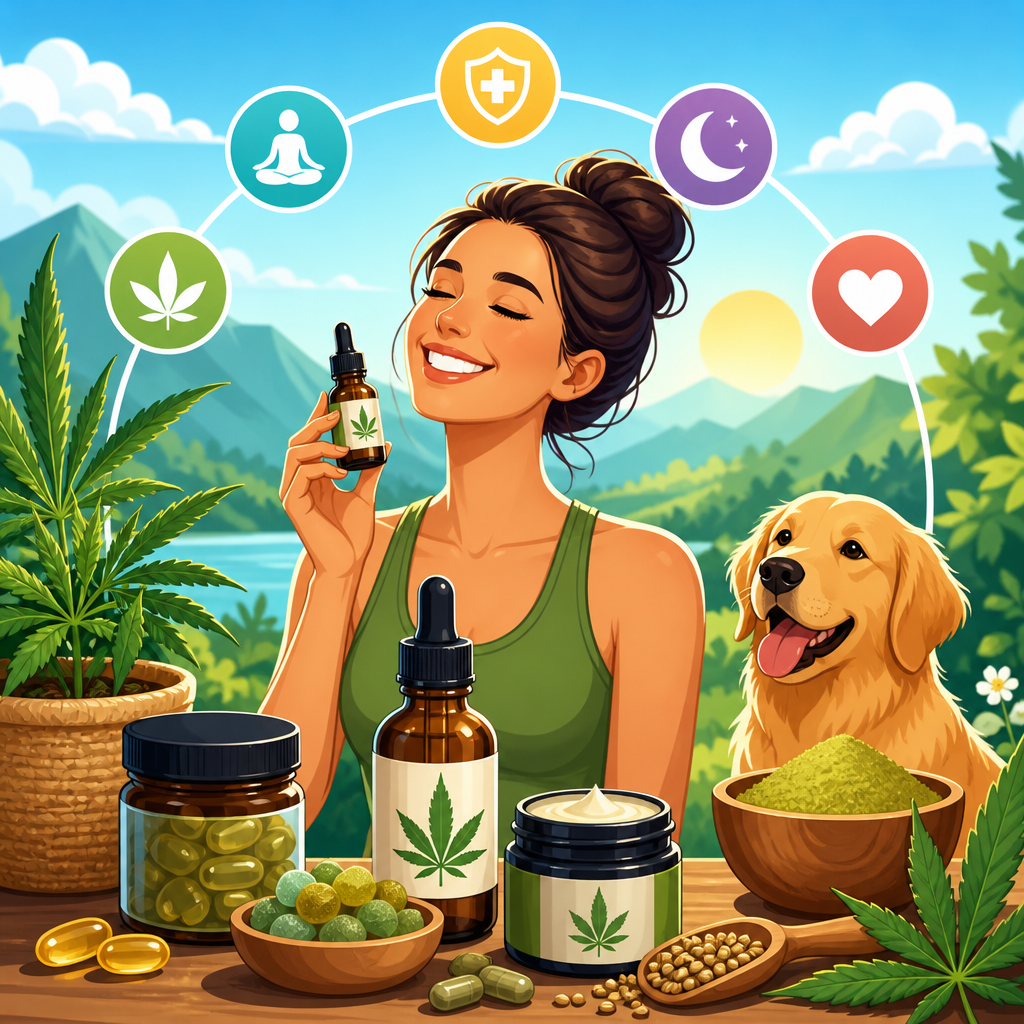
CBD and hemp-based supplements have moved from niche wellness shelves to mainstream retail, yet public understanding still lags behind marketing, regulation, and science. Confusion is common because people use “hemp,” “CBD,” “cannabis,” and “THC” as if they mean the same thing, even though they describe different plants, compounds, and legal categories. In practical terms, hemp is generally cannabis bred to contain very low levels of delta-9 tetrahydrocannabinol, or THC, while cannabidiol, or CBD, is one cannabinoid that can be extracted from hemp and formulated into oils, capsules, gummies, topicals, beverages, and powders. Hemp-based supplements may also include hemp seed oil, hemp protein, or hemp seed hearts, which are nutritionally useful but naturally contain little to no CBD. That distinction matters, because many myths start when consumers assume every hemp product works like a cannabinoid supplement.
I have worked with supplement brands, compliance teams, and product education materials long enough to see the same misconceptions repeated by shoppers and even by retailers. Some people think CBD causes a psychoactive “high,” some believe every product is equally effective, and others assume “natural” means automatically safe. None of those claims holds up. The quality of a CBD or hemp-based supplement depends on plant genetics, extraction method, batch testing, cannabinoid profile, formulation, dosage, and intended use. It also depends on whether the label accurately reflects what is inside the bottle, a problem regulators and third-party laboratories have documented for years. Understanding the difference between evidence, anecdote, and advertising is essential if you want to choose a product wisely.
This hub article explains the most common myths about CBD and hemp-based supplements and replaces them with the facts consumers actually need. It covers how these products are made, what they can and cannot do, how to read a certificate of analysis, why drug testing remains a concern, and how hemp seed products differ from cannabinoid extracts. It also serves as a foundation for deeper articles on formulation types, quality standards, dosage questions, safety considerations, and category-specific uses within supplements and nutraceuticals. If you want a clear, practical guide to CBD and hemp-based supplements, start here and use these principles whenever you compare products or evaluate health claims.
Myth 1: CBD and hemp are the same thing
This is the most widespread misunderstanding, and clearing it up makes the rest of the category easier to understand. Hemp is the source plant category. CBD is one chemical constituent that may be extracted from that plant. Hemp seed oil is pressed from seeds and is valued for fatty acids such as linoleic acid and alpha-linolenic acid, but it is not the same as CBD oil. A bottle labeled “hemp oil” may contain no meaningful cannabidiol at all. Conversely, a product labeled “CBD from hemp extract” is designed around cannabinoid content rather than basic seed nutrition.
From a formulation standpoint, manufacturers use several ingredient types. Full-spectrum hemp extract contains CBD plus additional cannabinoids, terpenes, flavonoids, and trace THC within legal limits. Broad-spectrum extract aims to retain multiple plant compounds while removing detectable THC. CBD isolate contains purified cannabidiol without the broader hemp matrix. Each format has a different use case, taste profile, and compliance implication. When shoppers treat all hemp products as interchangeable, they often buy the wrong product for their goal.
Myth 2: CBD gets you high like marijuana
CBD is not intoxicating in the way THC is. THC binds strongly to CB1 receptors in the central nervous system and is primarily responsible for the euphoric and impairing effects associated with marijuana. CBD interacts differently with the endocannabinoid system and other signaling pathways, and it does not produce the same psychoactive outcome. That is why many consumers use CBD-containing supplements while seeking calm, recovery support, or general wellness without intoxication.
That said, context matters. A full-spectrum hemp product can contain trace THC, and repeated use of high-serving products may expose a person to more THC than expected. That does not mean the product will feel intoxicating, but it does mean the blanket statement “all hemp products have zero THC” is false. The legal threshold in the United States for hemp is typically no more than 0.3 percent delta-9 THC by dry weight, yet that number does not automatically translate into zero risk in every format. Gummies, tinctures, and softgels concentrate extracts differently, so total intake matters more than simplistic assumptions.
Myth 3: If a CBD product is sold online, it must be legal and regulated
Availability is not proof of compliance. The CBD market expanded faster than consistent enforcement, creating a patchwork of rules across federal and state lines. In the United States, the Food and Drug Administration has repeatedly warned companies against marketing CBD supplements with disease treatment claims. At the same time, state hemp programs, agricultural rules, labeling standards, and retail restrictions vary. A product can be easy to buy and still be mislabeled, noncompliant, or poor quality.
In audits I have reviewed, the biggest red flags were missing batch numbers, no third-party lab report, vague hemp sourcing, and claims that sounded more like prescription drug advertising than supplement education. Consumers should treat CBD and hemp-based supplements with the same scrutiny they would apply to any serious nutraceutical purchase. Look for current certificates of analysis from accredited laboratories, lot-specific testing, clear serving information, and manufacturer transparency about extraction and THC content.
| Myth | What the evidence shows | What smart shoppers should check |
|---|---|---|
| All hemp products contain CBD | Hemp seed foods and oils usually contain little to no CBD | Ingredient panel, milligrams of CBD per serving |
| CBD always contains zero THC | Full-spectrum products may contain trace THC within legal limits | Certificate of analysis, cannabinoid profile |
| Natural means safe for everyone | CBD can interact with medications and may cause side effects | Healthcare review, liver warnings, serving size |
| More milligrams always work better | Response depends on formulation, individual biology, and goal | Start-low approach, product format, consistency |
| Online availability equals regulation | Marketplaces can list inconsistent or mislabeled products | Brand reputation, batch testing, state compliance |
Myth 4: Stronger products are always better
Milligram count is useful, but it is not a shortcut to quality or effectiveness. I have seen consumers buy a 3,000 milligram tincture thinking it is automatically superior, only to discover they dislike the flavor, cannot measure servings accurately, or take far more than needed. The right potency depends on body size, sensitivity, delivery format, frequency of use, and intended outcome. A lower-potency product with a precise dropper, better absorption strategy, and consistent use can outperform an ultra-strong product used inconsistently.
Bioavailability also complicates the picture. A softgel, oil tincture, gummy, beverage, and topical do not behave the same way in the body. Taking CBD with food, especially fat-containing meals, may affect absorption. Emulsified formulas and liposomal systems are often marketed as better absorbed, but product-specific evidence varies. Potency should therefore be considered alongside dose accuracy, route of administration, and consumer adherence rather than as the only metric that matters.
Myth 5: CBD works instantly for every problem
Some consumers expect a dramatic, immediate effect because marketing often borrows language from fast-acting pharmaceuticals. In reality, responses to CBD and hemp-based supplements are highly individual. Onset time varies by format: inhaled products act fastest, oils held briefly in the mouth may act sooner than swallowed capsules, and edibles typically take longer because digestion is involved. Topicals are different again, because they are used for local application rather than systemic intake in the way a swallowable supplement is used.
Just as important, no single ingredient works equally well for every goal. Research interest around CBD includes stress, sleep, discomfort, and recovery, but evidence quality differs by condition, dose, and study design. That is why responsible brands avoid blanket promises. If someone expects one gummy to fix chronic sleep disruption, exercise-related soreness, and everyday stress simultaneously, disappointment is likely. A more realistic approach is to define one target outcome, choose an appropriate format, track response over time, and reassess based on data instead of hype.
Myth 6: Hemp-based supplements are completely risk free because they are natural
Natural ingredients can still have contraindications, side effects, and quality concerns. CBD may cause drowsiness, gastrointestinal upset, appetite changes, or fatigue in some users. More importantly, it can interact with medications because it may affect cytochrome P450 enzyme activity, a pathway involved in metabolizing many drugs. That raises important questions for people taking anticoagulants, seizure medications, sedatives, or other prescriptions. Pregnant and breastfeeding individuals should be especially cautious because safety data remain limited.
Quality risks are equally important. Hemp is a bioaccumulator, meaning it can absorb substances from soil, including heavy metals if grown in contaminated environments. Poor extraction and inadequate purification can also leave unwanted residues. This is why reputable brands test for cannabinoids, pesticides, heavy metals, residual solvents, and microbial contaminants. When a company provides only marketing copy and no lab data, trust should drop immediately.
Myth 7: All third-party lab reports prove a product is high quality
A certificate of analysis is essential, but not every report is equally useful. Consumers should verify that the report matches the exact batch or lot number on the package, comes from an independent lab, and lists the test date. The most useful reports quantify major cannabinoids in milligrams or percentages and include contaminant panels. If a product claims to be THC-free, the report should support that claim within the laboratory’s limit of quantitation. If it claims full-spectrum content, the report should show a broader cannabinoid profile rather than CBD alone.
I advise people to read beyond the front-page summary. Check whether “ND” means non-detectable at a reasonable threshold, whether contaminant results are marked pass, and whether the serving math matches the label. For example, a 30 milliliter tincture advertised as 1,500 milligrams of CBD should align with the concentration shown on the report. Small inconsistencies may be innocent rounding, but major gaps suggest a labeling problem.
Myth 8: Drug testing is not a concern with CBD
This myth causes real-world consequences. Workplace drug screens generally test for THC metabolites, not for CBD. However, using full-spectrum hemp products can introduce enough THC over time to create risk, especially with frequent use or high daily servings. Even broad-spectrum and isolate products are not risk free if manufacturing controls are weak or cross-contamination occurs. Anyone subject to employment, athletic, military, or legal testing should approach the category conservatively.
The safest practical advice is simple: if drug testing matters, avoid assuming any cannabinoid product is automatically safe. Review the certificate of analysis, understand the product type, and consider abstaining altogether if the consequences of a positive result are serious. This is one of the clearest examples of where supplement education matters more than advertising slogans.
Myth 9: The entourage effect is proven for every product
The entourage effect is the idea that cannabinoids and terpenes may work differently together than in isolation. It is a useful concept and a plausible reason some consumers prefer full-spectrum formulations, but it is often overstated. Evidence is still evolving, and not every product containing multiple hemp compounds will deliver a meaningful synergistic benefit. Formulation quality, stability, dosage, and individual response still determine outcomes.
In practice, full-spectrum, broad-spectrum, and isolate products each have legitimate roles. Full-spectrum may appeal to users who want the widest native plant profile. Broad-spectrum may suit those seeking multiple hemp constituents while avoiding measurable THC. Isolate may be preferred for simple formulation, flavor control, or cautious introduction. Treat these as options with tradeoffs, not as a hierarchy where one format wins in all situations.
How to evaluate CBD and hemp-based supplements like an informed buyer
The best way to cut through myths is to use a repeatable evaluation process. Start by identifying the exact ingredient: hemp seed oil, full-spectrum hemp extract, broad-spectrum extract, or CBD isolate. Next, check the amount per serving rather than per bottle, since labels often highlight large bottle totals that exaggerate practical intake. Then review the certificate of analysis for cannabinoid content and contaminant testing. After that, examine the dosage form, additional ingredients, flavoring, sweeteners, and carrier oil. Medium-chain triglyceride oil, olive oil, and hemp seed oil are common carriers, and each affects texture, taste, and serving experience.
Also consider the manufacturer’s quality systems. Brands that follow current good manufacturing practices, maintain lot traceability, and use accredited labs are more credible. Finally, match the product to the goal. A topical balm, a nighttime gummy with melatonin, and a plain daytime softgel solve different problems. When people say CBD “did nothing,” they often mean the product choice, dose, timing, or expectation was wrong.
CBD and hemp-based supplements can be useful additions to a broader wellness strategy, but only when consumers understand what they are buying and what the evidence actually supports. The biggest myths collapse once you separate hemp seed nutrition from cannabinoid supplementation, recognize that CBD is not the same as THC, and accept that legality, safety, and effectiveness are not guaranteed by a trendy label. Product type, serving size, laboratory verification, and realistic expectations matter far more than buzzwords.
As a hub within supplements and nutraceuticals, this guide should be your starting point for every deeper question about CBD and hemp-based supplements: which format fits your routine, how to read a lab report, whether THC-free claims are credible, how drug testing risk works, and what quality markers deserve your attention. Use these principles before you buy, compare products carefully, and speak with a qualified healthcare professional when medications, pregnancy, or complex health conditions are involved. Better decisions begin with better questions, so let this article guide the next step in your research.
Frequently Asked Questions
1. Are hemp, CBD, cannabis, and THC basically the same thing?
No. One of the biggest sources of confusion in this category is that these words are related, but they do not mean the same thing. Cannabis is the broad plant family. Hemp is generally a legal and agricultural term used for cannabis varieties bred to contain very low levels of delta-9 THC, the primary intoxicating compound associated with marijuana. CBD, short for cannabidiol, is just one naturally occurring compound found in cannabis plants, including hemp. THC is a different compound altogether and is mainly responsible for the “high” people associate with marijuana.
That distinction matters because a hemp product is not automatically a CBD product, and a CBD product is not automatically intoxicating. Some hemp-based supplements contain CBD, some contain other cannabinoids, and some are made from hemp seed ingredients that do not contain meaningful amounts of CBD at all. Likewise, the word “cannabis” can refer to both hemp and marijuana, which is why broad statements about legality, effects, or safety often become misleading. Understanding the category starts with treating plant type, cannabinoid content, and legal classification as separate issues rather than interchangeable labels.
2. Does CBD get you high the same way THC does?
In general, no. CBD is not considered intoxicating in the same way THC is. THC binds strongly to receptors in the body and brain that are associated with the psychoactive effects people describe as a high. CBD works differently and does not typically produce that same altered mental state. That is why many people seek out CBD or hemp-based supplements for wellness support without wanting the euphoric or impairing effects linked to higher-THC cannabis products.
That said, consumers should still read labels carefully. Not every hemp-derived product is THC-free. Some formulations may contain trace amounts of THC, while others may contain broader-spectrum extracts or even enough THC to matter for sensitive individuals, depending on dosage and product quality. In addition, people sometimes mistake relaxation or drowsiness for intoxication. Feeling calmer is not the same as being high, but it can still affect how a person feels or functions. The practical takeaway is simple: CBD itself is not generally used for intoxication, but product composition varies, so third-party testing and transparent labeling are important.
3. Is hemp seed oil the same thing as CBD oil?
No, and this is one of the most common labeling misunderstandings in the supplement market. Hemp seed oil is pressed from the seeds of the hemp plant and is valued primarily for its nutritional profile, including fatty acids such as omega-3 and omega-6. It is often used in foods, skincare products, and wellness formulations, but it does not naturally provide meaningful amounts of CBD. CBD oil, by contrast, is made using extracts from other parts of the hemp plant, such as the flowers, leaves, and aerial portions where cannabinoids are concentrated.
Consumers sometimes buy a product labeled with words like “hemp extract” or “hemp oil” assuming it contains substantial CBD, when that may not be the case. The most reliable way to tell is to look for the actual amount of CBD listed on the label, usually in milligrams per serving or per container, and ideally supported by a certificate of analysis from an independent lab. Hemp seed oil can still be a useful ingredient, but it should not be confused with cannabinoid-rich extracts. If someone is shopping specifically for CBD, the product should clearly state CBD content rather than relying on vague hemp branding.
4. If a CBD or hemp supplement is sold legally, does that mean it is proven to work and fully regulated?
Not necessarily. Legal sale and scientific proof are not the same thing, and this is where many myths take hold. A product can be available online or in stores because it fits within a particular legal framework for hemp-derived ingredients, but that does not automatically mean regulators have evaluated it for effectiveness in the way a prescription drug would be reviewed. In many markets, hemp and CBD supplements exist in a space where rules continue to evolve, and oversight may focus more on labeling, sourcing, or THC limits than on strong clinical evidence for every marketing claim.
That does not mean all products are ineffective. It means consumers should approach them with realistic expectations. Research on cannabinoids is active and promising in some areas, but the quality of evidence varies by use case, dosage, formulation, and population. A gummy, tincture, capsule, and topical may all behave differently, even if each contains CBD. The best approach is to look for brands that provide clear ingredient lists, batch-specific lab reports, contaminant screening, and conservative claims rather than miracle language. Legal availability is a starting point for access, not a guarantee of proven benefit, perfect consistency, or comprehensive regulation.
5. Are all CBD and hemp-based supplements equally safe for everyone?
No. “Natural” does not mean risk-free, and hemp-based supplements are not one-size-fits-all. Product safety depends on several factors, including ingredient quality, extraction methods, cannabinoid concentration, potential contaminants, and how the supplement may interact with medications or health conditions. For example, some products may contain more or less CBD than the label states, while poorly made products could carry residual solvents, heavy metals, pesticides, or unwanted THC. This is why reputable third-party testing is one of the most important markers of quality in the category.
Individual response also matters. Two people can take the same supplement and have very different experiences based on body chemistry, dosage, sensitivity, and other substances they use. CBD may interact with certain medications, especially those metabolized through common liver enzyme pathways, so people who take prescription drugs or have underlying health issues should speak with a qualified healthcare professional before adding a supplement. Pregnant or breastfeeding individuals should be especially cautious unless specifically advised otherwise by a clinician. In short, hemp and CBD supplements may be appropriate for many adults, but safe use depends on product quality, informed dosing, and individual medical context rather than broad assumptions.